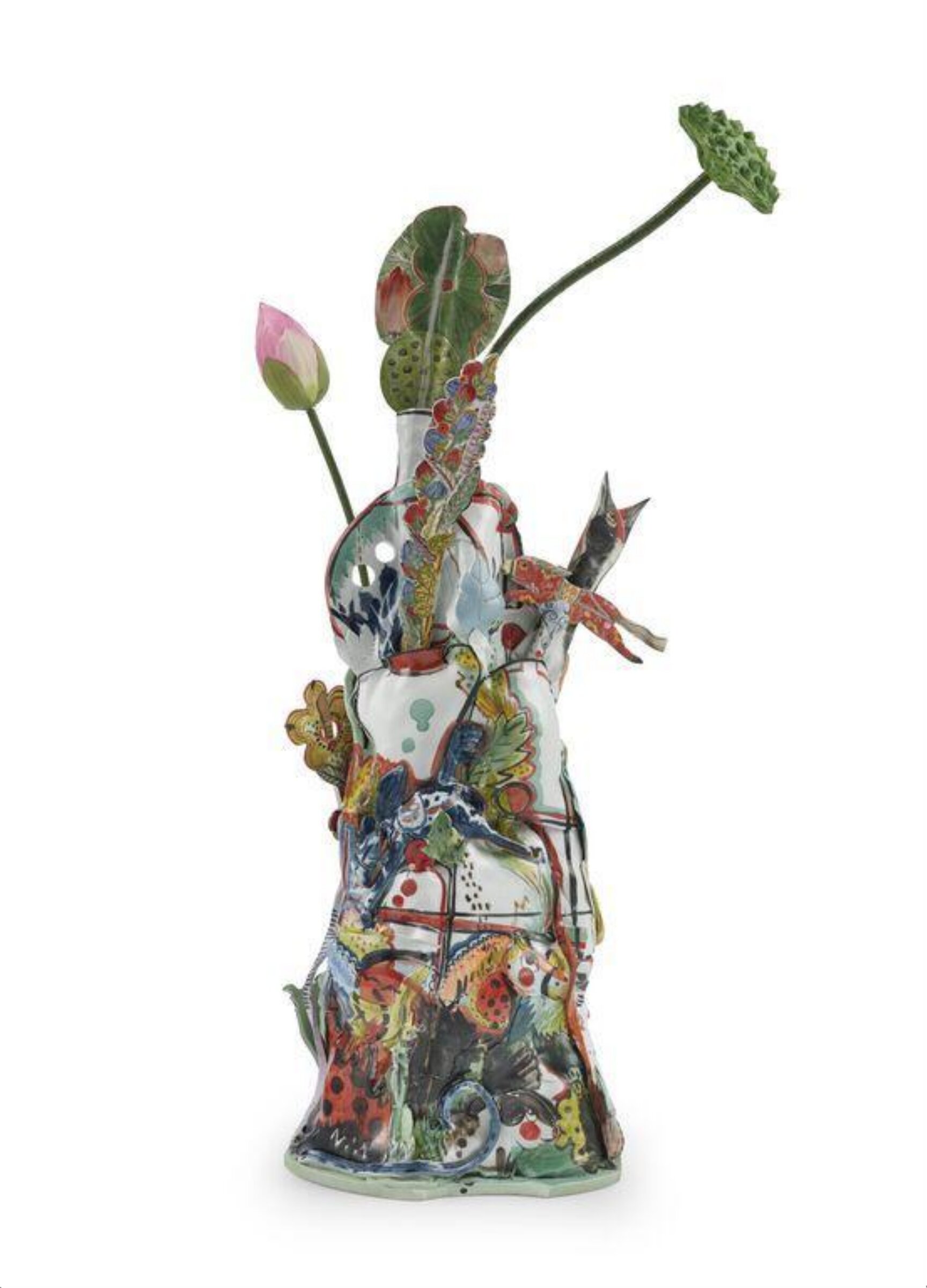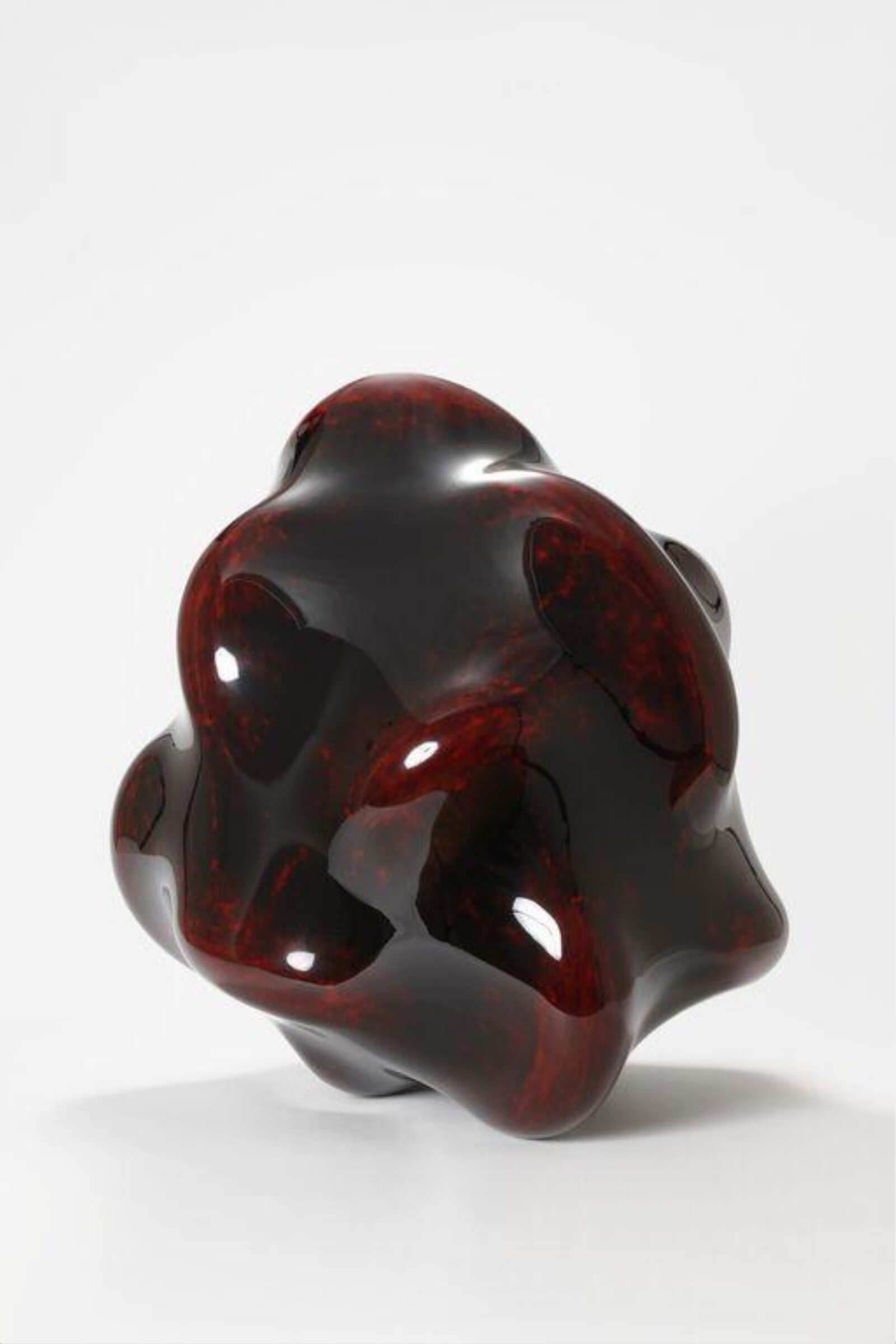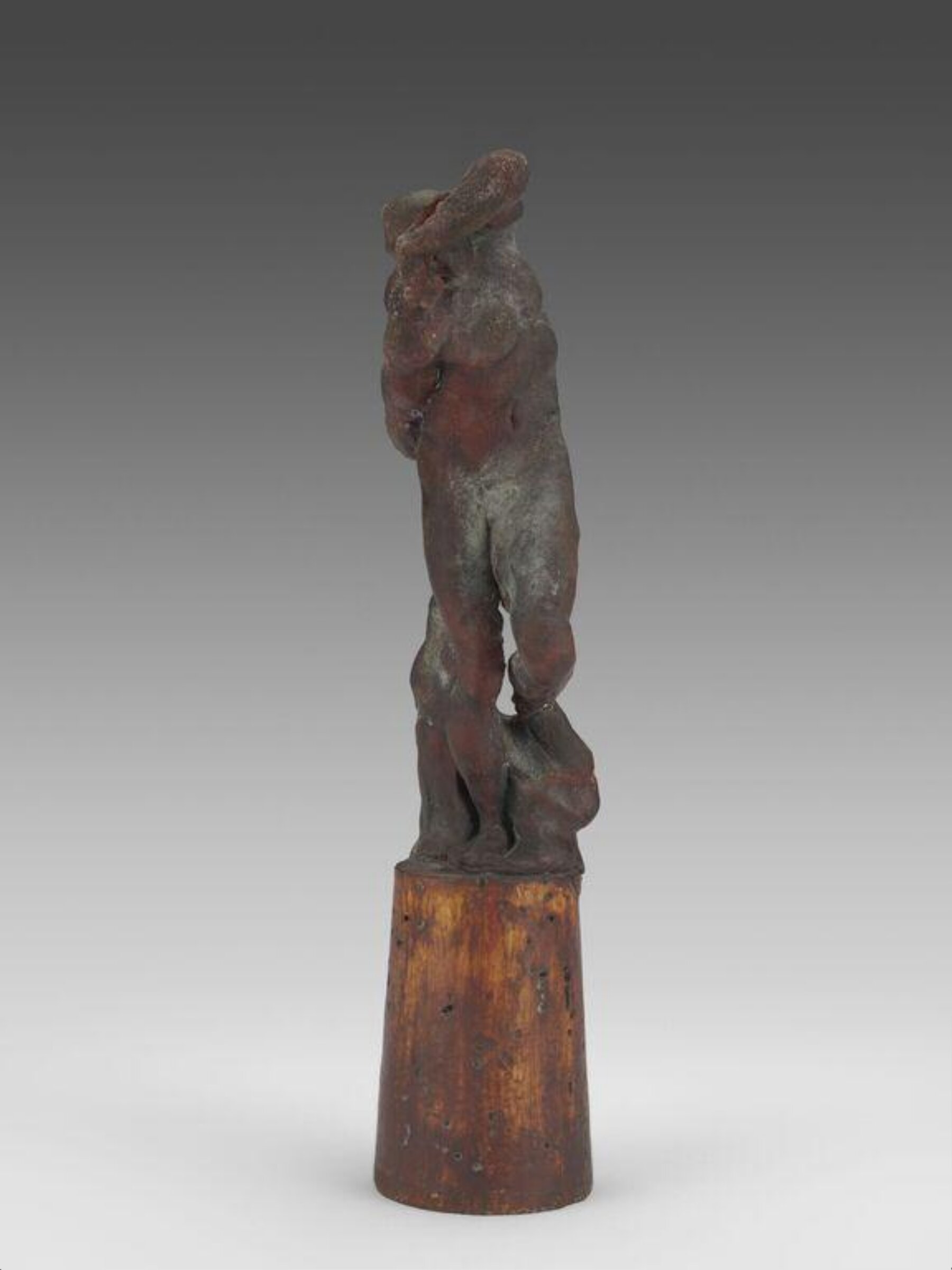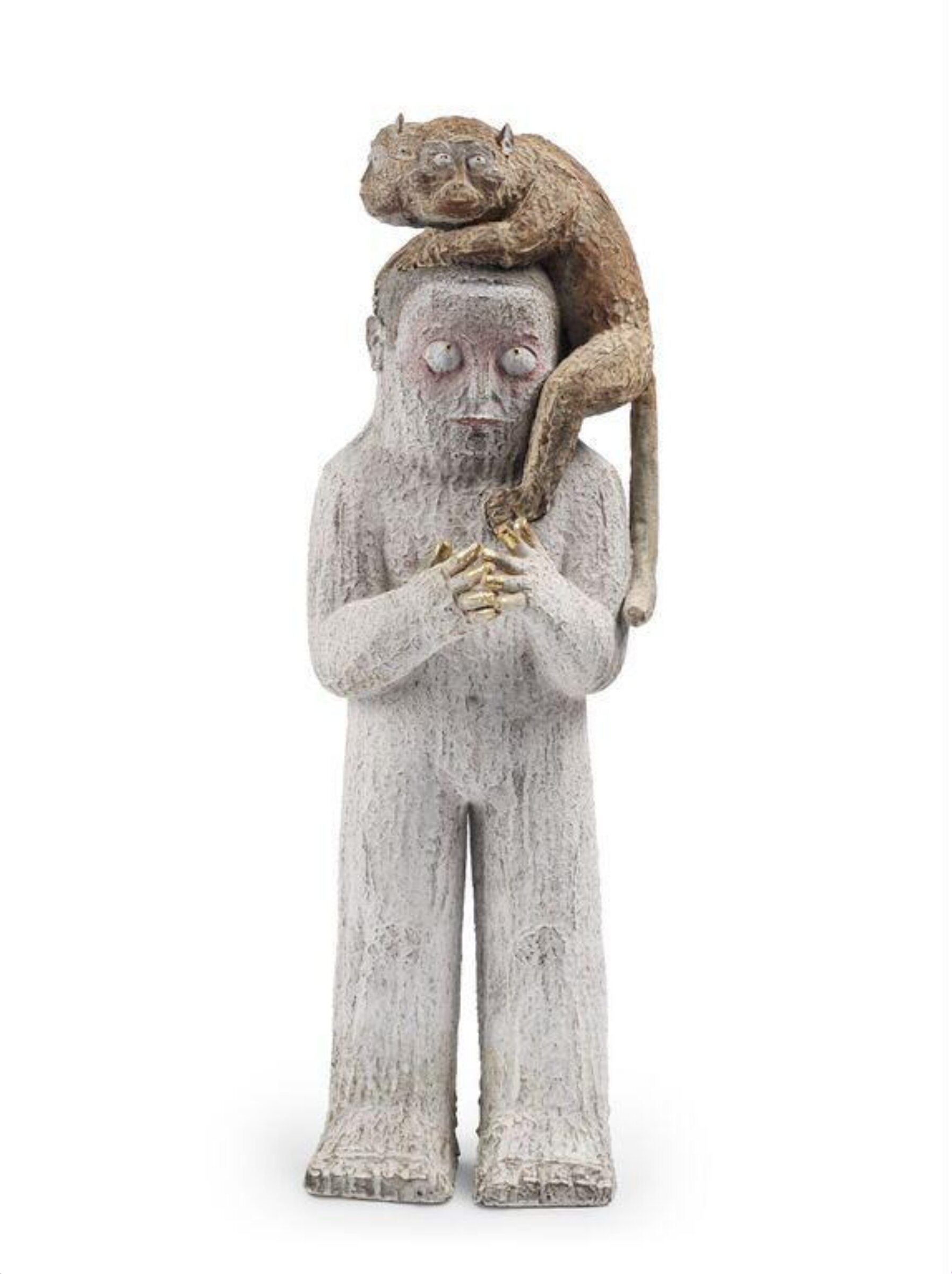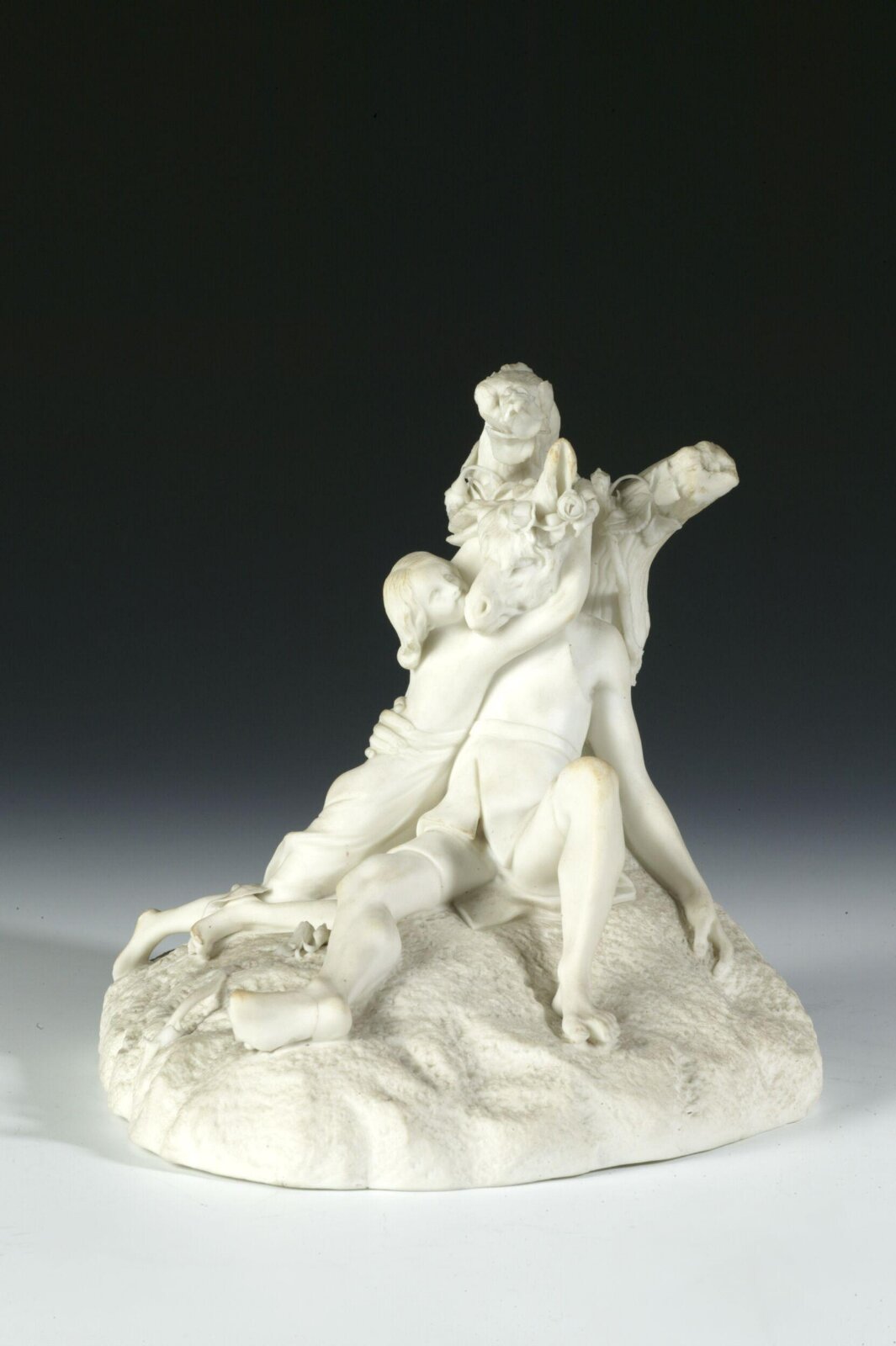
Titania and Bottom
Mag men het zien?
Ontvangt momenteel niet

Londen, Verenigd Koninkrijk
Het hoort bij de collectie, maar is momenteel niet tentoongesteld.
- Gecontroleerd
- Ongewijzigd sinds
- Bron
- Het museum
Over de sculptuur
This figure group is made of Parian ware, the unglazed development of biscuit porcelain which became very popular after the Staffordshire firm of Copeland and Garrett introduced it in 1842 as a medium for busts, statuettes and reliefs. Several potteries marketed it under a different name but Parian ware became its generic name after Minton used 'Parian' to suggest Paros, the Greek island which supplied stone used for Classical statuary. Parian ware was not cheap but gave households the semblance of owning a marble bust or figurine, previously only afforded by the very wealthy.
Lees meer
The Worcester firm started their production of Parian relatively late, but after they launched a range at the Dublin Exhibition in 1853, their chief modeller James Hadley (1837-1903) created a large number of decorative and useful wares for them. This group was modelled by William Boynton Kirk (1824-1900), another of Worcester's modellers who produced twelve different figure groups for Worcester depicting characters from A Midsummer Night's Dream. Bottom is shown here after Puck has changed his head to that of an ass, and has applied magic juice to Titania's eyes so that she sees him as a handsome object of adoration.
Victoria and Albert Museum
Gegevens
- Inventarisnummer
- S.1019-1996
Wat het toont
In de catalogus
Bronnen
- Victoria and Albert Museum
- Afbeelding: Victoria and Albert Museum — © Victoria and Albert Museum, London