Hendrick GoltziusNederland, 1558–1617
Theatrum Principium
Mag men het zien?
Onbekend

Amsterdam, Nederland
De eigenaar is bekend; of het werk nu te zien is, is onbekend.
- Bron
- Het museum
Over het werk
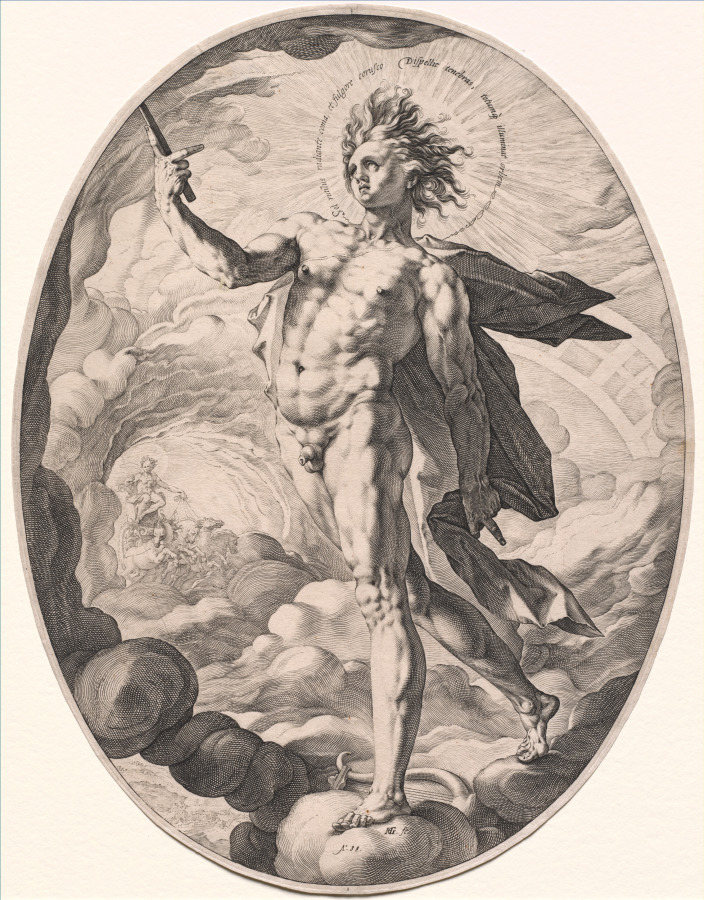
Deze prent is een combinatie van twee ontwerpen. De omlijsting heeft oorspronkelijk gediend als Goltzius titelpagina voor een serie bestaande uit zestien bladen met de kardinale deugden en ondeugden, op deze prent is de titel vervangen door "Theatrum Principum". In het ovaal is een tweede plaat op het papier gedrukt: een kopie in spiegelbeeld naar het portret van Henri III, de koning van Frankrijk, gegraveerd door Hieronymus Wierix in 1586.
Rijksmuseum Amsterdam
Gegevens
- Inventarisnummer
- RP-P-1904-1430
In de catalogus
Bronnen
- Rijksmuseum Amsterdam
- Afbeelding: Rijksmuseum Amsterdam — public domain
Intussen, in het leven van Hendrick Goltzius
Het hele leven1587
Founding of the Haarlem Academy
Together with Cornelis van Haarlem and Karel van Mander he founded an academy of art in Haarlem, later known as the Haarlem Mannerist Academy (some sources give 1583 or 1600). There, for the first time in the Netherlands, systematic study of anatomy and drawing from the nude model were introduced.
1590
Departure for Italy
He fled from his wife and, despite his illnesses, set out for Italy — via Hamburg and Munich to Venice, Bologna and Florence. Part of the way he traveled on foot, passing himself off as a commoner, "partly out of a love of mystification."
1591
Eight months in Rome
He arrived in Rome in January 1591 and stayed eight months (with a brief sojourn in Naples). He discovered Raphael, was especially impressed by Michelangelo and Giambologna, and studied art from classical sculpture to the masters of the Renaissance.
1591
Return to Haarlem with a collection of drawings
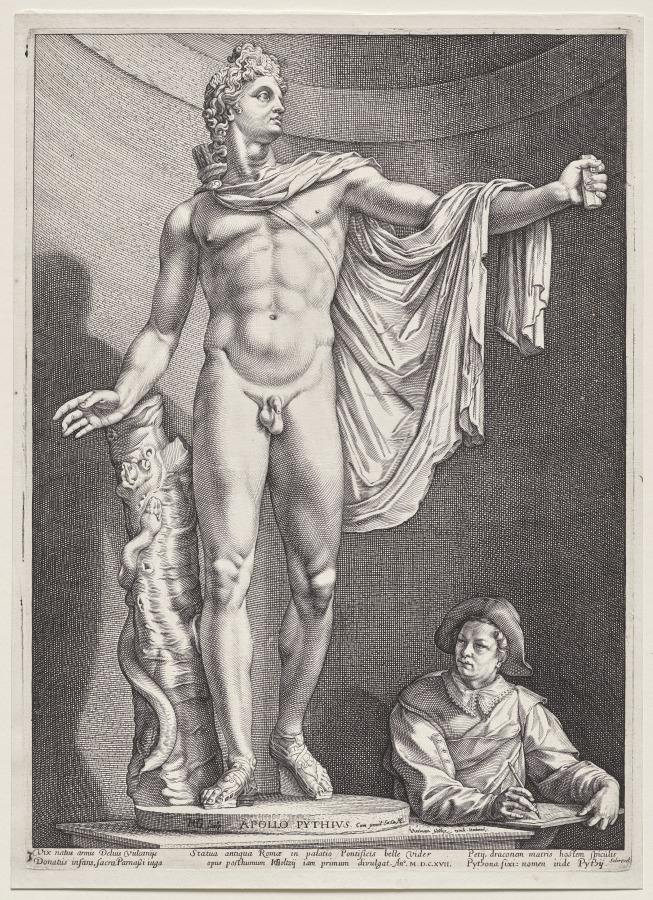
He returned to Haarlem, bringing from Italy a large collection of drawings that he used for the rest of his life; from the Roman material three engravings of classical statues are known, including the Farnese Hercules.
c. 1600
Abandoning engraving for painting
Around 1600, partial paralysis of his right hand (maimed in childhood in a fall onto burning coals) forced Goltzius to give up engraving and turn to painting; he handed over his print publishing to his stepson Jacob Matham. About fifty surviving paintings are attributed to him.
1 januari 1617
Died