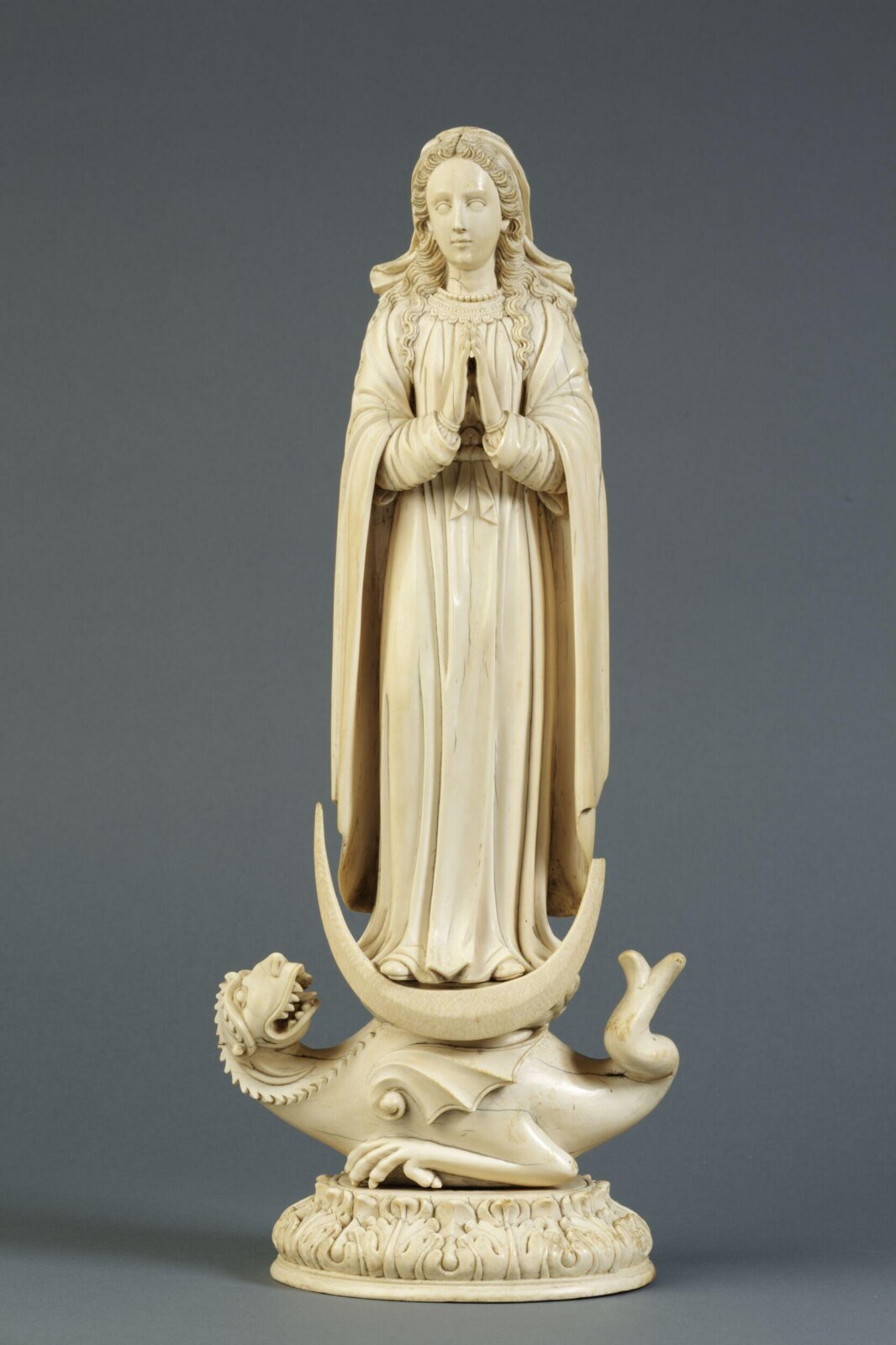
The Virgin of the Immaculate Conception
Kan ik het zien?
Nu niet te zien
Waar is „The Virgin of the Immaculate Conception” nu? Collectie: Victoria and Albert Museum, Londen. Nu niet te zien. Gecontroleerd 25 september 2026.

Londen, Verenigd Koninkrijk
Het hoort bij de collectie, maar is momenteel niet tentoongesteld.
- Gecontroleerd
- Ongewijzigd sinds
- Bron
- Het museum
Over de sculptuur
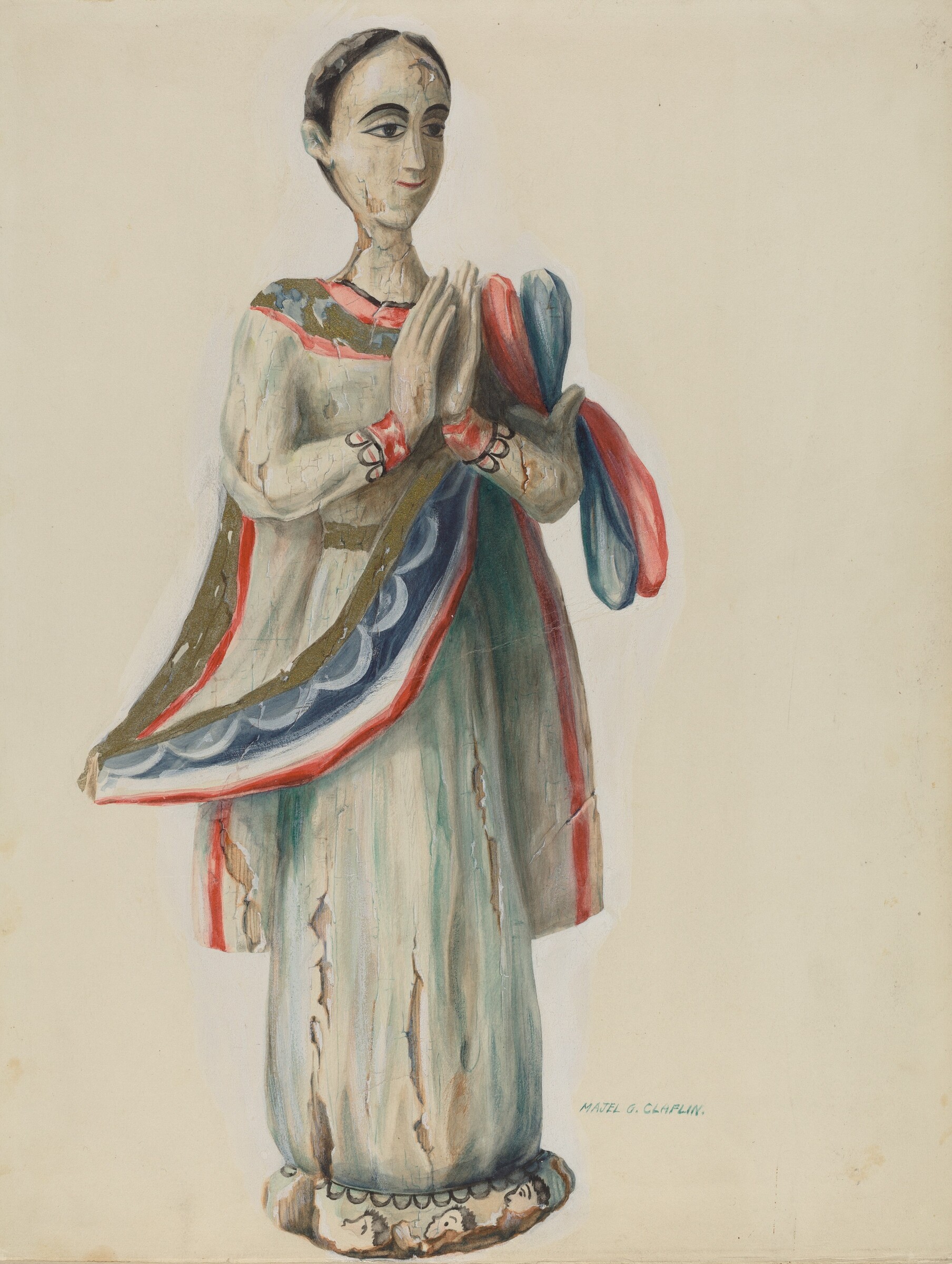
Ivory sculptures were locally produced in large numbers in Portuguese Sri Lanka (formerly called Ceylon). Usually for an European clientele, their style of carving combines Indian or Sri Lankan with European traditions.
This large figure of the Virgin of the Immaculate Conception is similar in style to the Mourning Mary (V&A. no. A.35-1940) and both are likely to date from the middle of the seventeenth-century and to have been carved in Goa, or perhaps Sri Lanka. From the sixteenth-century, the Portuguese were active as traders and later as rulers in Sri Lanka and Goa (on the west coast of India).
Lees meer
Ivory carving had a long tradition on the Indian subcontinent, and elaborate works of art were made, particularly as diplomatic gifts, often presented to Western rulers. Most of the ivory would have been exported from Mozambique in East Africa. Ivory sculptures were produced in large numbers in Portuguese Sri Lanka (formerly called Ceylon). The Virgin Mary was often standing on the crescent moon, triumphant over a dragon, both symbols derived from the Book of the Apocalypse in the New Testament.. From the sixteenth century onwards, the four main missionary Orders, the Augustinians, Jesuits, Dominicans and Franciscans, built churches and aimed to convert the inhabitants of India. The ivories would assist in the presentation of Christian imagery, as well as being exported back to churches, convents and private collectors in Europe.
Victoria and Albert Museum
Gegevens
- Inventarisnummer
- A.60-1949
Wat het toont
In de catalogus
Bronnen
- Victoria and Albert Museum
- Afbeelding: Victoria and Albert Museum — © Victoria and Albert Museum, London