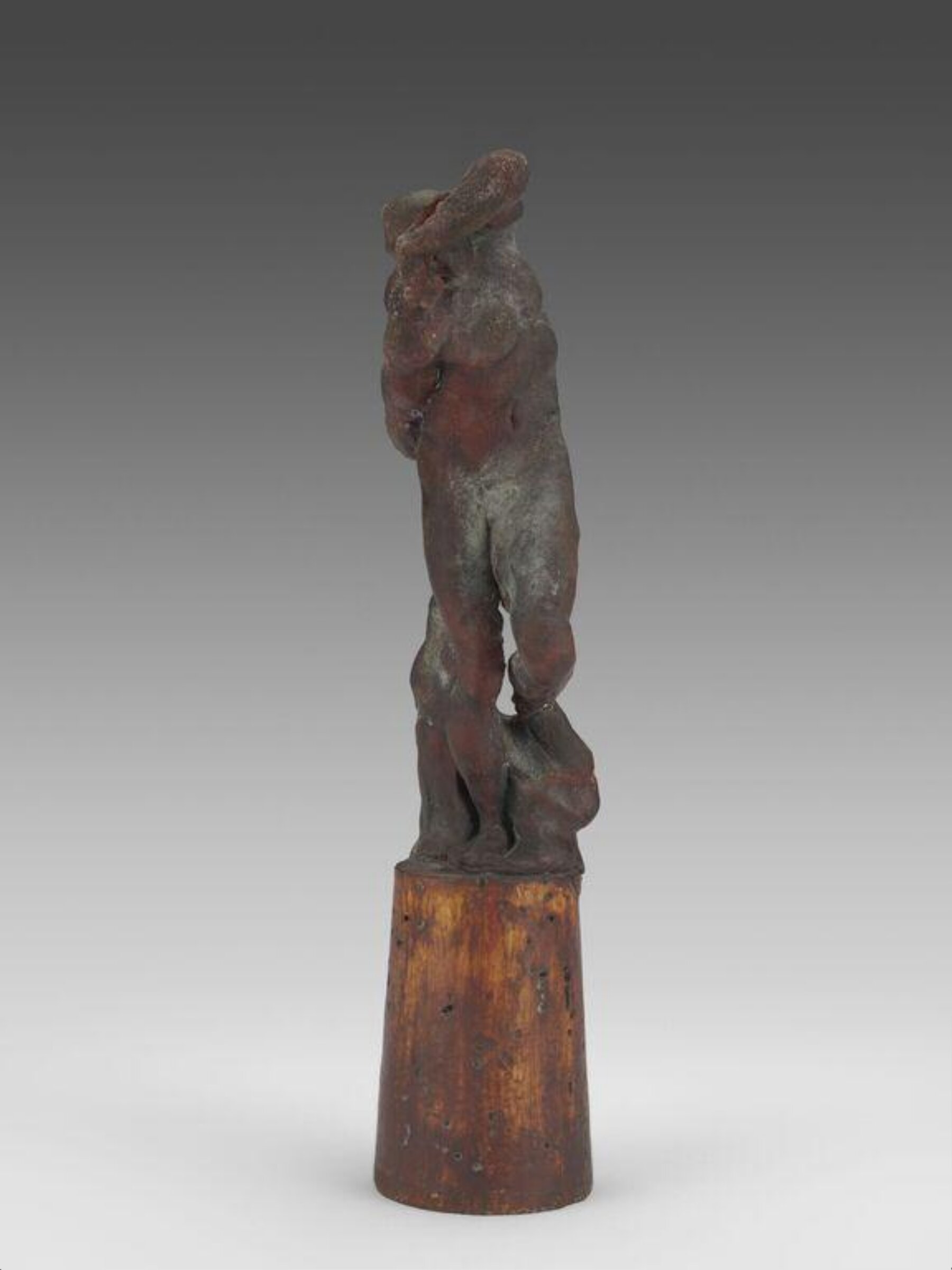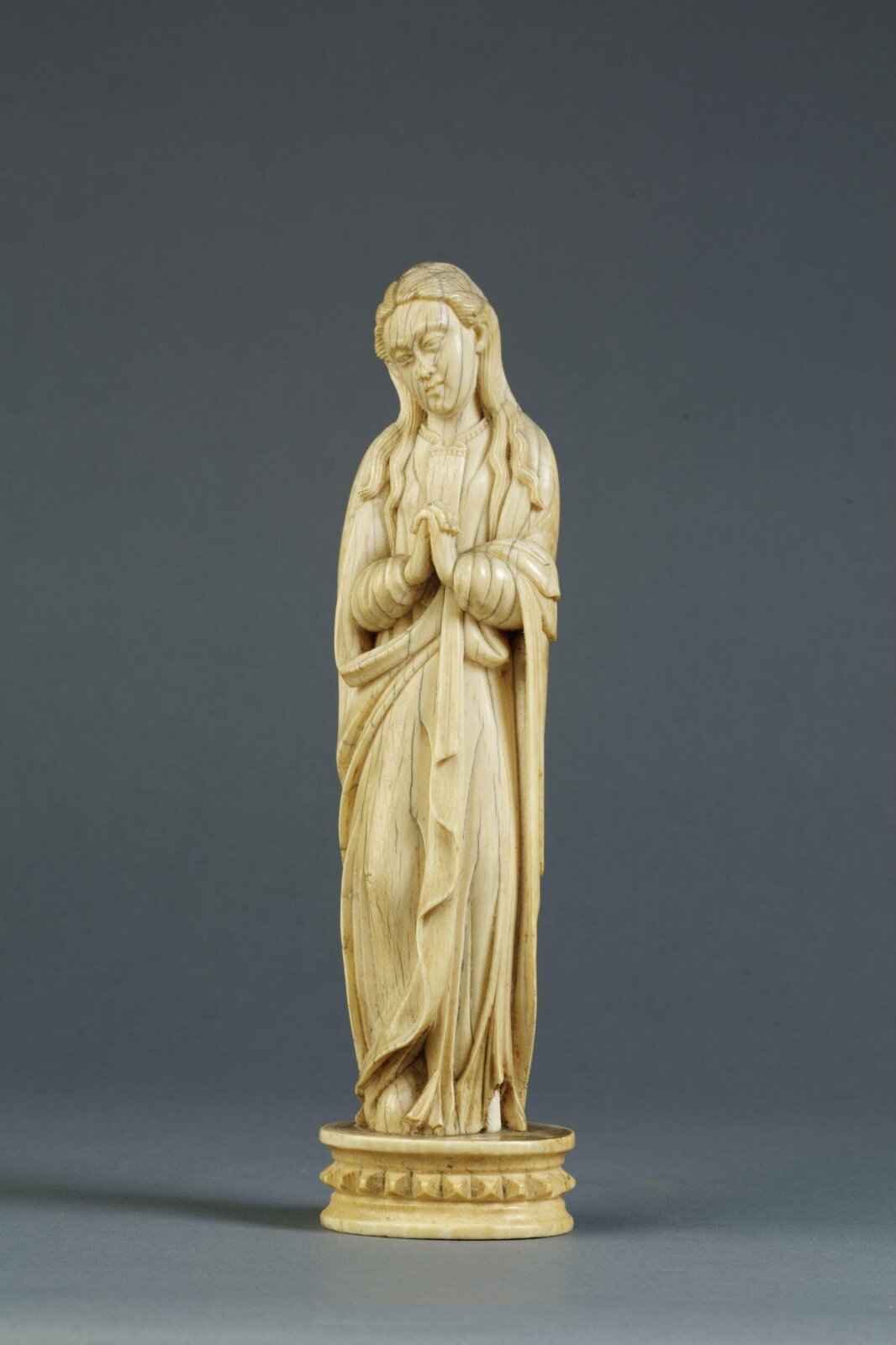
The Mourning Mary
Mag men het zien?
Ontvangt momenteel niet

Victoria and Albert Museum
Londen, Verenigd Koninkrijk
Het hoort bij de collectie, maar is momenteel niet tentoongesteld.
- Gecontroleerd
- 9 dagen geleden
- Ongewijzigd sinds
- 25 sep 2026
- Bron
- De eigen collectiegegevens van het museum
About the sculpture
This statuette, made in about 1650, represents a female figure with hands clasped together in lamentation. Although previously described as St John the Evangelist, the figure can possibly be identified as one of the Maries from an Entombment or Lamentation group. The fine carving of the facial features and flowing draperies are typical of ivories from Sri Lanka, where, from the sixteenth century onwards, the Portuguese were active as traders and later as rulers. The Indian subcontinent had a long-standing tradition of ivory carving, and elaborate objects were locally produced in large numbers for a European clientele. They were also often presented to Western rulers as diplomatic gifts. From the sixteenth century onwards, the four main missionary Orders, Augustinians, Jesuits, Dominicans and Franciscans, started building churches in India with the aim of converting the inhabitants. The ivories would assist in the presentation of Christian imagery, as well as being exported back to the churches, convents and private collections of Europe.
Victoria and Albert Museum
Gegevens
- Inventarisnummer
- A.35-1940
What it shows
In de catalogus
Bronnen
- Victoria and Albert Museum: the museum's own open data · opgehaald 9 dagen geleden
- Afbeelding: Victoria and Albert Museum — © Victoria and Albert Museum, London