ART WIKI32.963 te zien
KaartCollectieKunstenaarsMuseaTentoonstellingenJournal
Inloggen

ART WIKI

Waar het meesterwerk hangt en wanneer men u toelaat.

Collecties: Art Institute of Chicago, Cleveland Museum of Art, Getty Villa, Harvard Art Museums, Hermitage, Hirshhorn Museum and Sculpture Garden, J. Paul Getty Museum, Louvre, Metropolitan Museum of Art, Minneapolis Institute of Art, Museum of Modern Art, National Gallery of Art, National Museum of Asian Art, National Portrait Gallery, Poesjkinmuseum, Rijksmuseum Amsterdam, Russisch Museum, Smithsonian American Art Museum, Statens Museum for Kunst, Tretjakovgalerij, Victoria and Albert Museum, Whitney Museum of American Art, Staatscatalogus van het Russische museumfonds (274 musea), Europeana (19 musea), Wikidata (6 musea), Paris Musées (12 musea) en Joconde, de museumdatabank van het Franse ministerie van Cultuur (495 musea). De afbeeldingen behoren toe aan hun rechthebbenden.

Rubrieken

  • Kaart
  • Zoeken
  • Collectie
  • Meesterwerken
  • Nu te zien
  • Kunstenaars

Meer

  • Musea & galerieën
  • Tentoonstellingen
  • Journal
  • Waar de gegevens vandaan komen
  • Privacy & cookies
StartpaginaKaartCatalogus
  1. Collectie/
  2. National Gallery of Art/
  3. The Infant Bacchus
The Infant Bacchus, Giovanni Bellini, probably 1505/1510
Giovanni Bellini, portretGiovanni BelliniItalië, 1430–1516

The Infant Bacchus

probably 1505/1510 · Painting

Mag men het zien?

Ja, het ontvangt bezoek

National Gallery of Art

Washington D.C., Verenigde Staten

Zaal13 · Westgebouw, hoofdverdieping

Publiek tentoongesteld. Wie daarvoor instaat, staat hieronder.

Gecontroleerd
3 dagen geleden
Ongewijzigd sinds
19 aug 2026
Bron
Het museum
Op de kaartMuseumpagina

Over het schilderij

The Infant Bacchus or Young Bacchus is a ca. 1505–1510 painting of the Roman god Bacchus as a boy by the Italian Renaissance master Giovanni Bellini. Originally painted on panel, it was later transferred to canvas.

It was probably the Little Bacchus with a vase in his hand seen in Bartolo Delfino's house in Venice by Carlo Ridolfi in the mid-16th century and misidentified as a Giorgione. Shipley (1979) believes the subject is a metaphor for the winter solstice, based on a letter in Macrobius's Saturnalia, known during the Renaissance – the new year started as a baby and ended as an old man. It may be drawn from the same studies as the figure of Bacchus in The Feast of the Gods, which is very similar.

Verder lezen

By the 19th century it was in Frederick Richards Leyland's collection in London, where it was thought to be by Marco Basaiti. It passed through several further collections before being acquired by the Duveen Brothers in 1927, who took it to the United States. There it was acquired by Samuel H. Kress, who in 1961 gave it to the National Gallery of Art in Washington, D.C., where it still hangs.

Wikipedia · CC BY-SA

Gegevens

probably 1505/1510
14301516
Inventarisnummer
1961.9.5

Wat het toont

ClassicalBacchus

In de catalogus

SchilderijenOlieverfItaliaanse schilderkunstVenetiaanse schilderkunstRenaissance16e eeuwVenetianMythologisch schilderij

Bronnen

  • National Gallery of Art
  • Afbeelding: National Gallery of Art — Museum open access

Intussen, in het leven van Giovanni Bellini

Het hele leven
  1. 1501–1505

    Isabella Gonzaga and commissions without paintings

    In 1501–04 the Marchioness of Mantua, Isabella Gonzaga (also known as Isabella d'Este), has great difficulty obtaining from Bellini a painting of the Madonna and Saints, for which she has already paid in advance (it is now lost). In 1505 she tries through Pietro Bembo to commission another, of secular or mythological content; its subject and fate are unknown.

  2. 1506

    Meeting Dürer in Venice

    On Albrecht Dürer's second visit to Venice he calls Bellini very old but still the best in painting, and full of courtesy toward foreign fellow painters. In a letter to Pirckheimer Dürer reports that Bellini praised him before many gentlemen and came himself to ask for a work, promising to pay well.

  3. 1507

    The death of his brother Gentile

    After Gentile's death Giovanni inherits their father Jacopo's sketchbook, on condition that he finish a picture his brother left incomplete. Marin Sanudo notes that Gentile's brother Zuan Belin remains, the most excellent painter in Italy.

Meer van Giovanni Bellini

Alle werken
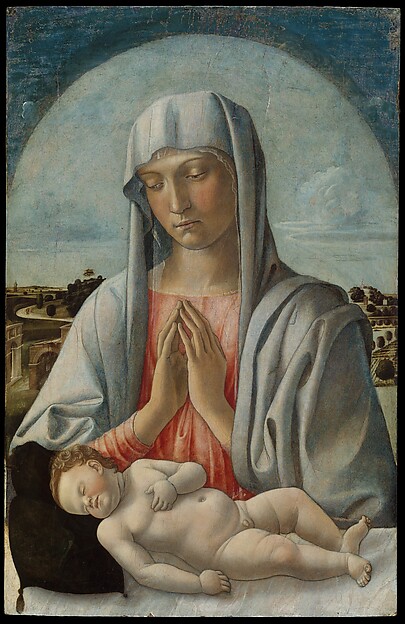
Madonna and Child, Giovanni Bellini, late 1480s

Madonna and Child

late 1480s · Metropolitan Museum of Art

Madonna Adoring the Sleeping Child, Giovanni Bellini, early 1460s

Madonna Adoring the Sleeping Child

early 1460s · Metropolitan Museum of Art

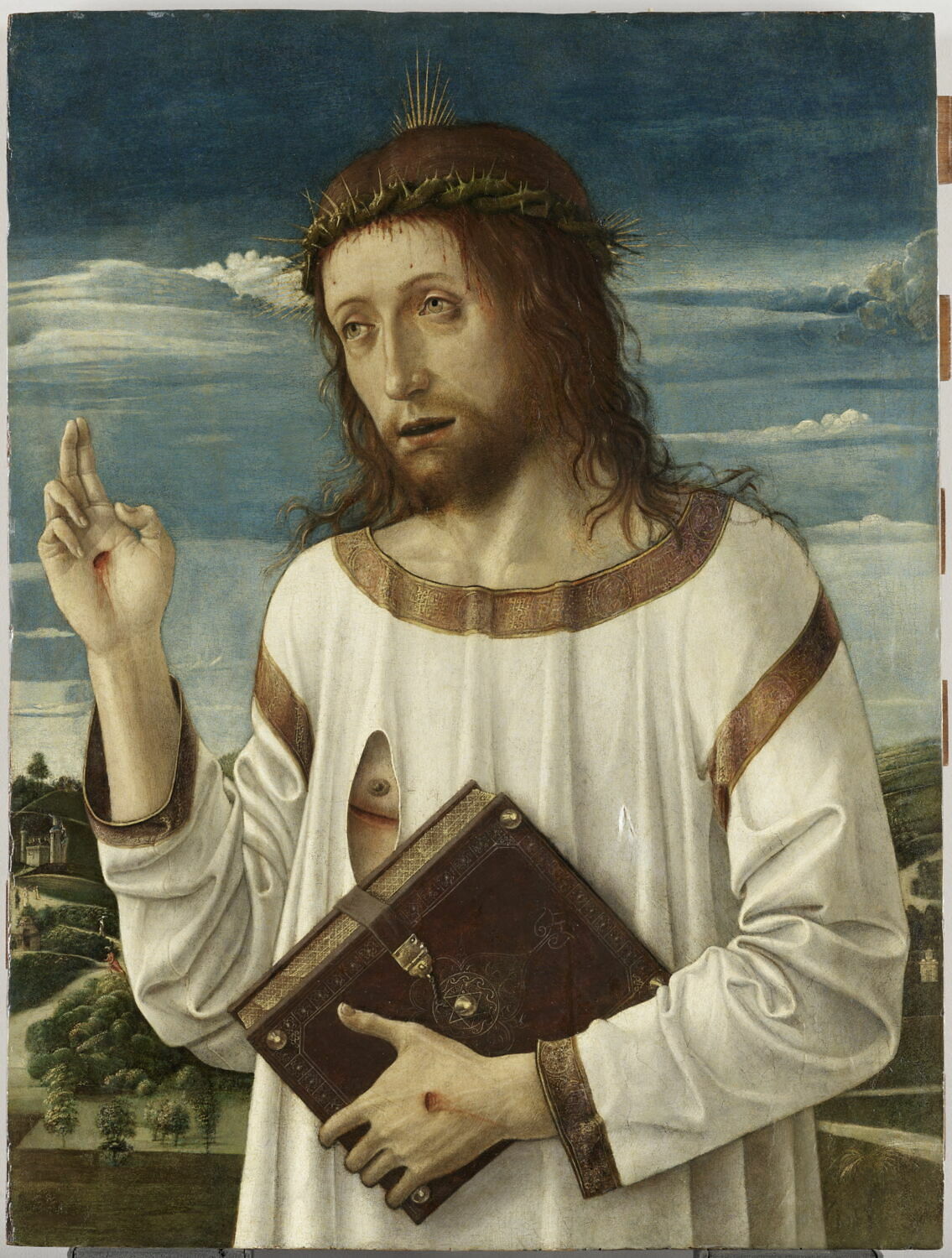
Le Christ rédempteur bénissant, Bellini, Giovanni, 3e quart du XVe siècle (1450 - 1475)

Le Christ rédempteur bénissant

3e quart du XVe siècle (1450 - 1475) · Louvre

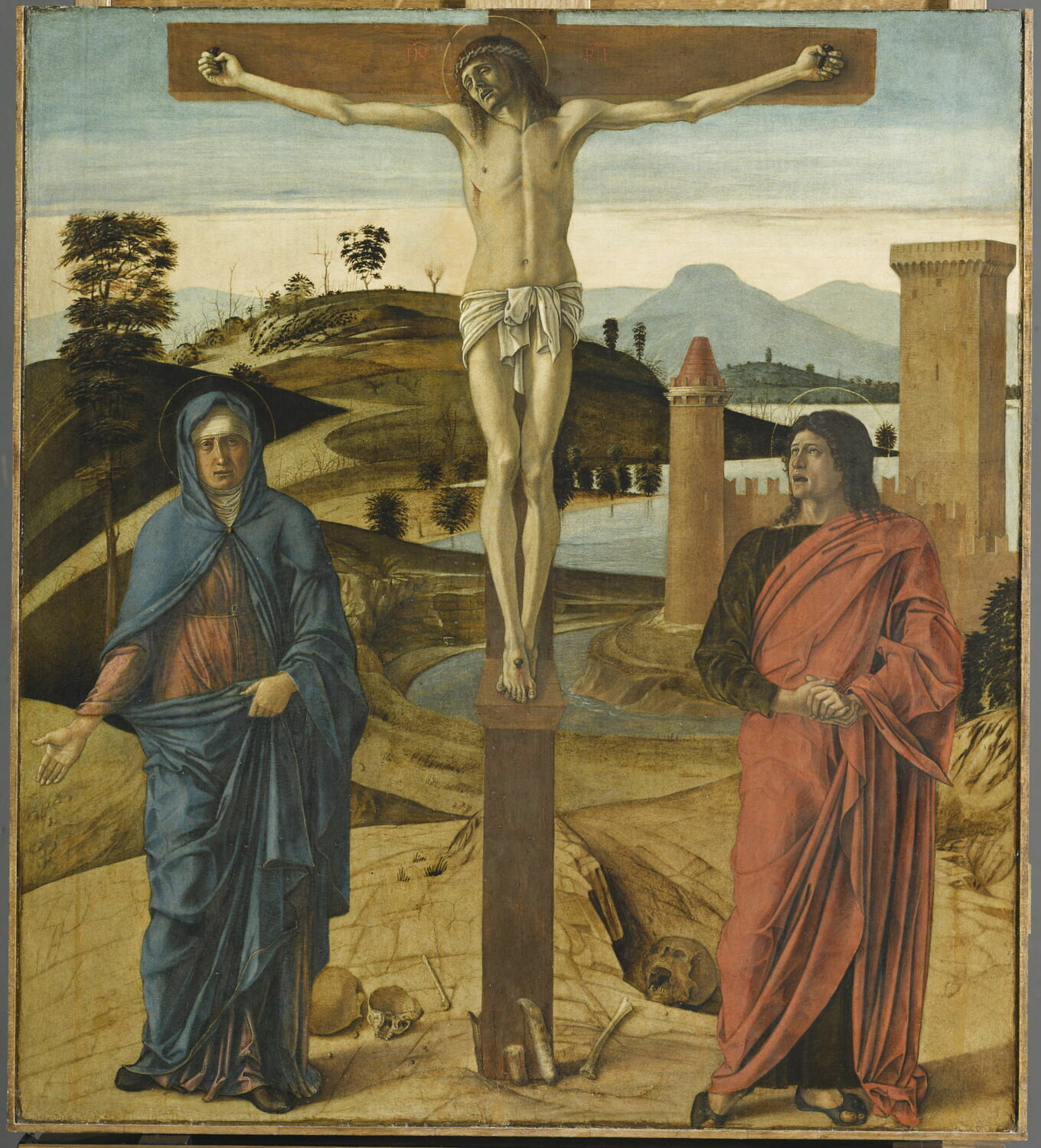
Le Calvaire, Bellini, Giovanni, 3e quart du XVe siècle (1450 - 1475)

Le Calvaire

3e quart du XVe siècle (1450 - 1475) · Louvre

Giovanni Emo, Attributed to Giovanni Bellini, c. 1475/1480

Giovanni Emo

c. 1475/1480 · National Gallery of Art

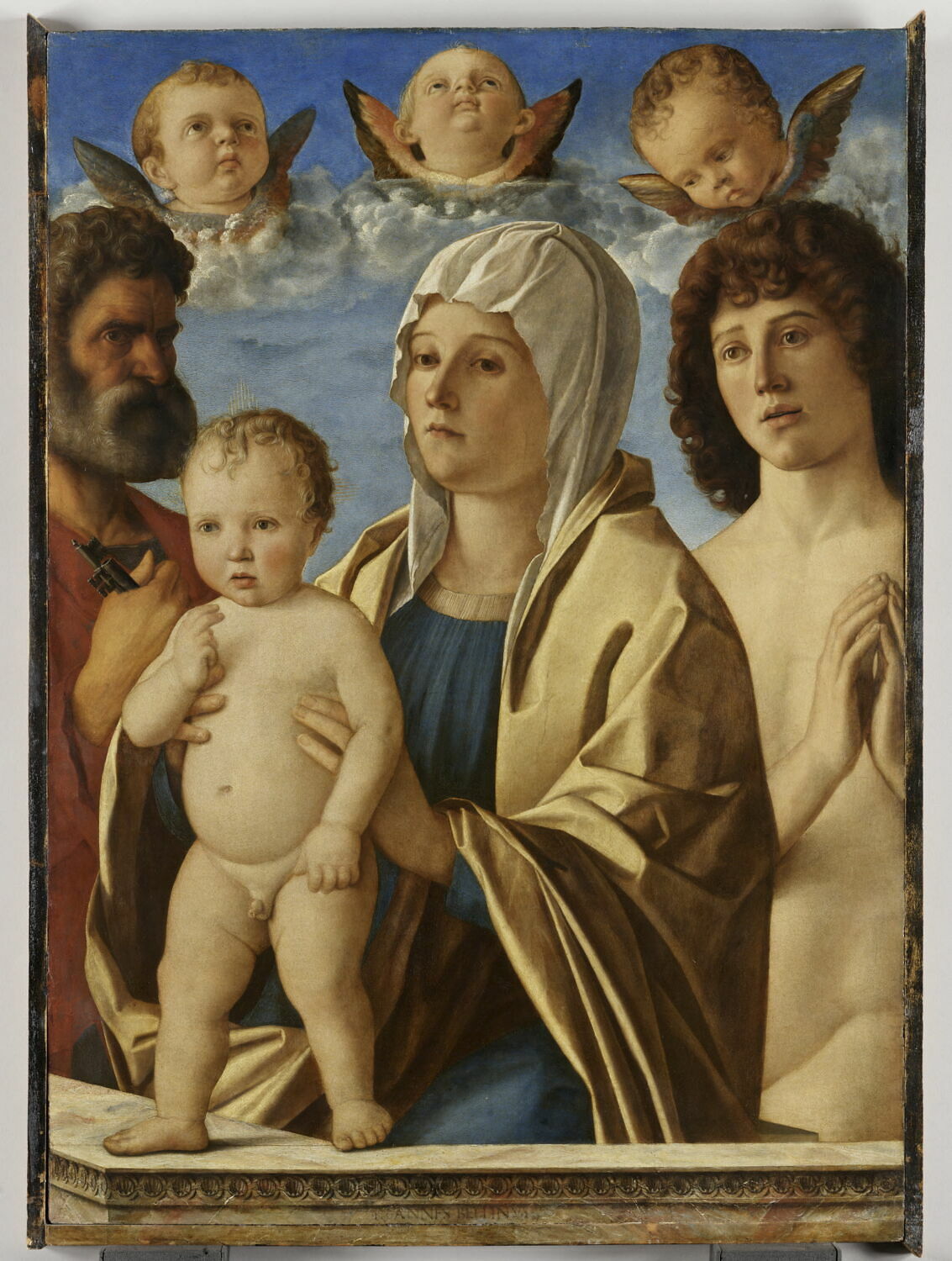
La Vierge et l'Enfant entre saint Pierre et saint Sébastien, Bellini, Giovanni, 4e quart du XVe siècle (1475 - 1500)

La Vierge et l'Enfant entre saint Pierre et saint Sébastien

4e quart du XVe siècle (1475 - 1500) · Louvre

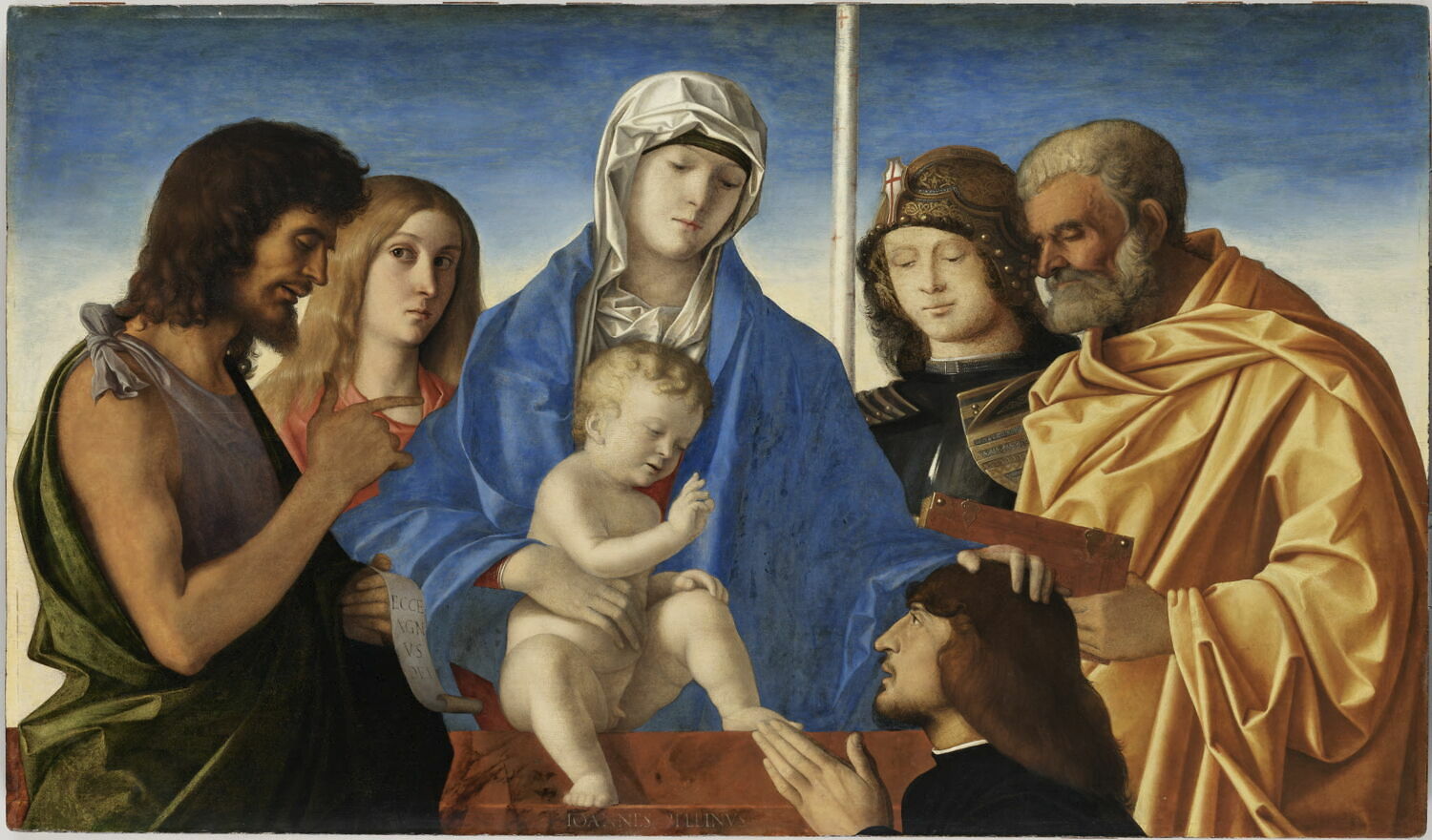
La Vierge et l'Enfant entourés de saint Jean Baptiste, sainte Marie-Madeleine, saint Georges, saint Pierre et un donateur, Bellini, Giovanni, 4e quart du XVe siècle (1475 - 1500)

La Vierge et l'Enfant entourés de saint Jean Baptiste, sainte Marie-Madeleine, saint Georges, saint Pierre et un donateur

4e quart du XVe siècle (1475 - 1500) · Louvre

Madonna and Child, Giovanni Bellini, c. 1480/1485

Madonna and Child

c. 1480/1485 · National Gallery of Art

Buren in huis: National Gallery of Art

Museumpagina
Ginevra de' Benci [obverse], Leonardo da Vinci, c. 1474/1478

Leonardo da Vinci

Portret van Ginevra de' Benci, c. 1474/1478

Wreath of Laurel, Palm, and Juniper with a Scroll inscribed Virtutem Forma Decorat [reverse], Leonardo da Vinci, c. 1474/1478

Leonardo da Vinci

Wreath of Laurel, Palm, and Juniper with a Scroll inscribed Virtutem Forma Decorat [reverse], c. 1474/1478

Green Wheat Fields, Auvers, Vincent van Gogh, 1890

Vincent van Gogh

Green Wheat Fields, Auvers, 1890

Girl in White, Vincent van Gogh, 1890

Vincent van Gogh

Meisje in Wit, 1890

Roses, Vincent van Gogh, 1890

Vincent van Gogh

Roses, 1890

Self-Portrait, Vincent van Gogh, 1889

Vincent van Gogh

Self-Portrait, 1889

Farmhouse in Provence, Vincent van Gogh, 1888

Vincent van Gogh

Boerderij in de Provence, 1888

La Mousmé, Vincent van Gogh, 1888

Vincent van Gogh

La Mousmé, 1888