Édouard ManetFrankrijk, 1832–1883
The Funeral
Mag men het zien?
Ja, het ontvangt bezoek

New York, Verenigde Staten
Publiek tentoongesteld.
- Gecontroleerd
- Ongewijzigd sinds
- Bron
- Het museum
Over het schilderij
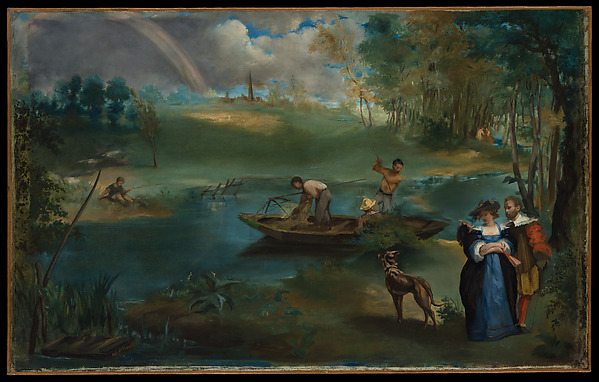
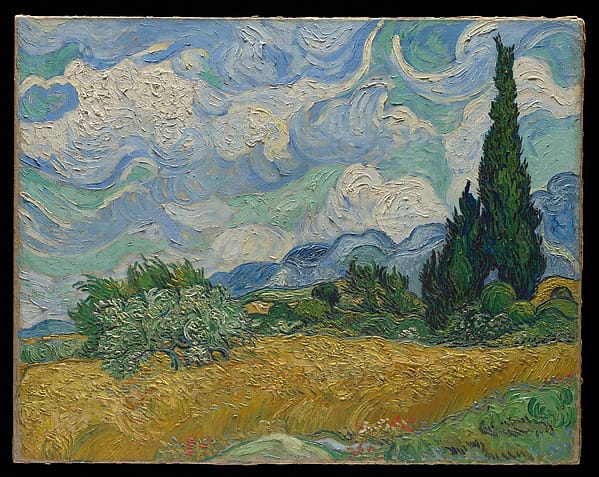
De begrafenis (Frans: L'enterrement) is de titel van een schilderij van Édouard Manet. Hij schilderde het waarschijnlijk omstreeks 1867 na de begrafenis van de dichter Charles Baudelaire. Het schilderij bleef onvoltooid. Tegenwoordig maakt het deel uit van de collectie van het Metropolitan Museum of Art in New York.
Gegevens
- Inventarisnummer
- 10.36
Wat het toont
In de catalogus
Bronnen
- Metropolitan Museum of Art
- Afbeelding: Metropolitan Museum of Art — Open Access (CC0)
Intussen, in het leven van Édouard Manet
Het hele leven1865
“Olympia” at the Salon: a scandal
In 1865 the Salon accepted “Olympia”, and the frank depiction of a self-assured prostitute created a scandal; according to Antonin Proust, only the precautions taken by the administration prevented the painting from being punctured and torn. The popular press caricatured it, while the avant-garde, including Courbet, Cézanne and Monet, championed it.
after 1865
Café Guerbois and the Batignolles group
After returning from Spain Manet became a regular at the Café Guerbois in the Batignolles quarter, where Fantin-Latour, Whistler, Duranty, Degas, Renoir, Monet and Pissarro gathered, with Émile Zola as Manet's ardent defender. After harsh reproaches from Duranty, Manet challenged him to a duel and wounded him, but they made up and remained good friends until Manet's death.
1865
Flight to Spain: El Greco, Velázquez, Goya
The persecution after “Olympia” forced Manet to flee, almost literally, to Spain, where he spent his time to good purpose, getting to know the works of El Greco, Velázquez and Goya and finding in them a justification of his own aesthetic taste.
1867
His own pavilion near the Pont de l'Alma
In 1867, during the World's Fair in Paris, Manet set up his own pavilion near the Pont de l'Alma and showed fifty of his best works of the past ten years. Possibly this step led to his works being accepted at the next two Salons.
1867
Zola defends Manet in print
In 1867 Émile Zola, who supported Manet publicly in the press, wrote that the public was not accustomed to such simple and direct translations of reality and that this luminous and serious painting interprets nature with a gentle brutality.
1868
Friendship with Berthe Morisot
In 1868 Manet became a friend and colleague of Berthe Morisot; she is credited with convincing him to attempt plein air painting, to which Camille Corot had introduced her. Through Morisot, Manet became friends with Degas, Monet, Renoir, Sisley, Cézanne and Pissarro.