Käthe KollwitzDuitsland, 1867–1945
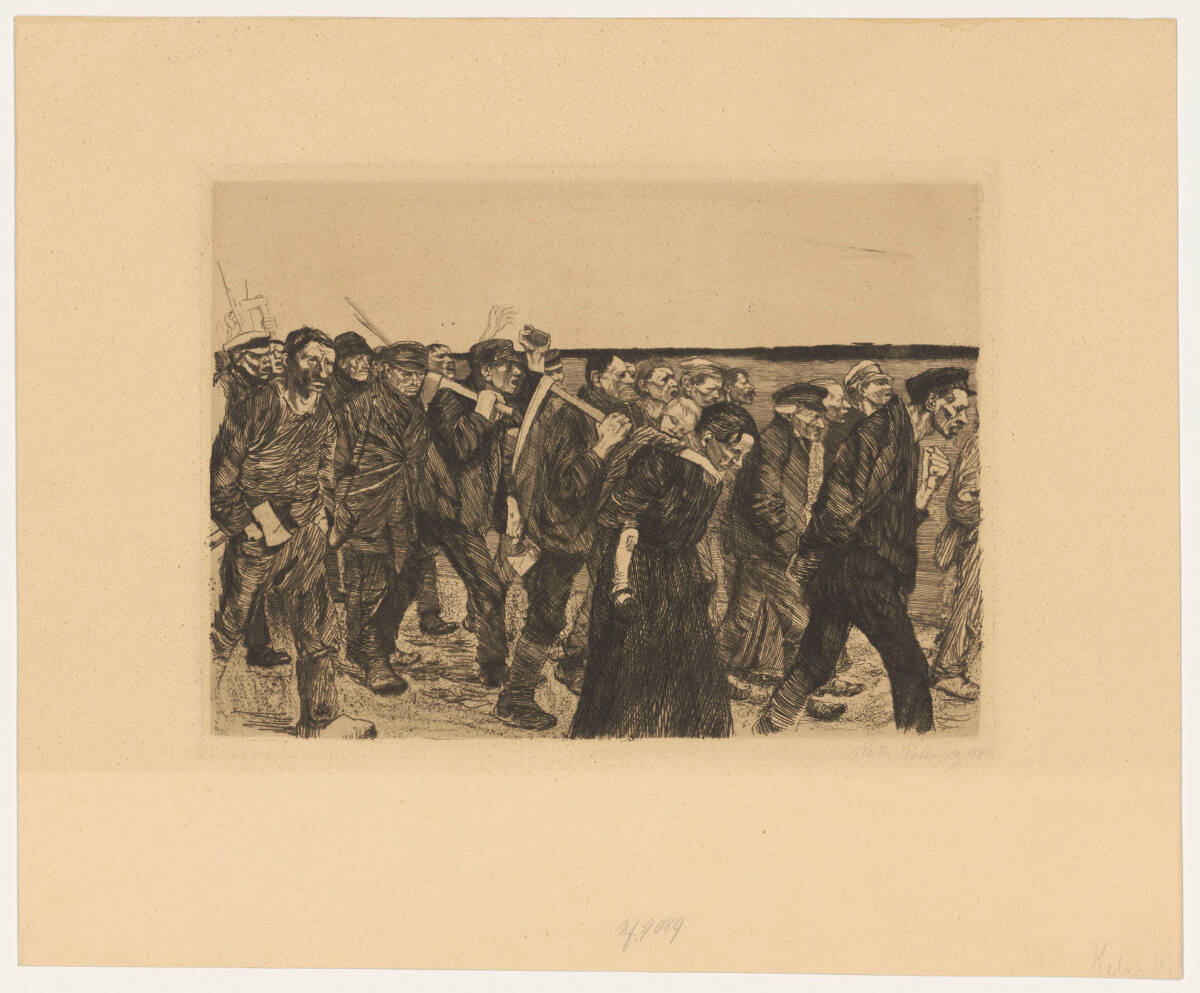
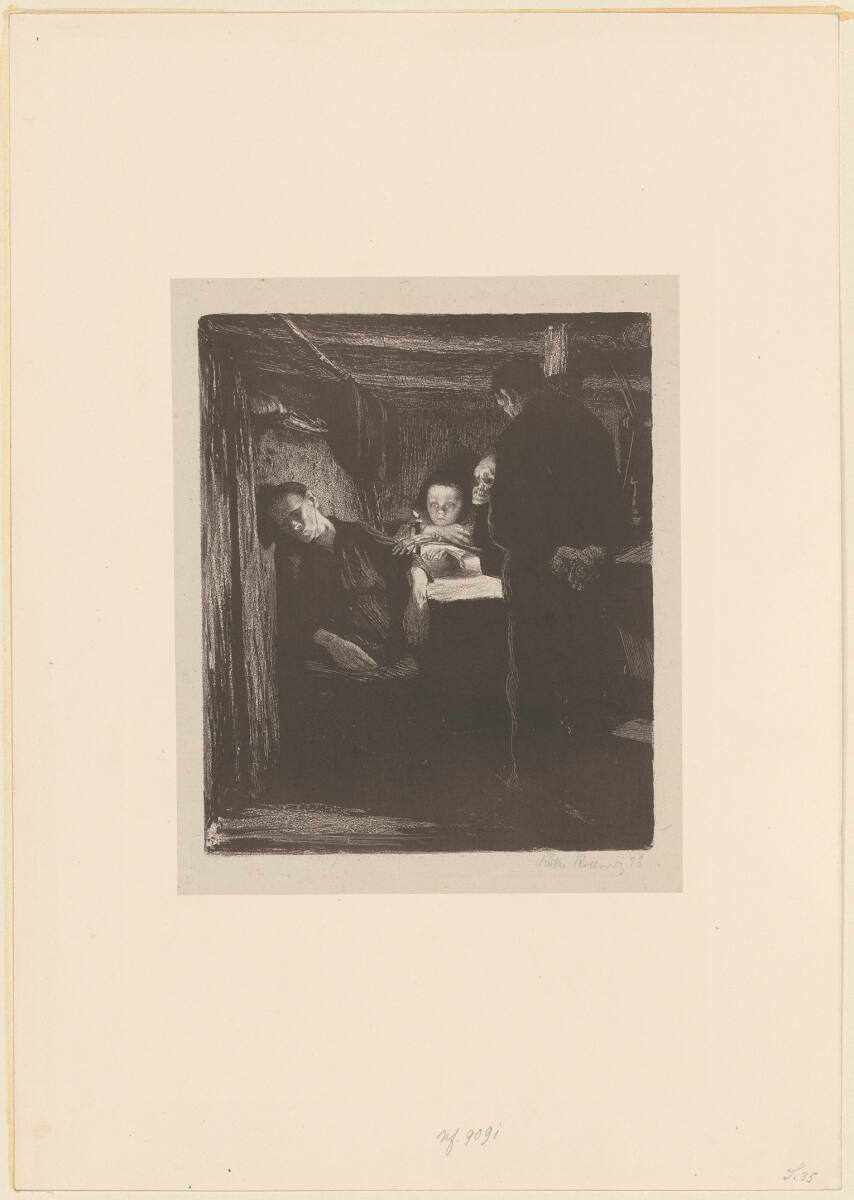
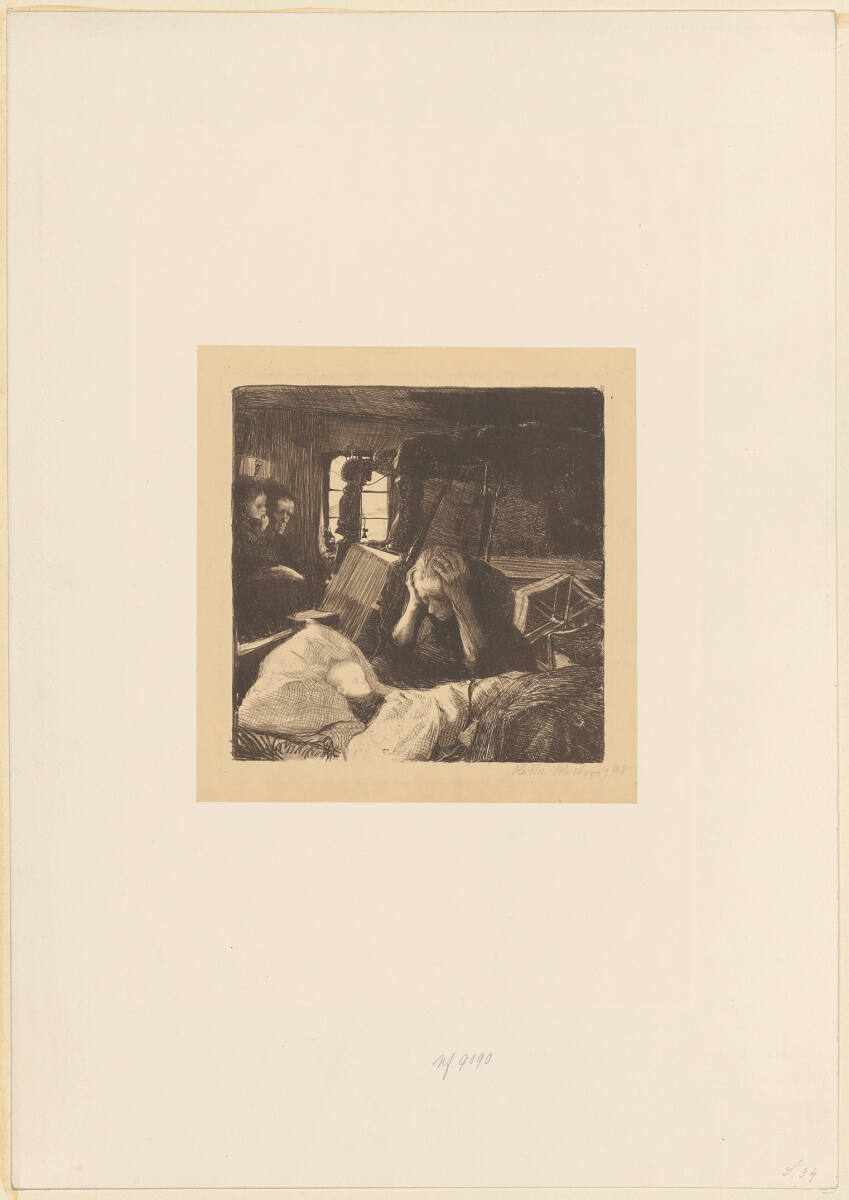
The End (Ende)
Mag men het zien?
Ontvangt momenteel niet

Washington D.C., Verenigde Staten
Het hoort bij de collectie, maar is momenteel niet tentoongesteld.
- Gecontroleerd
- Ongewijzigd sinds
- Bron
- Het museum
Gegevens
- Inventarisnummer
- 1943.3.5307
Wat het toont
In de catalogus
Bronnen
- National Gallery of Art
- Afbeelding: National Gallery of Art — Museum open access
Intussen, in het leven van Käthe Kollwitz
Het hele leven1892–1896
Hauptmann’s “The Weavers” inspires a new cycle
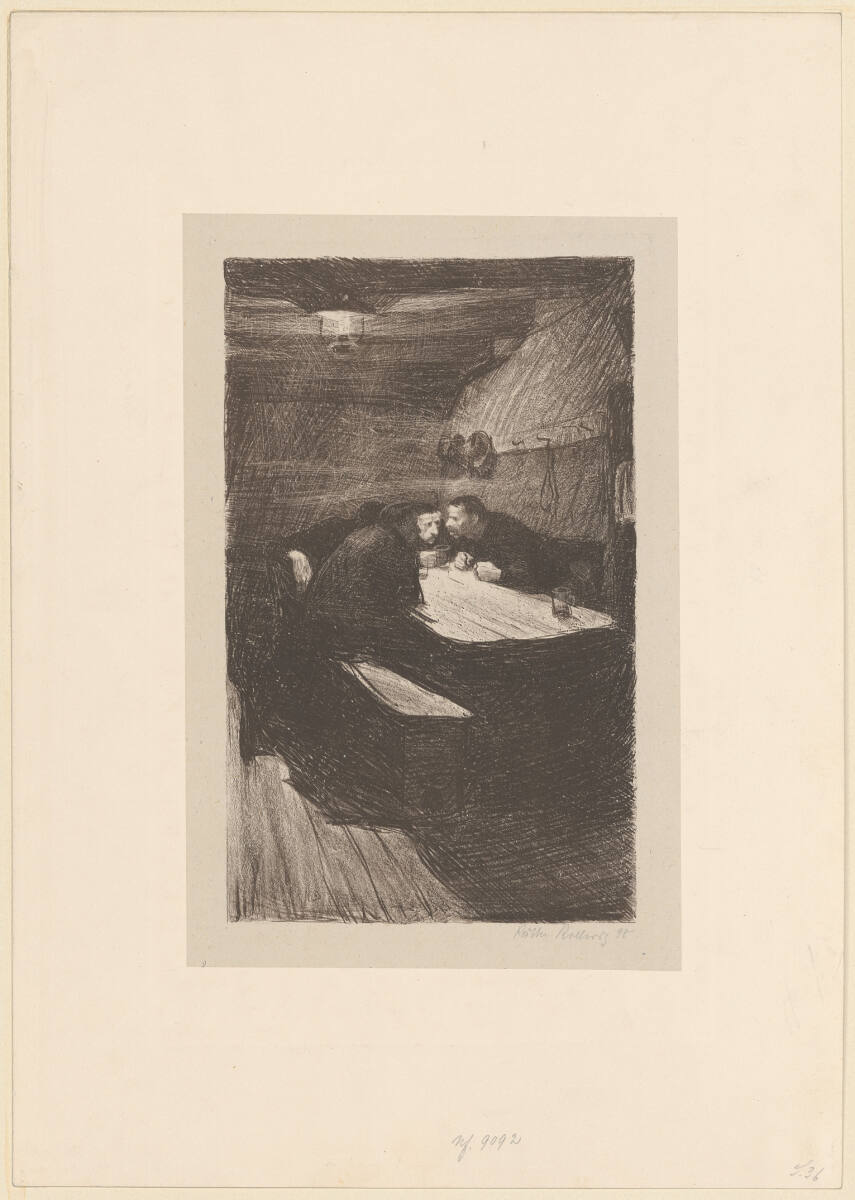
Between the births of her sons Hans and Peter she saw Gerhart Hauptmann’s play The Weavers, about the failed revolt of the Silesian weavers in Langenbielau in 1844. It inspired her to drop a series of etchings she had planned to illustrate Émile Zola’s Germinal and to produce a cycle on the weavers instead.
1896
Birth of her son Peter
In 1896 her younger son, Peter, was born; he was killed at the front in 1914.
6 februari 1896
Son born: Peter Kollwitz
1898
“The Weavers” at the Great Berlin Art Exhibition
In 1898 the cycle was shown publicly at the Great Berlin Art Exhibition and was widely acclaimed.
1898
The Kaiser refuses a gold medal to a woman
Adolph Menzel nominated her work for the gold medal of the 1898 Great Berlin Art Exhibition, but Kaiser Wilhelm II withheld his approval, saying that a medal for a woman would be going too far and that orders and medals belonged on the breasts of worthy men.
1898–1903
Teaches at the Women’s Art School
From 1898 to 1903 she taught at the Women’s Art School in Berlin.


![Ginevra de' Benci [obverse], Leonardo da Vinci, c. 1474/1478](https://api.nga.gov/iiif/8f29e3c9-a289-4d53-abf0-31a66e9e98fa/full/!2400,2400/0/default.jpg)
![Wreath of Laurel, Palm, and Juniper with a Scroll inscribed Virtutem Forma Decorat [reverse], Leonardo da Vinci, c. 1474/1478](https://api.nga.gov/iiif/ff62e8d0-45c4-498f-ad36-6358de827e04/full/!2400,2400/0/default.jpg)