 John Singleton CopleyVerenigde Staten, 1738–1815
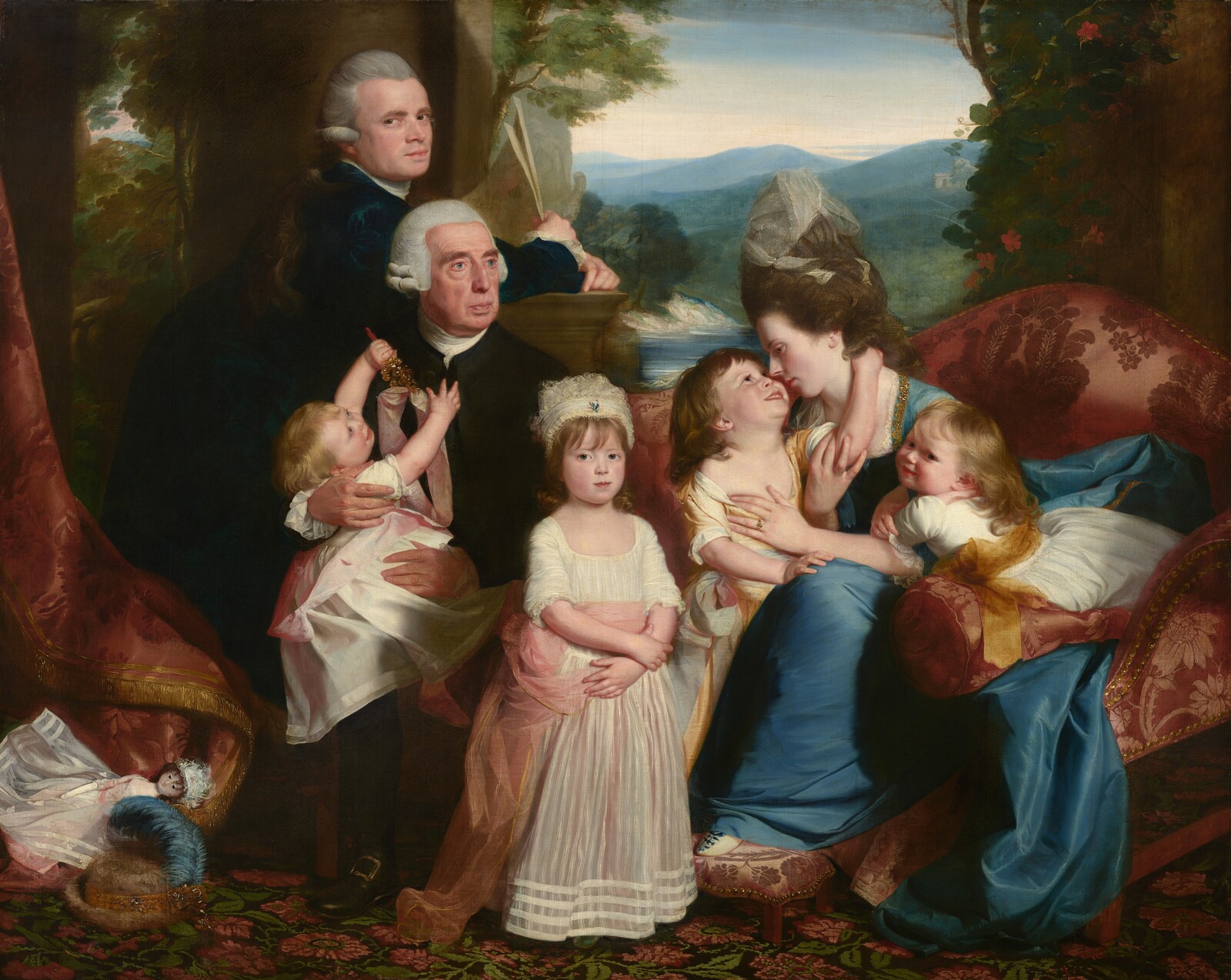
The Copley Family
Kan ik het zien?
Ja, nu te zien
Waar is „The Copley Family” nu? National Gallery of Art, Zaal 59 · Westgebouw, hoofdverdieping, Washington D.C. Ja, nu te zien. Gecontroleerd 29 september 2026.

Sluit binnenkort· tot 17:00
Publiek tentoongesteld.
- Gecontroleerd
- Ongewijzigd sinds
- Bron
- Het museum
Over het schilderij
The Copley Family is a 1777 oil on canvas portrait painting by the American artist John Singleton Copley. A group portrait, it features a self-portrait of the artist with his wife Susanna and children and his father-in-law Richard Clarke, an Loyalist merchant.
The Boston-born Copley settled in Britain shortly after the outbreak of the American War of Independence. He became known for his large modern history paintings such as The Death of Lord Chatham, The Death of Major Pierson and The Defeat of the Floating Batteries at Gibraltar.
The work was displayed at the Royal Academy's Summer Exhibition of 1777 at Pall Mall in London. Today the painting is in the National Gallery of Art in Washington, having once belonged to the artist's son Lord Lyndhurst, a British lawyer and politician and one of the sitters in the painting.
Gegevens
- Inventarisnummer
- 1961.7.1
Wat het toont
In de catalogus
Bronnen
- National Gallery of Art
- Afbeelding: National Gallery of Art — Museum open access
In het leven van John Singleton Copley
Het hele leven1753–1774 · Werkzaam in
Boston
1774
A mob at Copley’s house looks for the Loyalist Watson
A mob comes to Copley’s house demanding Col. George Watson, a Loyalist mandamus counsellor who had gone elsewhere; the patriots threaten to have Copley’s blood if he ever again shelters such a villain. In a letter of 26 April he is appalled: had Watson stayed the night, as he had pressed him to, he would have had to give up a friend to the insult of a mob or have his house pulled down and perhaps his family murdered.
1774
Sails from Boston for London
Amid growing unrest on the eve of the War of Independence, and urged on by correspondents in England, Copley sails with many letters of introduction, leaving his mother, wife and children in Henry Pelham’s charge. He never returns to America.
July – August 1774
London: West, Reynolds and the Royal Academy
On 11 July Copley writes from London after an easy passage; among his first calls is on West, in whose friendship he finds the qualities of both an artist and a gentleman. He is introduced to Sir Joshua Reynolds and taken to the Royal Academy, where students are drawing from a nude model; he takes no sitters yet, though urged to.
2 September 1774
Paris: the start of the European tour
Copley records his arrival in Paris, the beginning of his tour of Europe, where he sees and painstakingly describes many paintings and sculptures. He travels toward Rome with the artist George Carter, who kept a detailed journal and set down every trifle that told against the American.
1774–1815 · Werkzaam in
London






![Sheet of Studies [recto], Leonardo da Vinci, probably 1470/1480](https://api.nga.gov/iiif/49c325bf-6243-46eb-8215-f8830fd15641/full/!2400,2400/0/default.jpg)