 Auguste RodinFrankrijk, 1840–1917
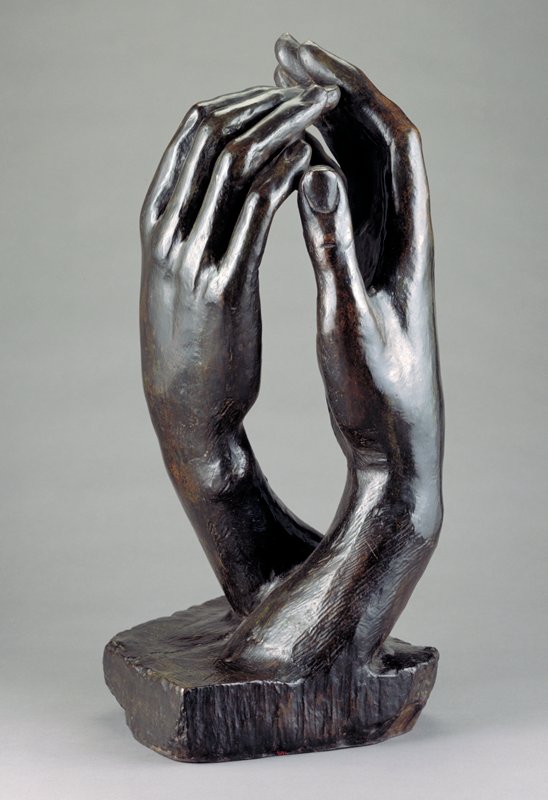
The Cathedral
Mag men het zien?
Ontvangt momenteel niet

Minneapolis Institute of Art
Minneapolis, Verenigde Staten
Het hoort bij de collectie, maar is momenteel niet tentoongesteld.
- Gecontroleerd
- Ongewijzigd sinds
- Bron
- De eigen collectiegegevens van het museum
About the sculpture
Throughout his career, Rodin created sculptures of the fragmented human body. He had an extraordinary ability to employ the power of gesture to convey deep emotions and used his skill to express these gestures in sculpture. Rodin had a lifelong fascination with cathedrals, and the shape of the converging hands here alludes to the pointed arches of a Gothic church. Besides expressing calmness, faith and protection, it is interesting that the linked hands presumably come from different bodies.
Minneapolis Institute of Art
Gegevens
- Inventarisnummer
- 91.149
In de catalogus
Bronnen
- Minneapolis Institute of Art: the museum's own open data · opgehaald 7 dagen geleden
- Afbeelding: Minneapolis Institute of Art — public domain
Intussen, in het leven van Auguste Rodin
Het hele leven1890s–1900s
Young sculptors in Rodin's studio
His income let him hire gifted young sculptors, among them Antoine Bourdelle, Charles Despiau, Jules Desbois, François Pompon and Aristide Maillol. Constantin Brancusi left after two months, convinced that nothing grows under a big tree.
1900s
Portraits of the famous and the rich
Rodin began to receive regular commissions for portraits; his clients included Bernard Shaw, Gustav Mahler, Georges Clemenceau, the Argentine president Sarmiento, the chemist Berthelot and the philanthropist Bertha Palmer. Clemenceau was displeased: he thought the portrait looked like a “Mongol general”.
1905–1906
Rilke as Rodin's secretary
In 1905–1906 the sculptor's private secretary was the German poet Rainer Maria Rilke, who later wrote an admiring monograph on Rodin.
1906 · Onderscheiding
honorary doctorate of the University of Glasgow
1907 · Onderscheiding
Honorary doctor of the University of Oxford
1908
Moves into the Hôtel Biron
Rilke invited Rodin to the eighteenth-century mansion where he rented rooms; Rodin liked it so much that he took the ground floor, moved his studio there and lived there for his last years.