ART WIKI33.040 te zien
KaartCollectieKunstenaarsMuseaTentoonstellingenJournal
Inloggen

ART WIKI

Waar het meesterwerk hangt en wanneer men u toelaat.

Collecties: Art Institute of Chicago, Cleveland Museum of Art, Getty Villa, Harvard Art Museums, Hermitage, Hirshhorn Museum and Sculpture Garden, J. Paul Getty Museum, Louvre, Metropolitan Museum of Art, Minneapolis Institute of Art, Museum of Modern Art, National Gallery of Art, National Museum of Asian Art, National Portrait Gallery, Poesjkinmuseum, Rijksmuseum Amsterdam, Russisch Museum, Smithsonian American Art Museum, Statens Museum for Kunst, Tretjakovgalerij, Victoria and Albert Museum, Whitney Museum of American Art, Staatscatalogus van het Russische museumfonds (274 musea), Europeana (19 musea), Wikidata (6 musea), Paris Musées (12 musea) en Joconde, de museumdatabank van het Franse ministerie van Cultuur (495 musea). De afbeeldingen behoren toe aan hun rechthebbenden.

Rubrieken

  • Kaart
  • Zoeken
  • Collectie
  • Meesterwerken
  • Nu te zien
  • Kunstenaars

Meer

  • Musea & galerieën
  • Tentoonstellingen
  • Journal
  • Waar de gegevens vandaan komen
  • Privacy & cookies
StartpaginaKaartCatalogus
  1. Collectie/
  2. Musée d'Orsay/
  3. Het balkon
Het balkon, Édouard Manet, 1868
Édouard Manet, portretÉdouard ManetFrankrijk, 1832–1883

Het balkon

The Balcony

1868 · Painting · 170 × 124.5 cm

MeesterwerkNr. 65van de honderd beroemdste schilderijen ter wereld

Mag men het zien?

Onbekend

Musée d'Orsay

Parijs, Frankrijk

De eigenaar is bekend; of het werk nu te zien is, is onbekend.

Ongewijzigd sinds
29 sep 2026
Bron
Het museum
Op de kaartMuseumpagina

Over het schilderij

Het balkon (Frans: Le Balcon) is een schilderij van Édouard Manet. Het werk stamt uit 1868-69 en laat twee personen op een balkon zien: de schilderes Berthe Morisot en de violiste Fanny Claus, met de schilder Antoine Guillemet op de achtergrond. Op de Parijse salon van 1869 werd het werk voor het eerst tentoongesteld. Het schilderij maakt sinds 1986 deel uit van de collectie van het Musée d'Orsay.

Wikipedia · CC BY-SA

Gegevens

1868 · op 36-jarige leeftijd
18321883
Inventarisnummer
RF 2772

In de catalogus

SchilderijenFranse schilderkunstRealismeImpressionisme19e eeuw

Bronnen

  • Wikidata
  • Afbeelding: Musée d'Orsay — Édouard Manet · Public domain · Wikimedia Commons

Intussen, in het leven van Édouard Manet

Het hele leven
  1. 1867

    His own pavilion near the Pont de l'Alma

    In 1867, during the World's Fair in Paris, Manet set up his own pavilion near the Pont de l'Alma and showed fifty of his best works of the past ten years. Possibly this step led to his works being accepted at the next two Salons.

  2. 1867

    Zola defends Manet in print

    In 1867 Émile Zola, who supported Manet publicly in the press, wrote that the public was not accustomed to such simple and direct translations of reality and that this luminous and serious painting interprets nature with a gentle brutality.

  3. 1867

    First contacts with the future Impressionists

    When Manet was excluded from the International Exhibition of 1867 he set up his own; it was enormously expensive, his mother worried he would waste his inheritance, and it earned poor reviews from the major critics, but it provided his first contacts with several future Impressionist painters, including Degas.

  4. 1868

    Friendship with Berthe Morisot

    In 1868 Manet became a friend and colleague of Berthe Morisot; she is credited with convincing him to attempt plein air painting, to which Camille Corot had introduced her. Through Morisot, Manet became friends with Degas, Monet, Renoir, Sisley, Cézanne and Pissarro.

  5. 1870

    The siege of Paris: Manet in the army

    During the siege of Paris Manet, a convinced republican, sent his family to Oloron-Sainte-Marie in the south of France, while he himself, with many fellow artists, joined the army and took part in the defence of the capital; he was lucky to survive.

  6. 1870s

    Refuses to exhibit with the Impressionists

    Although his own work influenced and anticipated the Impressionist style, Manet resisted involvement in Impressionist exhibitions: he did not wish to be seen as the representative of a group identity and held that modern artists should seek to exhibit at the Salon.

Meer van Édouard Manet

Alle werken
The Spanish Singer, Edouard Manet, 1860

De Spaanse zanger

1860 · Metropolitan Museum of Art

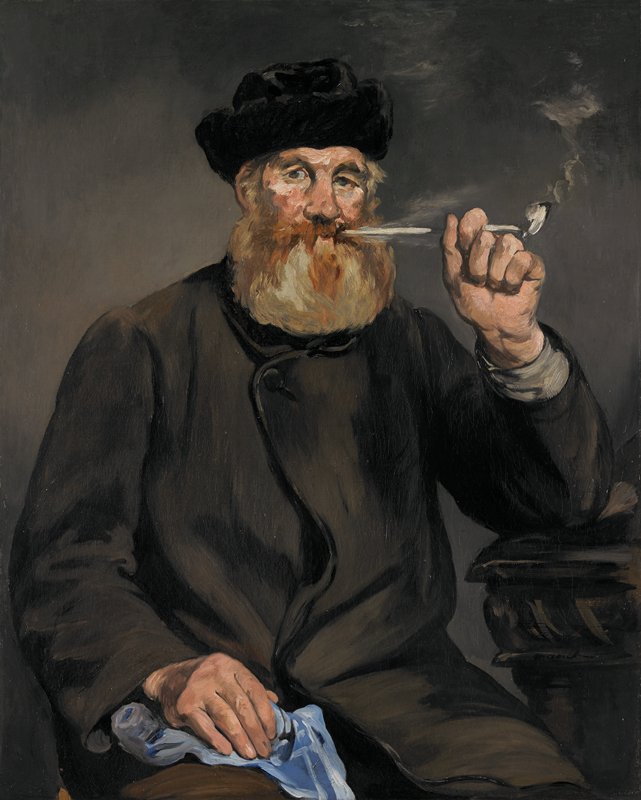
The Smoker, Édouard Manet, 1866

The Smoker

1866 · Minneapolis Institute of Art

Young Lady in 1866, Edouard Manet, 1866

Young Lady in 1866

1866 · Metropolitan Museum of Art

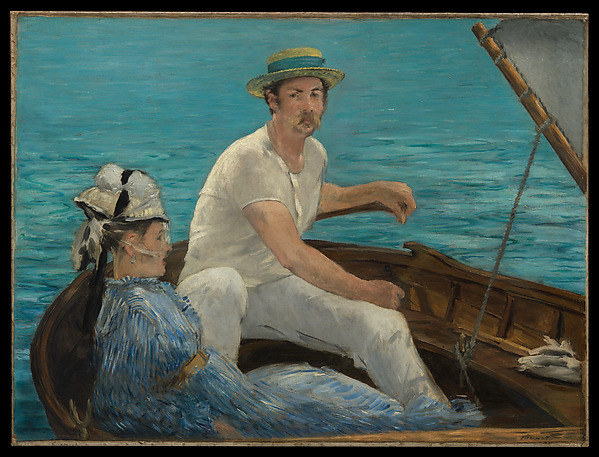
Boating, Edouard Manet, 1874

Boating

1874 · Metropolitan Museum of Art

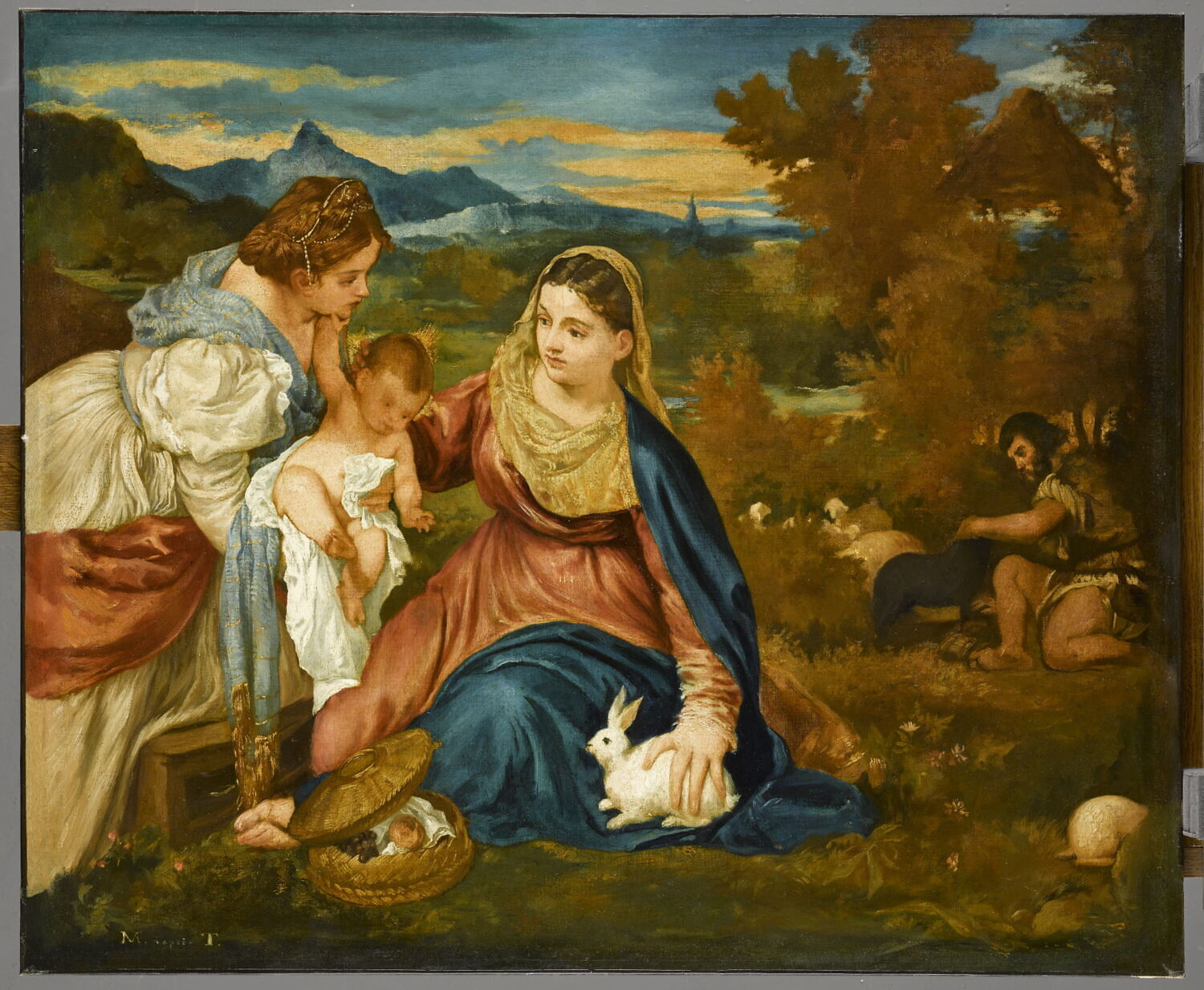
La Vierge au lapin, Manet, Édouard, Milieu du XIXe siècle (1840 - 1860)

La Vierge au lapin

Milieu du XIXe siècle (1840 - 1860) · Louvre

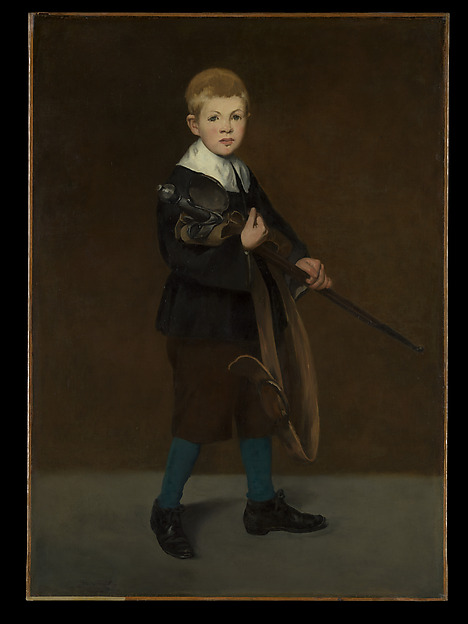
Boy with a Sword, Edouard Manet, 1861

Jongen met zwaard

1861 · Metropolitan Museum of Art

Portrait of Madame Brunet, Édouard Manet, about 1861–1863, reworked by 1867

Portrait of Madame Brunet

about 1861–1863, reworked by 1867 · J. Paul Getty Museum

The Old Musician, Edouard Manet, 1862

De oude muzikant

1862 · National Gallery of Art

Uit de collectie: Musée d'Orsay

Museumpagina
Still Life: Japanese Vase with Roses and Anemones, Vincent van Gogh, 1890

Vincent van Gogh

Still Life: Japanese Vase with Roses and Anemones, 1890

Chaumes de Cordeville, Vincent van Gogh, 1890

Vincent van Gogh

Chaumes de Cordeville, 1890

Doctor Gachet's Garden in Auvers, Vincent van Gogh, 1890

Vincent van Gogh

Doctor Gachet's Garden in Auvers, 1890

Two Children, Vincent van Gogh, 1890

Vincent van Gogh

Two Children, 1890

The siesta (after Millet), Vincent van Gogh, 1890

Vincent van Gogh

The siesta (after Millet), 1890

Marguerite Gachet in the Garden, Vincent van Gogh, 1890

Vincent van Gogh

Marguerite Gachet in the Garden, 1890

The Church at Auvers, Vincent van Gogh, 1890

Vincent van Gogh

De kerk van Auvers, 1890

Portrait of Dr. Gachet, Vincent van Gogh, 1890

Vincent van Gogh

Portrait of Dr. Gachet, 1890