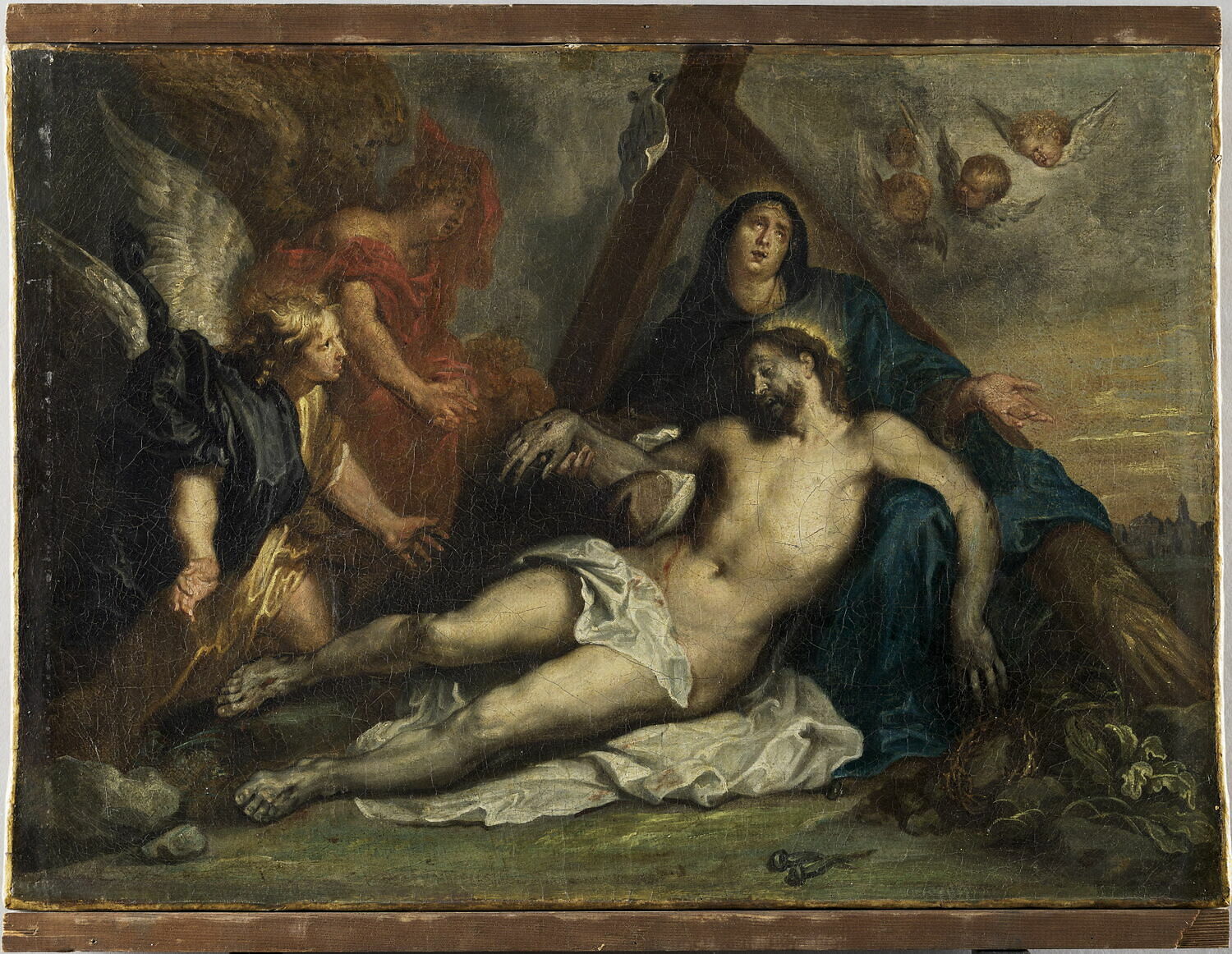
Anthony van DyckVlaanderen, 1599–1641
The Balbi Children
Kan ik het zien?
Onbekend
Waar is „The Balbi Children” nu? Collectie: National Gallery, Londen. Onbekend.

Londen, Verenigd Koninkrijk
De eigenaar is bekend; of het werk nu te zien is, is onbekend.
- Ongewijzigd sinds
- Bron
- Het museum
Gegevens
- Inventarisnummer
- NG6502
In de catalogus
Bronnen
- Wikidata
- Afbeelding: National Gallery — Anthony van Dyck · Public domain · Wikimedia Commons
In het leven van Anthony van Dyck
Het hele leven1620
First Trip to London to the Court of James I
In October 1620, at the age of twenty-one, Van Dyck moved to London to the court of King James I at the urging of the Duke of Buckingham and the Earl of Arundel; he received an annual pension of one hundred pounds sterling from the king.
20 November 1621
Departure for Italy, Arrival in Genoa
In 1621 Van Dyck decided to go to Italy; Rubens supplied him with funds and letters of introduction. On 20 November 1621 he arrived in Genoa and remained in Italy for six years, where his fame as a portraitist was consolidated.
1624
Quarantine During the Plague in Palermo
In Palermo Van Dyck found himself in quarantine during the plague of 1624, one of the most severe in Sicily's history; there he created an important series of paintings of Saint Rosalia, the city's patroness, establishing her iconography for the Italian Baroque.
1624
Invitation to Palermo
In April 1624 Emmanuel Philibert of Savoy, Viceroy of Sicily, invited Van Dyck to Palermo to paint his portrait.
1626–1632
The Iconography Print Series
After returning to Antwerp, Van Dyck conceived a large series of engraved portraits of his contemporaries, the Iconography; he etched eighteen plates himself, executing the preparatory drawings mainly between 1626 and 1633. The first edition (80 plates) appeared in Antwerp in 1632.
1627
Return to Antwerp
In 1627 Van Dyck returned from Italy to Antwerp, where he remained for five years, creating portraits of the Flemish nobility and large altarpieces, and beginning to work in printmaking.