 André DerainFrankrijk, 1880–1954
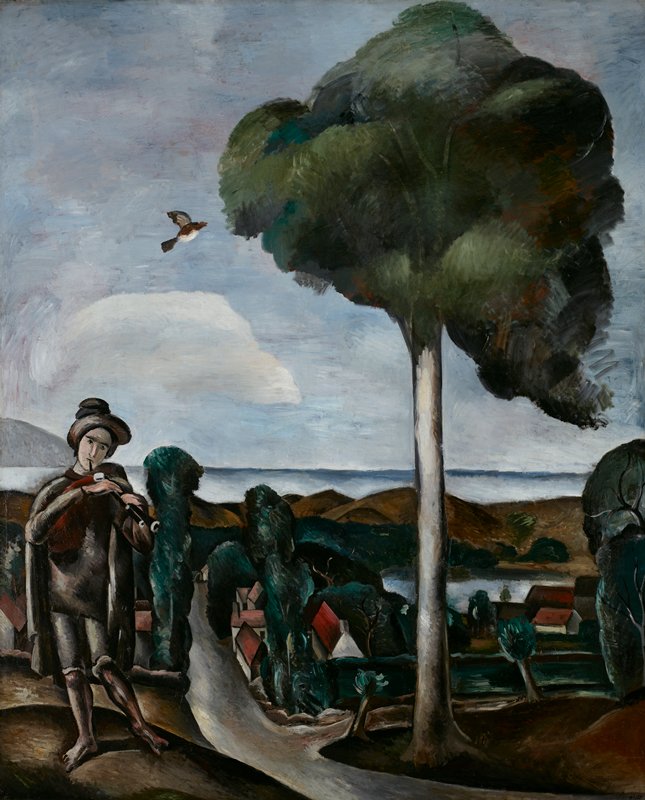
The Bagpiper
Kan ik het zien?
Ja, nu te zien
Waar is „The Bagpiper” nu? Minneapolis Institute of Art, G371, Minneapolis. Ja, nu te zien. Gecontroleerd 16 november 2026.

Minneapolis, Verenigde Staten
Gesloten· gaat open om 10:00
Publiek tentoongesteld.
- Gecontroleerd
- Ongewijzigd sinds
- Bron
- Het museum
Over het schilderij
André Derain painted The Bagpiper in 1910–11; it is in the Minneapolis Institute of Art, Minneapolis. Colour, handling and composition owe much to Cézanne, while the pastoral subject recalls Titian and Claude Lorrain's scenes with shepherds and musicians. Derain had grown dissatisfied with Fauvism and Cubism, feeling that technical concerns displaced subject matter. His turn towards older painting helped shape this lyrical, romantic work, which became widely known before the war. Its large format continues that older tradition. The painting is exhibited in gallery G371.
In de woorden van het museum
Although Derain had helped found Fauvism and had been an early adherent of Cubism, he increasingly fell away from both aesthetics, feeling their obsession with technique had supplanted the content of their work. Derain, instead, began to turn toward the Old Masters, even as he kept pace with the spirit of his own time. Thus, while The Bagpiper at Camiers owes much to Cézanne in color, brushwork and composition, a great debt to the Old Masters is also evident, especially the arcadian scenes peopled with shepherds and musicians by Titian, and Derain's countryman, Claude Lorrain. The Bagpiper at Camiers became one of Derain's best known pre-war pictures and its lyrical and romantic feeling established him as an artist in the grand tradition of large formats and timeless subjects.
Minneapolis Institute of Art
Gegevens
- Inventarisnummer
- 61.36.10
In de catalogus
Bronnen
- Minneapolis Institute of Art
- Afbeelding: Minneapolis Institute of Art — public domain
In het leven van André Derain
Het hele leven1909
Houtsneden voor Apollinaires eerste boek
Hij maakt houtsneden in primitivistische stijl voor de uitgave van Guillaume Apollinaires eerste prozaboek, ‘Гниющий чародей’ (L'enchanteur pourrissant).
1910
Tentoonstelling van de Neue Künstlervereinigung in München
Hij toont werk op de tentoonstelling van de Neue Künstlervereinigung in München.
1912
Deelname aan de tentoonstelling van Der Blaue Reiter
Hij exposeert op de tentoonstelling van de secessionistische kunstenaarsgroep Der Blaue Reiter; in hetzelfde jaar illustreert hij een dichtbundel van Max Jacob.
1913
Deelname aan de Armory Show in New York
Hij neemt deel aan de baanbrekende Armory Show in New York.