St Martin and the Beggar
Mag men het zien?
Ja, het ontvangt bezoek

Londen, Verenigd Koninkrijk
ZaalSculpture, Room 111, The Gilbert Bayes Gallery
Publiek tentoongesteld.
- Gecontroleerd
- Ongewijzigd sinds
- Bron
- Het museum
Over de sculptuur
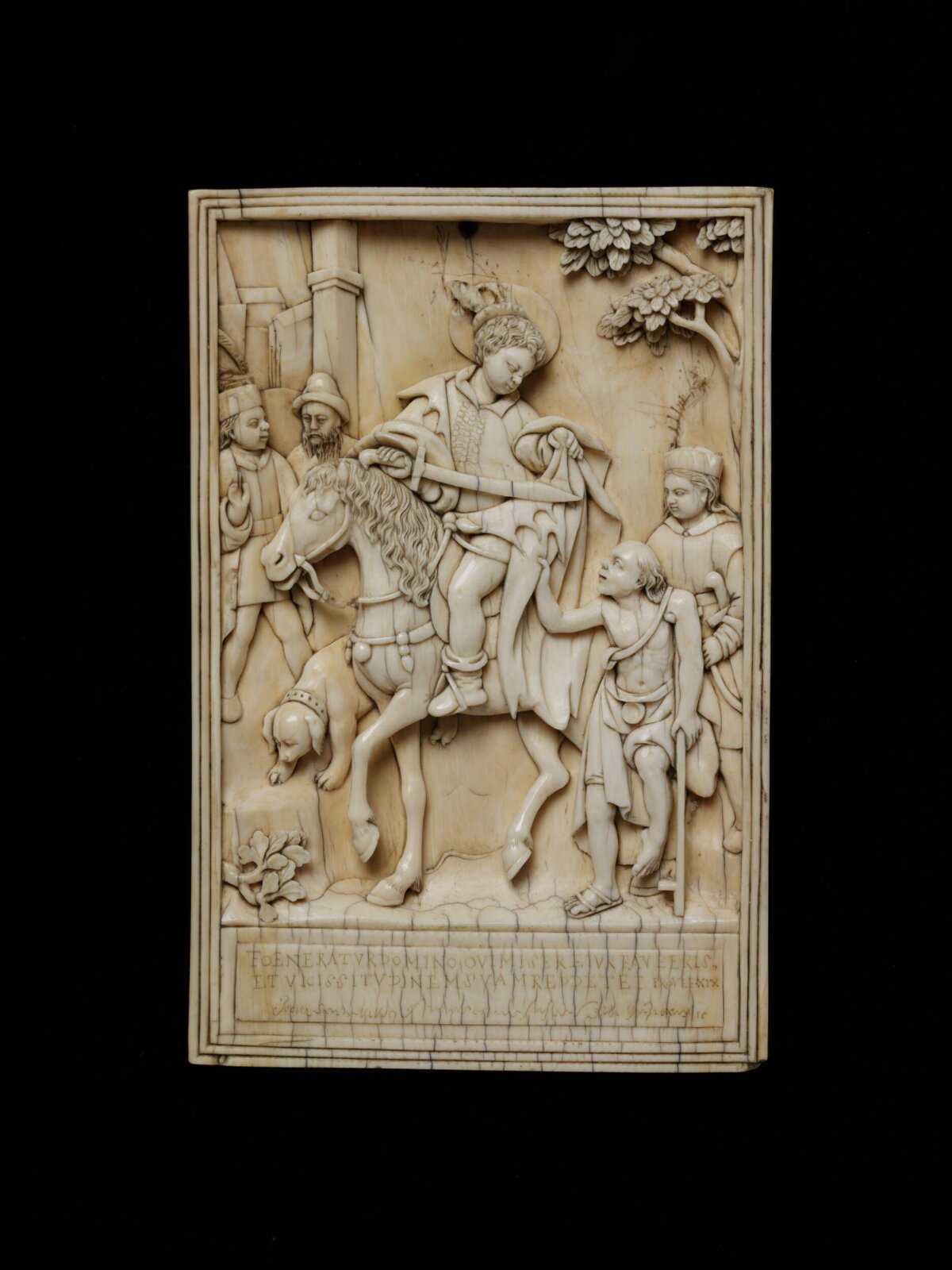
Ivory was popular as a material for religious subjects, especially during the 17th and 18th centuries. Spanish and Portuguese patrons imported ivories carved with Christian imagery from their territories overseas, such as the Philippines, Mexico and Goa. German and Netherlandish artists were renowned for their dexterity in ivory carving. Their reliefs are masterpieces of composition and virtuosity. On this relief St Martin is shown dividing his cloak to give half to a beggar.
Lees meer
This composition is based on a Netherlandish print. The Chinese carver copied the devotional inscription in Latin from the print ("He that hath pity on the poor lendeth unto the lord; and that which he hath given will he pay him again"), but the cursive script underneath, which probably gave the names of the engraver and publisher of the source were rendered indecipherable on the ivory. The relief is based on an engraving from the late sixteenth century by the Flemish print maker and designer Adriaen Collaert, after the Flemish artist Johannes Stradanus.
Victoria and Albert Museum
Gegevens
- Inventarisnummer
- A.8-1955
Wat het toont
In de catalogus
Bronnen
- Victoria and Albert Museum
- Afbeelding: Victoria and Albert Museum — © Victoria and Albert Museum, London