 Viktor Vasnetsov1848–1926
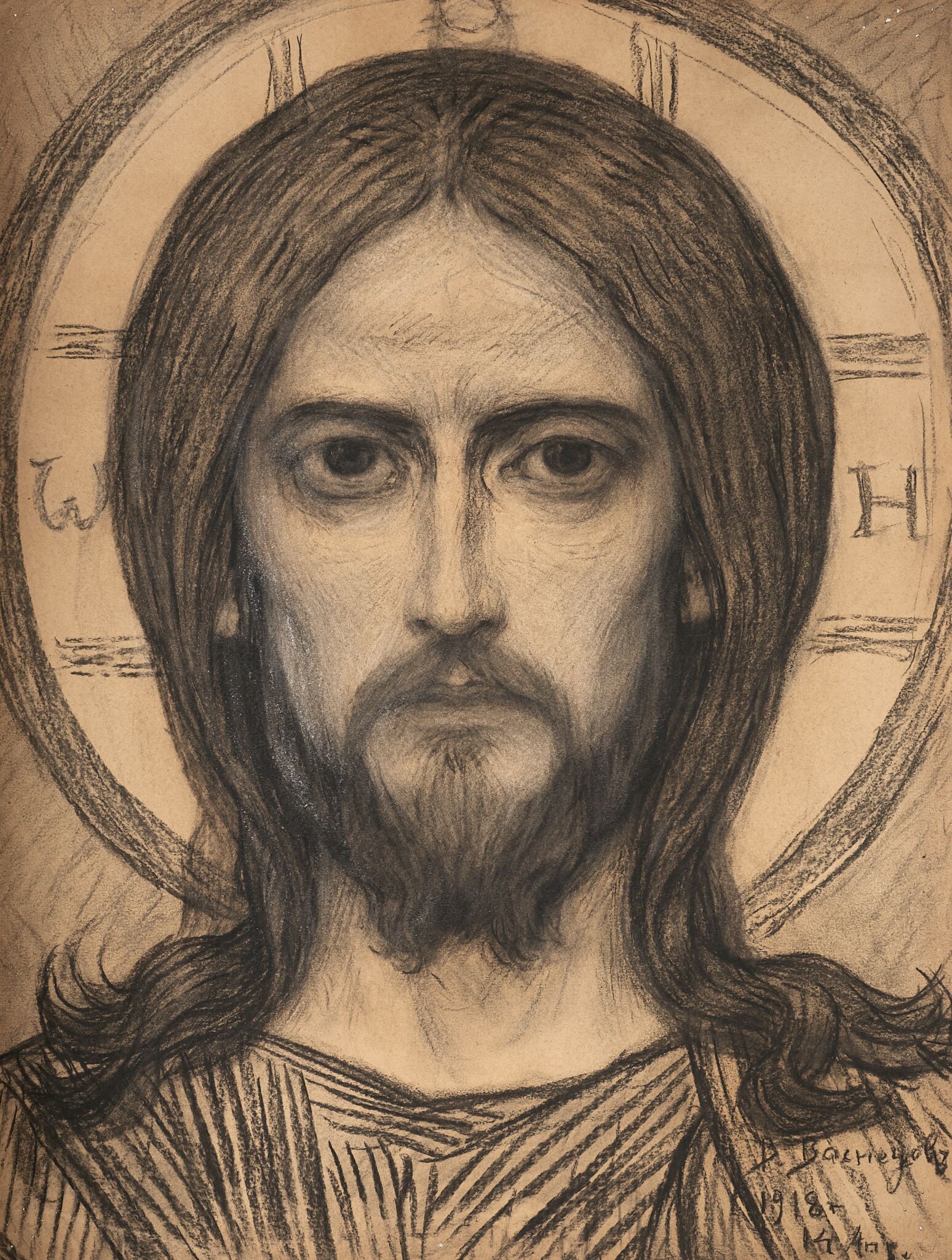
Спас Нерукотворный
Mag men het zien?
Onbekend

Tretjakovgalerij
Moskou, Rusland
De eigenaar is bekend; of het werk nu te zien is, is onbekend.
- Ongewijzigd sinds
- Bron
- Het museum
Over het werk
In de woorden van het museum — in het Russisch
Иконография образа сложилась согласно преданию о том, что Иисус Христос, умыв лицо, приложил к нему убрус, и на ткани чудесным образом отпечатался Его лик. Этот святой убрус был отправлен в Эдессу царю Авгарю V Уккаме, больному проказой. Приложившись к плату, царь получил исцеление. В византийском искусстве иконография Спаса Нерукотворного распространилась со второй половины Х века. Самый ранний из известных русских памятников – новгородская икона второй половины XII века. Иконографический тип имеет множество вариантов. В работах Васнецова известны два из них: Спас на убрусе и Спас на убрусе с ангелами.
Verder lezen
В России образ Спаса Нерукотворного с давних времен изображался на стягах, под которыми сражались русские войска. Этим, вероятно, можно объяснить особое внимание художника к такой иконографии в период трагических событий первых двух десятилетий XX века. Под одним из образов Спасителя художник даже поставил две даты: 1905 и 1915. Написав образ Спаса Нерукотворного после событий Кровавого воскресенья, выразив в нем «главные боли и раны души», художник датировал рисунок 1905 годом. Однако в годы Первой мировой войны Васнецов вновь обратился к этому образу, значительно усилив выражение страдания в лике Спасителя, и проставил еще одну дату: 1915 год.
В 1918-м художник написал еще один образ Спаса Нерукотворного, вновь передавая собственное ощущение трагизма переживаемого времени. Подписан Брест-Литовский договор, заканчивалась Первая мировая война, близилась война Гражданская. Это стало причиной горьких размышлений художника. На указанных рисунках лик Христа близок образу Вседержителя, созданному Васнецовым во Владимирском соборе в Киеве. Отличительной особенностью стало выраженное в нем глубокое страдание: тени под глазами, скорбная поперечная складка на лбу.
«Думали ли мы, что доживем до таких тяжких времен! – писал художник Е.А. Праховой в 1914 году, – о чем бы ни говорил, о чем бы ни думал, а в душе все время великая незабываемая тяжелая дума – война! Бог милостив – будем молиться!»
Tretjakovgalerij
Gegevens
- Inventarisnummer
- ДМВ Г-2004
In de catalogus
Bronnen
- Tretjakovgalerij
- Afbeelding: Tretjakovgalerij — © State Tretyakov Gallery
Intussen, in het leven van Viktor Vasnetsov
Het hele leven1917
He rejects the revolution but stays in Russia
He did not accept the October Revolution, calling himself a convinced monarchist “on the ancient Russian principles”; his nobility and ties with the old regime found no favour with the Bolsheviks, but he did not emigrate and went on living and working in Moscow.
after 1917
After the revolution: church paintings to the Tretyakov
After the October Revolution he advocated moving some of the religious paintings from churches to the Tretyakov Gallery; even before the revolution he had been a trustee of the gallery and gave a significant part of his income to the State Historical Museum, a large part of whose collection was acquired with his money.
1919
His son Boris dies
In 1919 his son Boris (1880–1919) died; after the revolution the artist’s family was scattered, which he took hard.
September 1919
Rumours that Vasnetsov has been shot
In September 1919 a Russian émigré newspaper reported that the Bolsheviks had “in all likelihood” killed the artist; the rumour reached Repin at Penaty, who anxiously asked the Soviet artists visiting him whether it was true that Vasnetsov had been shot.
1920
His son Mikhail emigrates on the last steamer
During the Civil War Mikhail taught at the White Army’s flying school in Kiev; in 1920, escaping the Red Army, he sent his wife and son to his father’s house and left on the last steamer sailing from Crimea to Gallipoli — the family knew nothing of his fate until 1922.