
 Margaret Bourke-WhiteVerenigde Staten, 1904–1971
Shock Brigadier
Mag men het zien?
Ontvangt momenteel niet

National Gallery of Art
Washington D.C., Verenigde Staten
Het hoort bij de collectie, maar is momenteel niet tentoongesteld.
- Gecontroleerd
- Ongewijzigd sinds
- Bron
- De eigen collectiegegevens van het museum
Gegevens
- Inventarisnummer
- 2023.36.1.24
What it shows
In de catalogus
Bronnen
- National Gallery of Art: the museum's own open data · opgehaald 6 dagen geleden
- Afbeelding: National Gallery of Art — © the artist or rights holder
Intussen, in het leven van Margaret Bourke-White
Het hele leven1928
Moves to Cleveland: an industrial photography studio
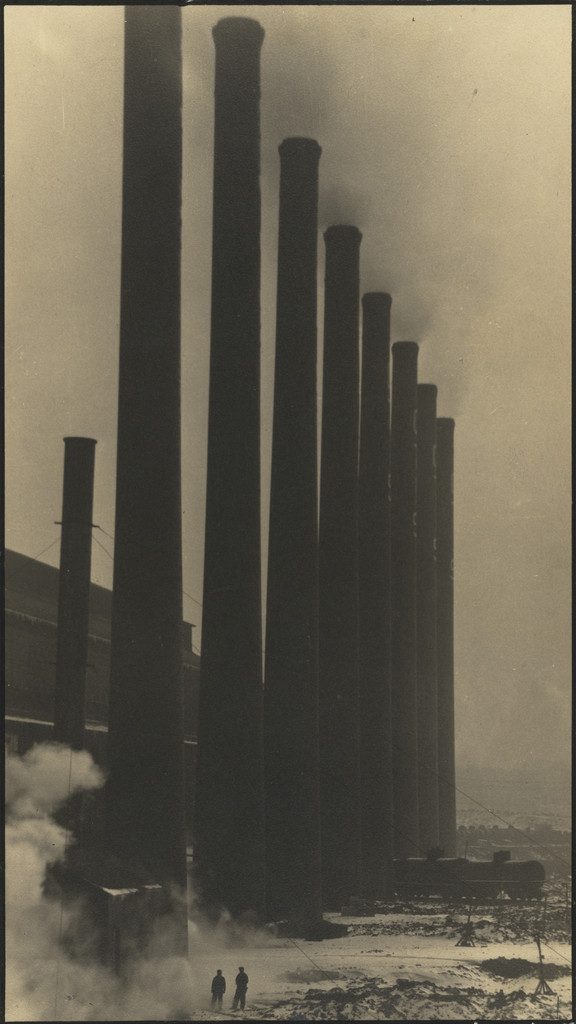
A year after graduating she moves from Ithaca to Cleveland, where she opens a commercial photography studio and concentrates on architectural and industrial work. Among her clients is the Otis Steel Company (other accounts say she went to work for it straight away as an industrial photographer).
summer 1929
Joins Fortune magazine
She accepts a post as associate editor and staff photographer at the new business magazine Henry Luce is launching in the fall. She holds it until 1935.
1930
First Western photographer admitted to the USSR
She is granted official access to document the industrial sites of the Soviet Union during the first five-year plan, the first Western professional photographer to be admitted. She returns in each of the next two summers, until 1932.
1930–1932
Photographs Stalin, his mother, Radek and Eisenstein
On her trips she photographs Joseph Stalin and, in Georgia, his mother and great-aunt; she also portrays Karl Radek, Sergei Eisenstein and Hugh Cooper. The work in the USSR demanded great patience, and her impressions remained mixed but on the whole positive.
1931
“Eyes on Russia” in Fortune
Her Soviet photographs first appear in Fortune under the title “Eyes on Russia”; a book of the same name follows from Simon and Schuster.
1934
Photographs Dust Bowl drought victims for Fortune
Like Dorothea Lange, she photographs the victims of the Dust Bowl drought. This Depression-era work marks the beginning of her shift from corporate photography to photojournalism.



![Ginevra de' Benci [obverse], Leonardo da Vinci, c. 1474/1478](https://api.nga.gov/iiif/8f29e3c9-a289-4d53-abf0-31a66e9e98fa/full/!2400,2400/0/default.jpg)
![Wreath of Laurel, Palm, and Juniper with a Scroll inscribed Virtutem Forma Decorat [reverse], Leonardo da Vinci, c. 1474/1478](https://api.nga.gov/iiif/ff62e8d0-45c4-498f-ad36-6358de827e04/full/!2400,2400/0/default.jpg)


