
 André KertészVerenigde Staten, 1894–1985
Self-Portrait, Wounded, with Officer
Mag men het zien?
Ontvangt momenteel niet

Washington D.C., Verenigde Staten
Het hoort bij de collectie, maar is momenteel niet tentoongesteld.
- Gecontroleerd
- Ongewijzigd sinds
- Bron
- Het museum
Gegevens
- Inventarisnummer
- 2000.170.4
Wat het toont
In de catalogus
Bronnen
- National Gallery of Art
- Afbeelding: National Gallery of Art — © the artist or rights holder
Intussen, in het leven van André Kertész
Het hele leven1914
At the front: trench life on a Goerz Tenax
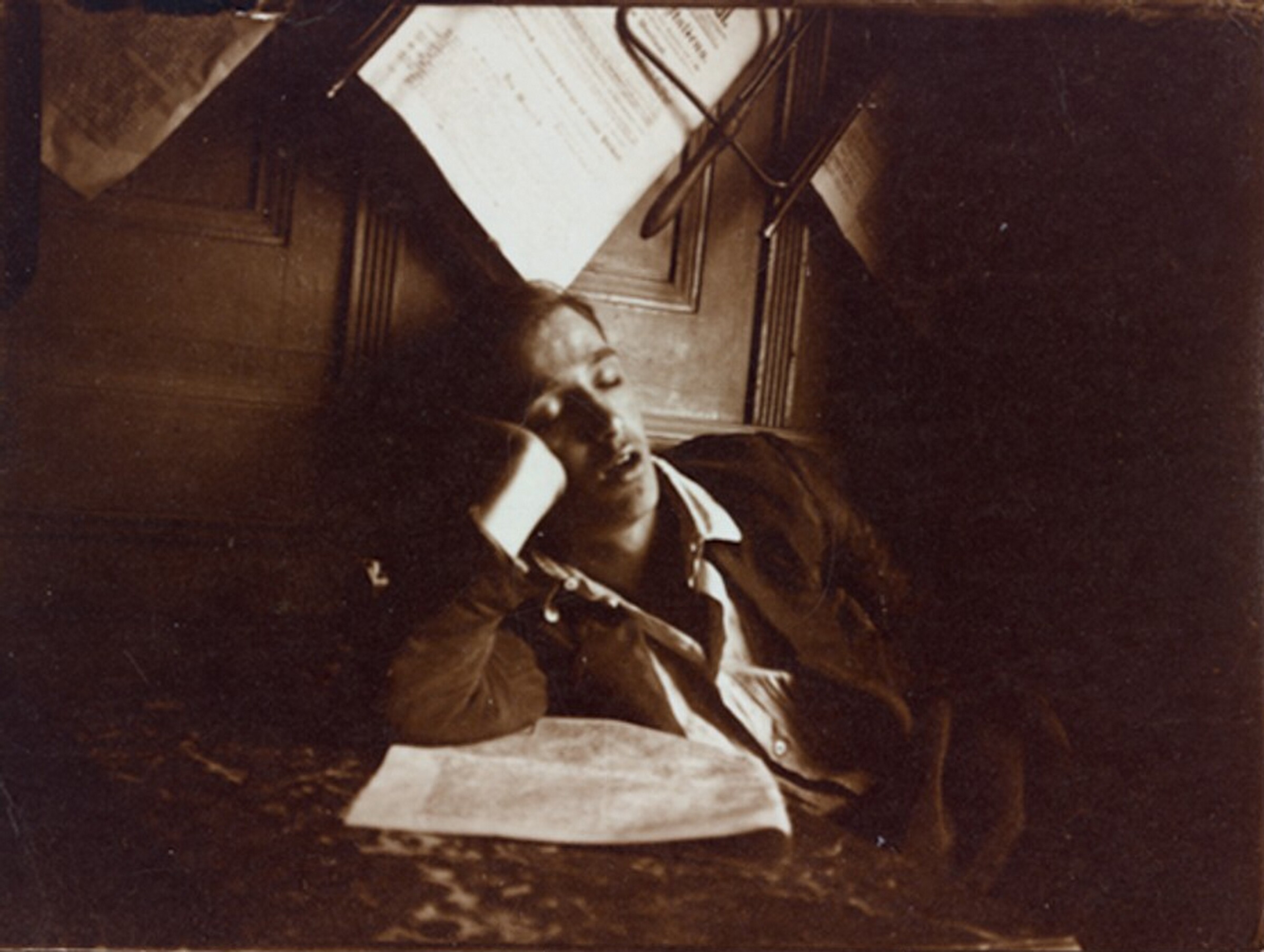
At the age of 20 he is sent to the frontline of the First World War, where he photographs life in the trenches with a lightweight Goerz Tenax camera; most of these photographs are destroyed during the violence of the Hungarian Revolution of 1919. His distinctive, mature style is already evident in work of 1914 such as Eugene.
1915
Wounded, then convalescing in Esztergom
He is wounded by a bullet and suffers temporary paralysis of his left arm; sent to convalesce in a military hospital in Budapest, he is later transferred to Esztergom, where he continues to take photographs, including a self-portrait for a competition in the magazine Borsszem Jankó. He does not heal soon enough to return to combat.
1917
First publication in Érdekes Újság
While he is serving in the Austro-Hungarian army, his photographs are first published, in the magazine Érdekes Újság.
1918
Meets Erzsebet Salomon
With peace in 1918 he returns to the stock exchange, where he meets his future wife Erzsebet Salomon (later Elizabeth Saly), who also works there, and begins to pursue her romantically; throughout his whole career he uses Elizabeth as a model for his photographs.


![Ginevra de' Benci [obverse], Leonardo da Vinci, c. 1474/1478](https://api.nga.gov/iiif/8f29e3c9-a289-4d53-abf0-31a66e9e98fa/full/!2400,2400/0/default.jpg)
![Wreath of Laurel, Palm, and Juniper with a Scroll inscribed Virtutem Forma Decorat [reverse], Leonardo da Vinci, c. 1474/1478](https://api.nga.gov/iiif/ff62e8d0-45c4-498f-ad36-6358de827e04/full/!2400,2400/0/default.jpg)


