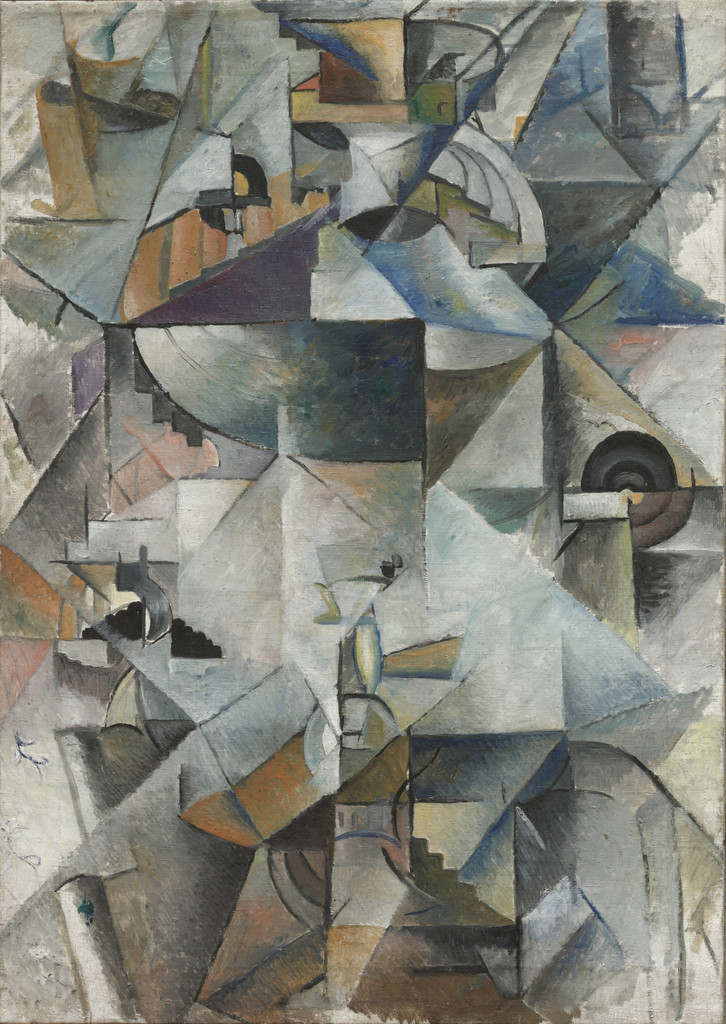
 Kazimir MalevichRusland, 1879–1935
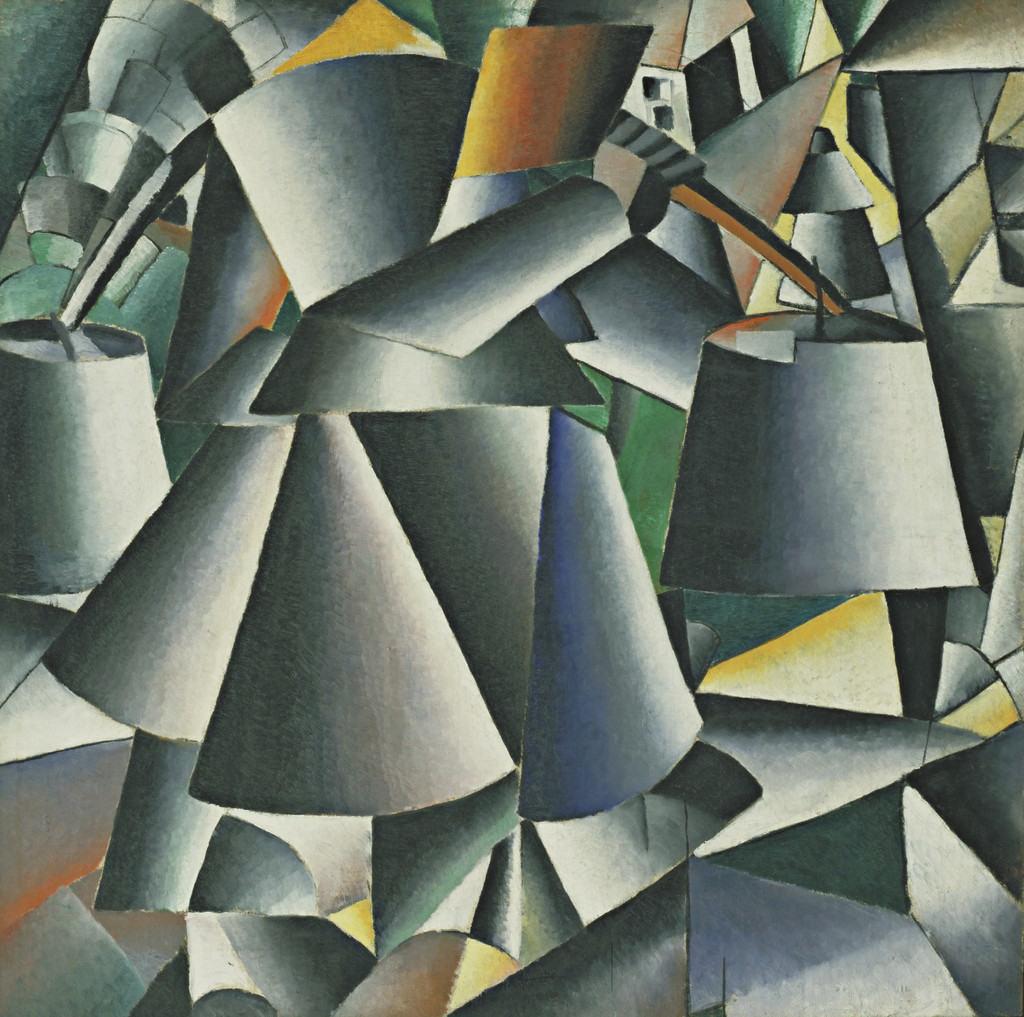
Samovar
Mag men het zien?
Ja, het ontvangt bezoek

Publiek tentoongesteld. Wie daarvoor instaat, staat hieronder.
- Gecontroleerd
- Bron
- Het museum
Gegevens
- Inventarisnummer
- 1041.1983
In de catalogus
Bronnen
- Museum of Modern Art
- Afbeelding: Museum of Modern Art — © the artist or rights holder
Intussen, in het leven van Kazimir Malevich
Het hele leven1912
Meeting Mikhail Matyushin
In 1912 Malevich met the composer Mikhail Matyushin, the future composer of “Victory over the Sun” and publisher of his first Suprematist texts.
March – April 1912
The “Donkey’s Tail”: neo-primitivism
In March 1912 Malevich showed more than twenty neo-primitivist works at the “Donkey’s Tail” exhibition in Moscow (it ran until April), among them the peasant-inspired gouaches “Floor Polishers” and “Washerwoman”. That same year he took part in the exhibitions of the “Union of Youth” and the “Blue Rider” in Munich.
1913
“Target”, debates and “transrational realism”
In 1913 Malevich took part in the “Debate on Contemporary Painting” in St Petersburg and in the “First Evening of Speech-Makers in Russia” in Moscow, designed a number of Futurist publications and in March showed “Morning in the Country after Snowstorm” and “Knifegrinder” with Goncharova and Larionov at the “Target” exhibition; at the last “Union of Youth” exhibition he showed, next to neo-primitivist works, paintings he himself called “transrational realism” and “Cubo-Futurist realism”. In the spring he wrote to Matyushin that he had rejected reason because a different kind of reason — transrational — had arisen in him, with its own law, construction and meaning.
March 1914
The Paris Salon des Indépendants
In March 1914, at Nikolai Kubin’s invitation, Malevich sent works, among them the Cubist “Samovar” (1913), to the Salon des Indépendants in Paris.
summer – autumn 1915
The first “Black Square” and a hurried brochure
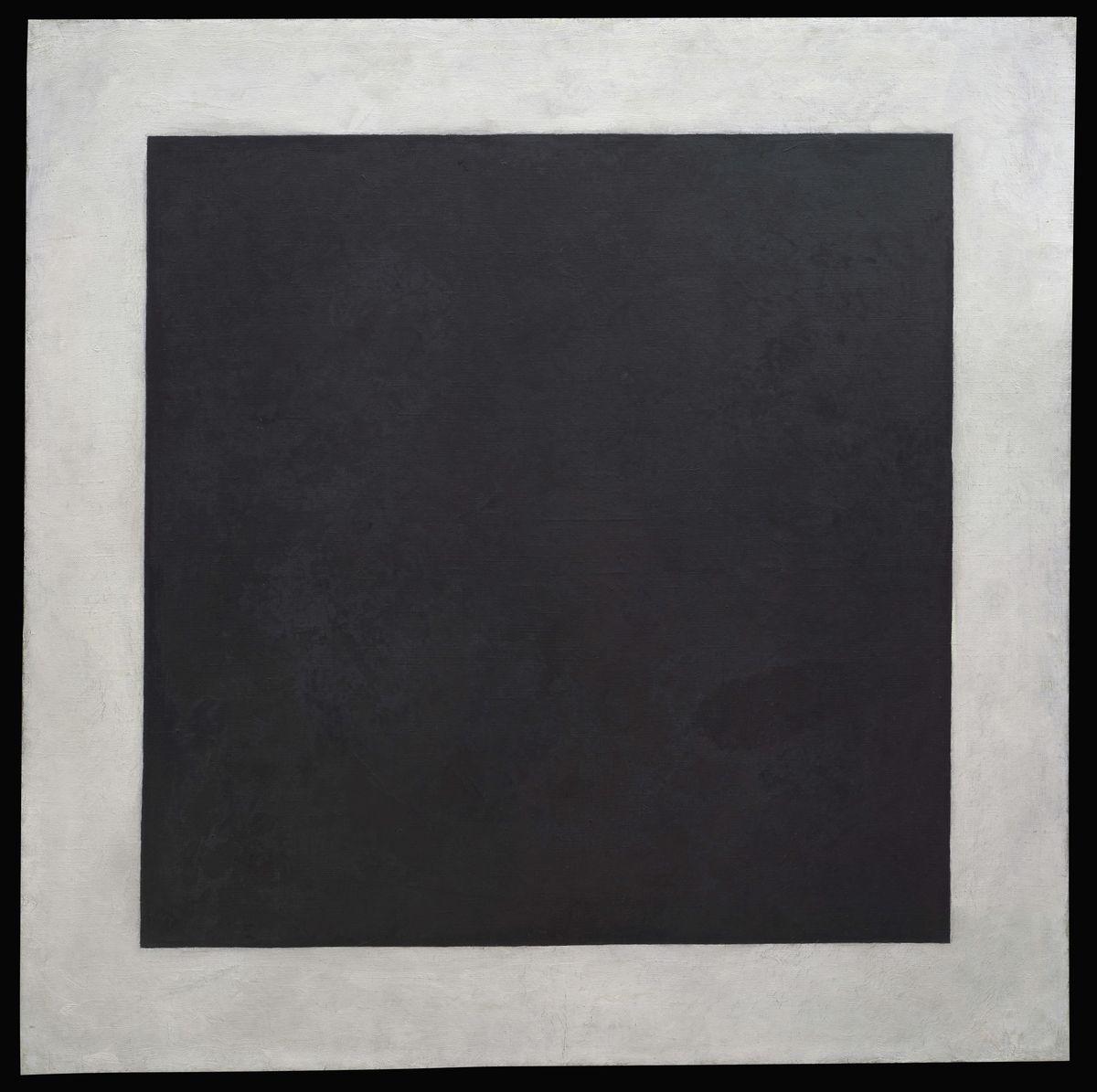
In the summer of 1915 Malevich produced his first abstract composition, a black quadrilateral on a white ground. When Ivan Puni visited his studio in September and saw the new work, the artist, afraid that the idea would be copied, composed with Matyushin’s help his first text on Suprematism — the basis of the manifesto “From Cubism to Suprematism”.
19 December 1915
“0,10”: the “Black Square” in the icon corner
On 19 December 1915 (1 January 1916 in the new style), at the “Last Futurist Exhibition of Paintings 0,10” in Nadezhda Dobychina’s Art Bureau in Petrograd, Malevich showed 39 abstract works under the general title “Suprematism of Painting”; he hung the “Black Square” in the upper corner of the room — where an icon hangs in a Russian home. His brochure “From Cubism and Futurism to Suprematism” accompanied the show; in the next room Tatlin exhibited his corner reliefs, and the exhibition was seen by more than six thousand people.