 Simon VouetFrankrijk, 1590–1649
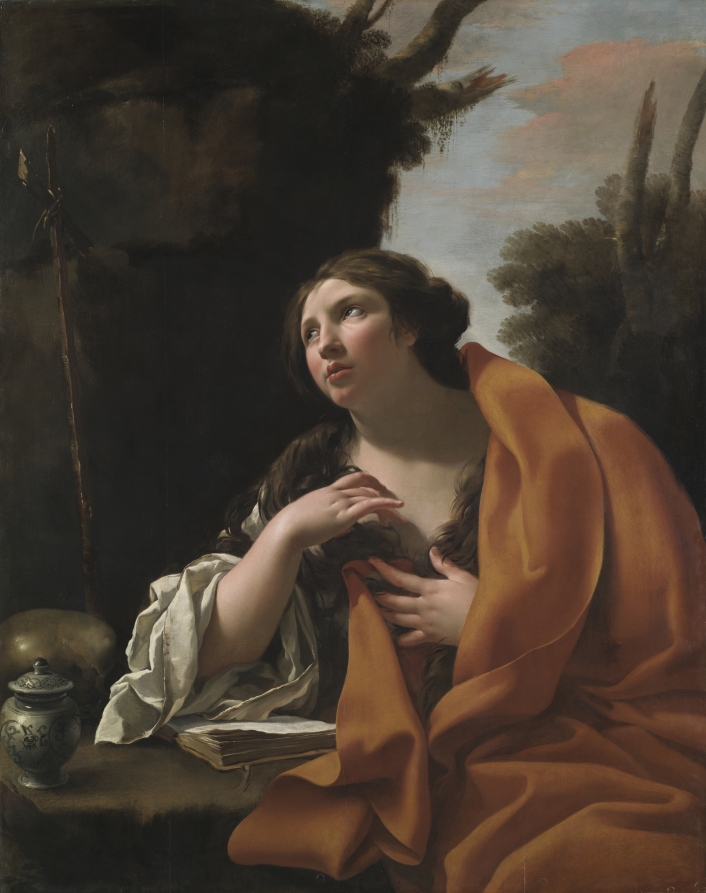
Saint Mary Magdalen
Mag men het zien?
Ja, het ontvangt bezoek

Publiek tentoongesteld. Wie daarvoor instaat, staat hieronder.
- Gecontroleerd
- Ongewijzigd sinds
- Bron
- Het museum
Over het schilderij
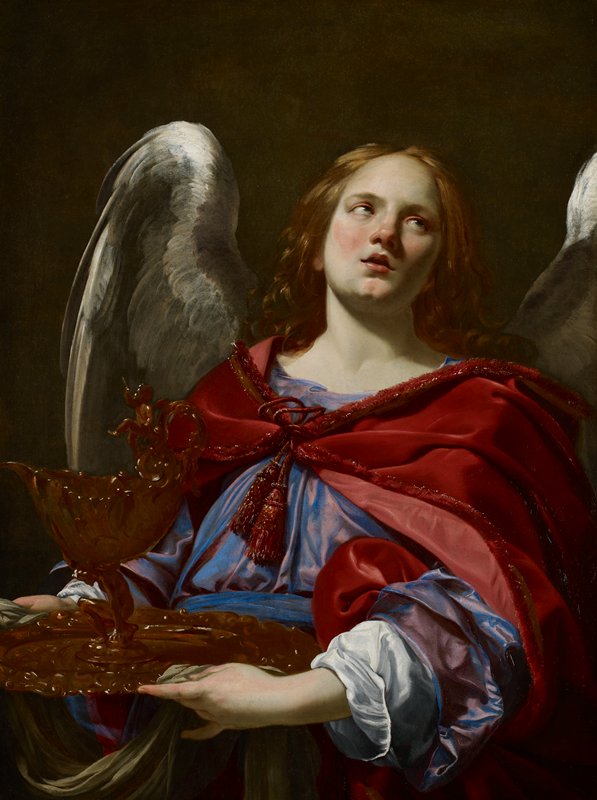
Simon Vouet worked in Rome for several years before he was summoned back to France in 1627 to serve as court painter to King Louis XIII. This painting, executed soon after his return, reveals how skillfully Vouet adapted his Italian experiences to local tastes: the focus on a single monumental figure, positioned close to the picture plane, reflects the influence of Caravaggio, but the vivid pastel colors accord with the French preference for a brighter palette. Representations of the penitent Magdalene as a hermit—expressing Christian devotion but also sensuality—were exceedingly popular in the 1600s.
Cleveland Museum of Art
Gegevens
- Inventarisnummer
- 1988.108
In de catalogus
Bronnen
- Cleveland Museum of Art
- Afbeelding: Cleveland Museum of Art — Museum open access
Intussen, in het leven van Simon Vouet
Het hele leven1627–1649
Post: Premier peintre du Roi
1630
Lodgings and a studio in the Louvre
Vouet was given lodgings and a studio in the Louvre; his Paris workshop trained a whole school of French painters of the next generation — among its pupils was André Le Nôtre, creator of the gardens of Versailles, while Michel Dorigny and François Tortebat became the master's sons-in-law.
1631
Decorating the châteaux and mansions of the nobility
Vouet decorated the château of the président de Fourcy at Chessy, the hôtel Bullion, Marshal d'Effiat's château at Chilly, the hôtel of the Duc d'Aumont, the Séguier chapel and the gallery of the Château de Wideville. Of his major decorative schemes only two survive, at the châteaux of Colombes and Chessy.
1632
Working for Cardinal Richelieu
Vouet worked for Cardinal Richelieu at the Palais-Royal and the Château de Malmaison.