 El GrecoGriekenland, 1541–1614
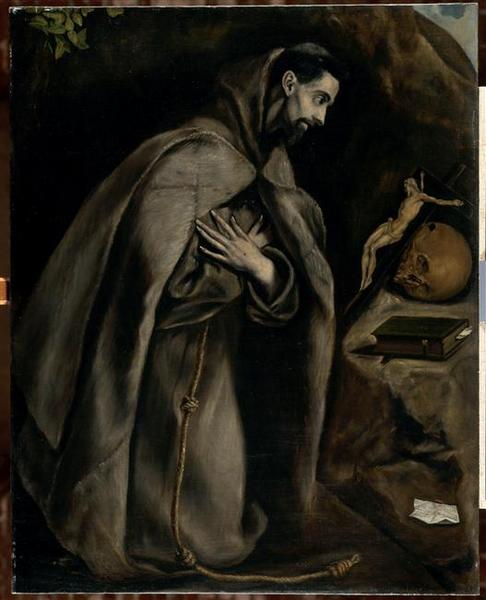
Saint François
Mag men het zien?
Onbekend: het museum bewaart het stilzwijgen
Museum voor Schone Kunsten
Rijsel, Frankrijk
De eigenaar is bekend. Of het vandaag te zien is, zegt het museum niet, en gissen hebben wij niet geleerd.
- Ongewijzigd sinds
- Bron
- De eigen collectiegegevens van het museum
Gegevens
- Inventarisnummer
- P 51
Wat het toont
In de catalogus
Bronnen
- Museum voor Schone Kunsten: de open data van het museum · opgehaald gisteren
- Afbeelding: Museum voor Schone Kunsten — © Réunion des musées nationaux - utilisation soumise à autorisation; Ministère de la Culture (France), base Joconde
Intussen, in het leven van El Greco
Het hele leven1570s
The quarrel with Michelangelo in Rome
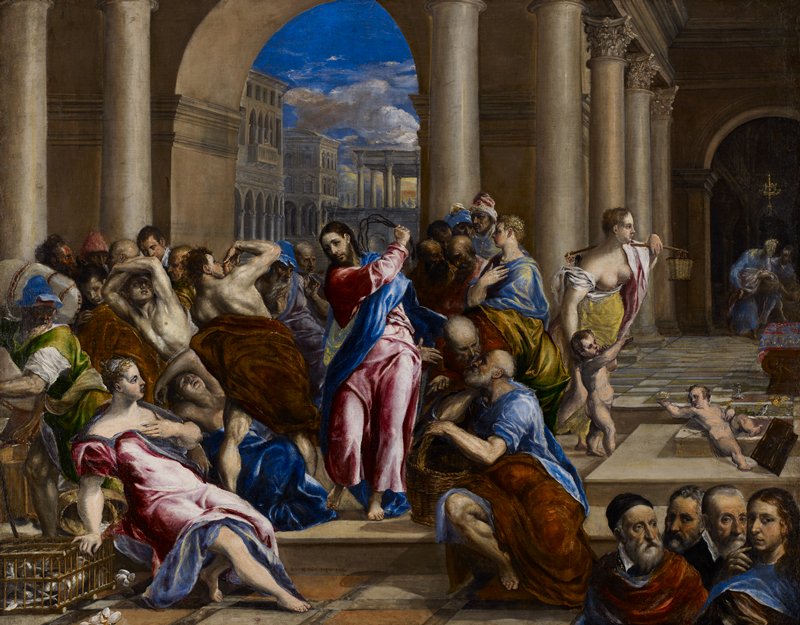
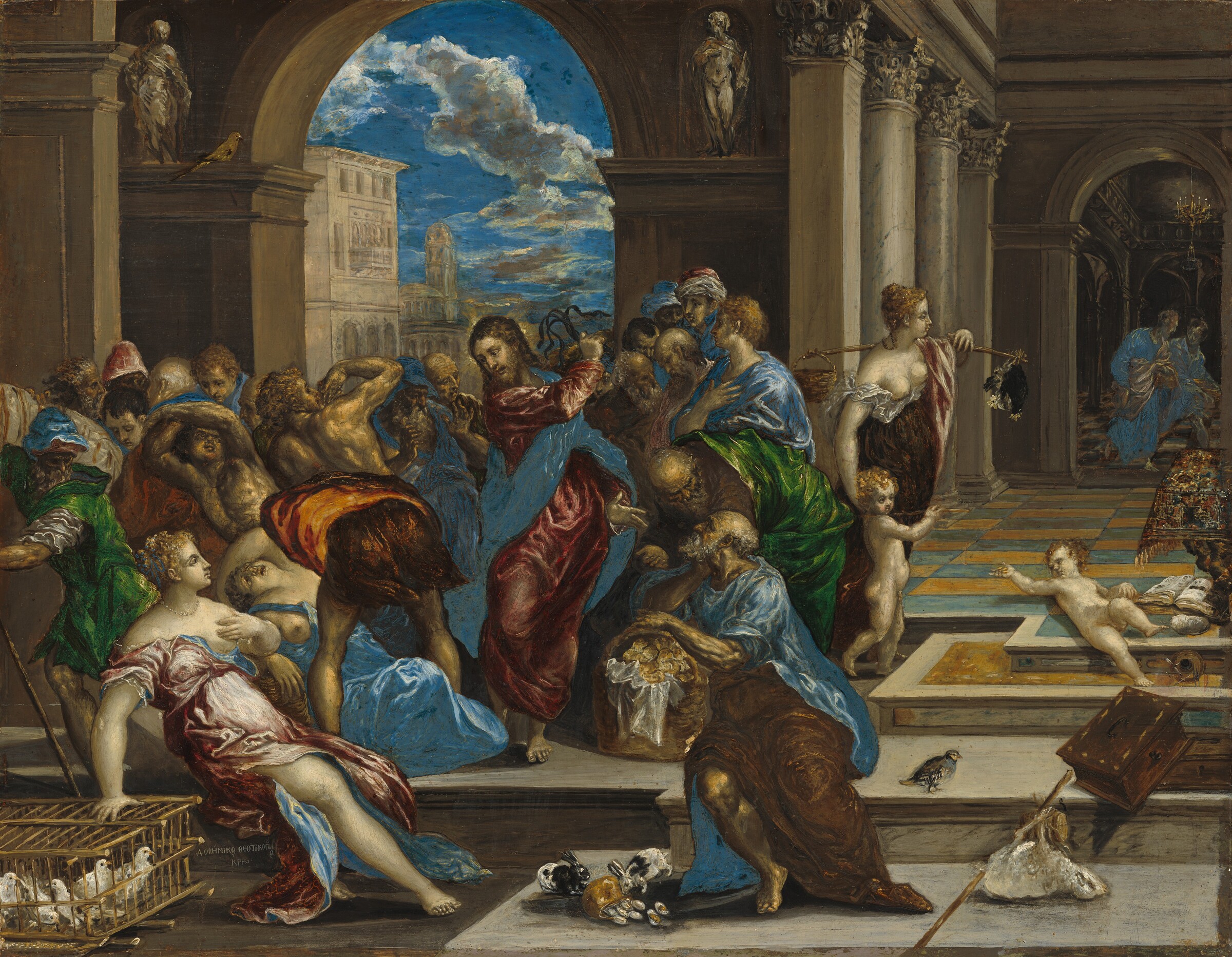
El Greco singled out Correggio and Parmigianino for praise but did not hesitate to dismiss Michelangelo's Last Judgment, offering Pope Pius V to paint over the whole fresco in accord with the new and stricter Catholic thinking; later he said Michelangelo was a good man who did not know how to paint. In The Purification of the Temple he painted portraits of Michelangelo, Titian, Clovio and presumably Raphael, advancing a claim to rival them.
1577–1585
Royal commissions and the disfavour of Philip II
El Greco did not plan to stay in Toledo: he meant to win a place at court and secured two important commissions from Philip II, the Allegory of the Holy League and the Martyrdom of St Maurice. The king disliked them — the St Maurice altarpiece was hung in the chapter-house instead of the intended chapel — and gave him no further commissions; the reasons are unclear: some scholars think he disliked living persons in a religious scene, others that El Greco let style outweigh content.
1578
Birth of his son Jorge Manuel
In 1578 El Greco's only son, Jorge Manuel, was born; his mother, the Spaniard Jerónima de las Cuevas, was probably never married to him. Jorge Manuel also became a painter, assisted his father and repeated his compositions for many years after inheriting the studio.
1585
A home and workshop in Toledo
From 1585 El Greco rented a complex of three apartments and twenty-four rooms in Toledo, where he lived and worked for the rest of his life; he hired an assistant, Francisco Preboste, and set up a workshop capable of producing altar frames and statues as well as paintings. He lived in considerable style, sometimes employing musicians to play while he dined.
12 March 1586
The commission for “The Burial of the Count of Orgaz”
On 12 March 1586 El Greco obtained the commission for The Burial of the Count of Orgaz, now his best-known work.
1597–1607
A decade of intense activity
The decade from 1597 to 1607 was a period of intense activity for El Greco: his workshop made pictorial and sculptural ensembles for religious institutions — three altars for the Chapel of San José in Toledo (1597–99), three paintings for the Colegio de Doña María de Aragón in Madrid (1596–1600), and the high altar, four lateral altars and St Ildefonso for the Hospital of Charity at Illescas (1603–05).