Arkhip KuindzhiOekraïne, 1842–1910
Радуга
Kan ik het zien?
Onbekend
Waar is „Радуга” nu? Collectie: Penza Savitsky Art Gallery, Penza. Onbekend.
Penza, Rusland
De eigenaar is bekend; of het werk nu te zien is, is onbekend.
- Ongewijzigd sinds
- Bron
- Het museum
Over het schilderij
In de woorden van het museum — in het Russisch
Этюд. Среди ярко-зеленого луга на невысокой, освещённой солнцем возвышенности белые с зелеными куполами церковь и колокольня, другие строения. Небо у горизонта темное синевато-серое, а в верхней части светлее, на небе полоса радуги.
Penza Savitsky Art Gallery
Gegevens
- Inventarisnummer
- 158-ж
In de catalogus
Bronnen
- De Staatscatalogus van het Russische museumbezit
- Afbeelding: Penza Savitsky Art Gallery — © Пензенская областная картинная галерея имени К. А. Савицкого · Госкаталог музейного фонда РФ
In het leven van Arkhip Kuindzhi
Het hele leven1865
Moves to St Petersburg and fails twice to enter the Academy
In 1865 Kuindzhi decided to enter the Academy of Arts and left for St Petersburg, but his first two attempts failed.
15 September 1868
Awarded the title of free artist
On 15 September 1868 the Council of the Academy of Arts awarded Kuindzhi the title of free artist. Only after a petition to the Council was he allowed to sit the examinations in the main and special subjects needed for a diploma.
1878
The World Exhibition in Paris
In 1878 Kuindzhi’s works were shown at the World Exhibition in Paris in the presence of the artist and his wife; public and critics admired them and noted the absence of foreign influence. The critic Duranty called him the most interesting of the young Russian painters, in whom, more than in others, an original national character is felt.
late 1879
The break with the Peredvizhniki
By the end of 1879 Kuindzhi broke with the Peredvizhniki for good: an anonymous newspaper article sharply criticised both his work and the Society, and its author turned out to be Klodt. Kuindzhi demanded Klodt’s expulsion but, realising that Klodt, an Academy professor, would not be expelled, announced his own withdrawal despite attempts to persuade him to stay; many scholars consider the story only a pretext for a break that had long been brewing.
October – November 1880
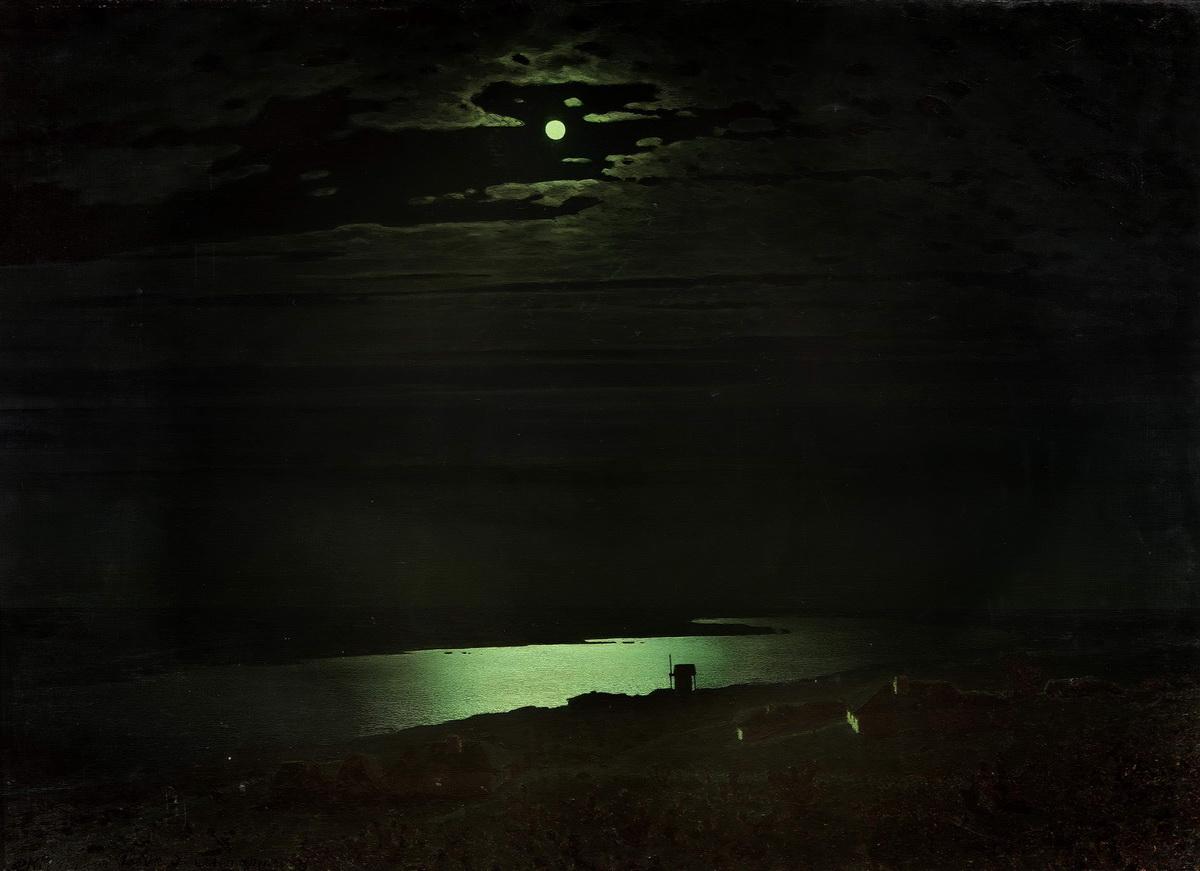
A one-painting exhibition: “Moonlit Night on the Dnieper”
In autumn 1880 Kuindzhi staged an exhibition of a single painting at the Society for the Encouragement of Artists: he draped the hall’s windows and lit the canvas with a beam of electric light. “Moonlit Night on the Dnieper” was an unprecedented success. The painting was bought by Grand Duke Konstantin Konstantinovich, who took it with him on a round-the-world voyage, and under the action of the sea air its bitumen paints darkened.
1882
The last exhibition before the silence
In June 1882, in the Solodovnikov Passage on Kuznetsky Most, Kuindzhi staged an exhibition of two paintings, “The Birch Grove” and “Moonlit Night on the Dnieper”. After it he “fell silent” for twenty years, shutting himself up in his studio and showing his work to no one.