 Mikhail Vrubel1856–1910
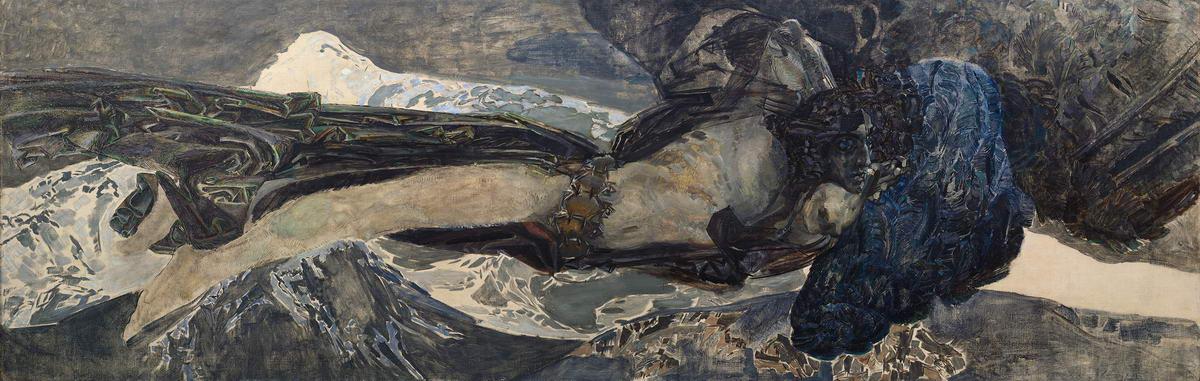
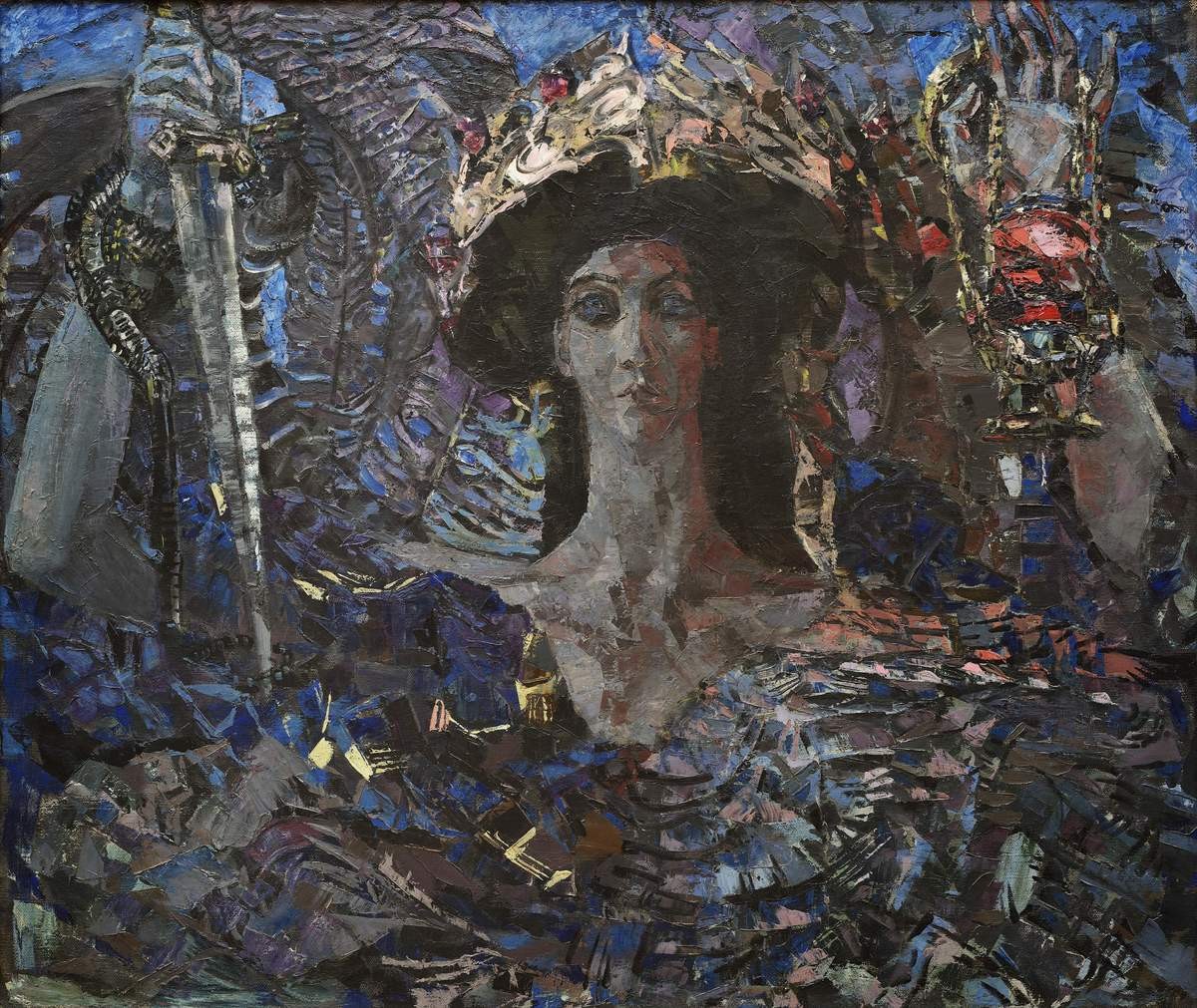
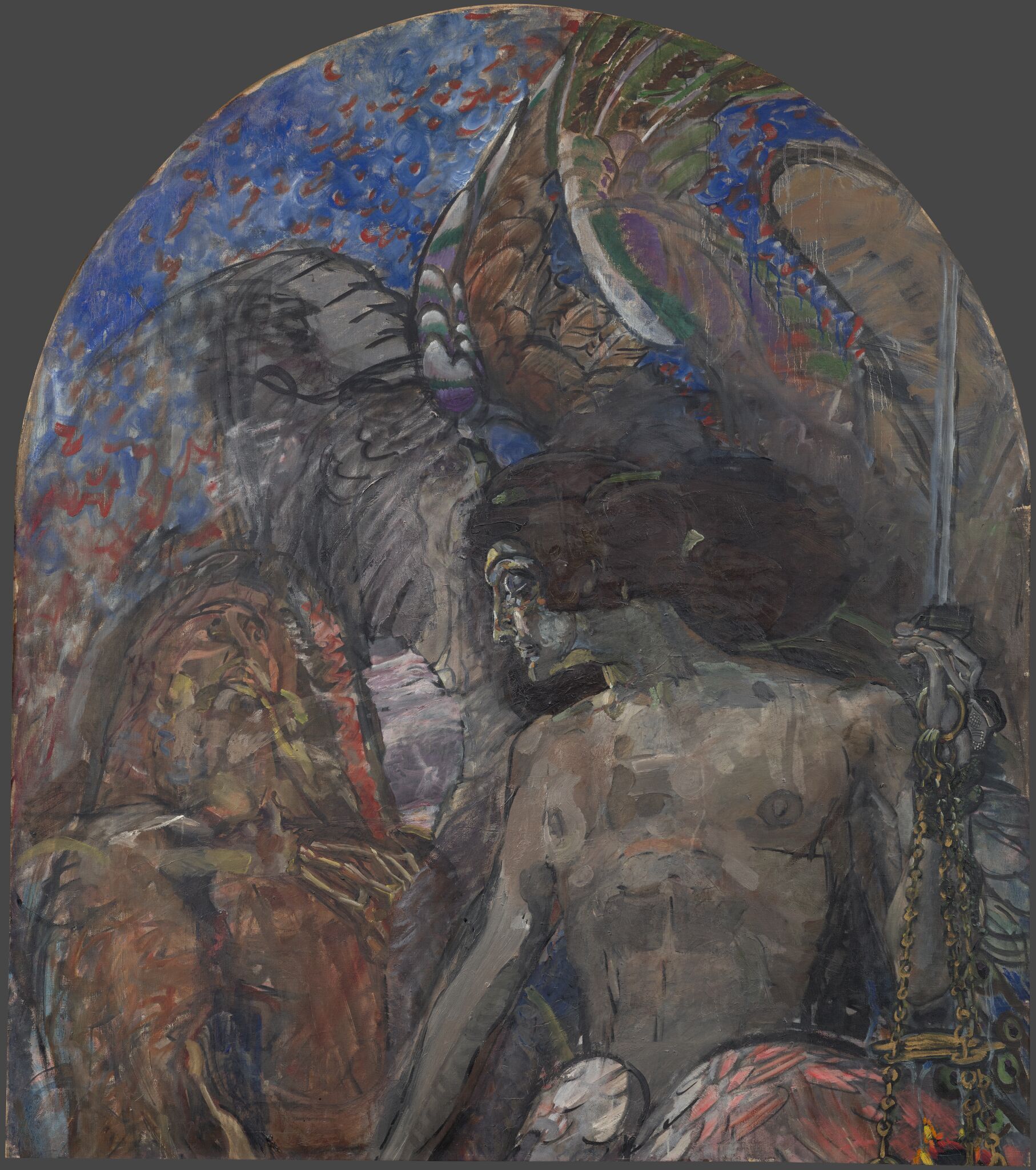
Пророк
Mag men het zien?
Onbekend: het museum bewaart het stilzwijgen

Tretjakovgalerij
Moskou, Rusland
De eigenaar is bekend. Of het vandaag te zien is, zegt het museum niet, en gissen hebben wij niet geleerd.
- Ongewijzigd sinds
- Bron
- De eigen collectiegegevens van het museum
About the painting
In the museum's own words — the original
Долгий путь постижения Врубелем темы Пророка начался для него с иллюстрирования одноименного стихотворения А.С. Пушкина. Иллюстрация к пушкинскому «Пророку» предназначалась для юбилейного издания сочинений поэта, столетие со дня рождения которого должно было торжественно праздноваться в России в 1899 году. Поэтические образы Пророка и явившегося ему божественного вестника – шестикрылого Серафима – переосмысливались художником-символистом на протяжении многих лет и претерпевали значительные метаморфозы.
Read on
Живописное полотно «Пророк» появилось раньше, чем одноименная иллюстрация (1899, Третьяковская галерея). Выполненное художником в графической технике, оно повторяет первоначальный вариант картины, где Пророк и Серафим были изображены в рост. Художник В.Д. Милиоти, посетивший зимой 1899 года мастерскую Врубеля на Пречистенке, вспоминал «прислоненный к стене высокой комнаты овальный сверху огромный холст с пушкинским Пророком». Там же он видел и «другие картины, зарисованные с двух сторон, причем часто с перерезанной пополам композицией на обороте. Врубель не стеснялся со своими вещами, богатство его фантазии торопило его от одной вещи к другой, щедрой рукой сыпал он сокровища, чтобы бросить их и перейти к новым». Именно так и поступил художник, разрезав пополам первоначальную композицию «Пророка». В своем нынешнем виде картина «Пророк» – верхняя часть написанного в 1898 году живописного полотна, которое и видел В.Д. Милиоти. Нижняя его часть также сохранилась и позднее была использована Врубелем для портрета жены («Дама в лиловом», 1904–1905, Государственный Русский музей).
Монументальный характер живописи, ее декоративность, широкий динамичный мазок как бы выталкивают изображение за пределы уменьшенного холста. Создавая фантастические образы, художник стремился преобразить материальную живописную поверхность в дивный орнамент, который столь органично стал фоном для портрета.
Разные интерпретации образов Пророка и Серафима появлялись в произведениях Врубеля до конца его творческой жизни, символически переплетаясь с его собственной судьбой художника-пророка, призванного «жечь сердца людей».
Tretjakovgalerij
Gegevens
- Inventarisnummer
- 1460
Bronnen
- Tretjakovgalerij: the museum's own open data · opgehaald 6 dagen geleden
- Afbeelding: Tretjakovgalerij — © State Tretyakov Gallery
Intussen, in het leven van Mikhail Vrubel
Het hele levenearly 1896
Meeting Nadezhda Zabela
In St Petersburg Vrubel stepped in for the ailing Korovin as designer of Humperdinck’s opera “Hansel and Gretel”, which Mamontov was financing, and at a rehearsal he first heard, then saw, the singer of Gretel — Nadezhda Zabela. Rushing up to her in the interval with the cry “What a lovely voice!”, he proposed almost on the day they met, and later told his sister that had she refused, he would have killed himself on the spot.
22 May 1896
The Academy rejects his Nizhny Novgorod panels
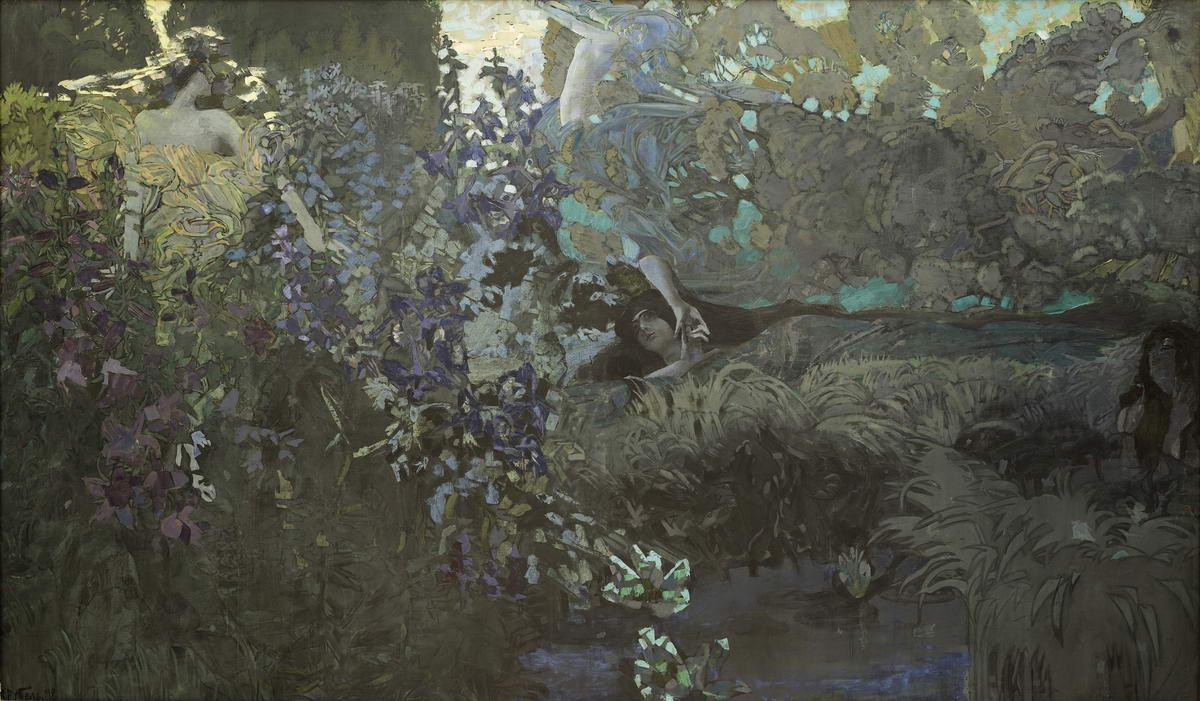
Mamontov secured Vrubel a commission for two huge panels for the art section of the All-Russian Exhibition — “Mikula Selyaninovich” and “The Princess of the Dream”, a hundred square metres in three months. But the academician Albert Benois, in charge of the pavilion, demanded sketches, a telegram went to St Petersburg — “Vrubel’s panels are monstrous, they must be removed” — the Academy’s commission ruled them unfit to show, and on 22 May the works were carried out of the pavilion.
July 1896
Mamontov’s pavilion for the “rejected” panels
Mamontov bought both panels for 5,000 roubles: Polenov and Korovin finished “Mikula”, Vrubel completed “The Princess of the Dream” in a shed at the Abramtsevo pottery, and in time for the imperial couple’s visit on 15–17 July the canvases were shown in a specially built pavilion signposted “Exhibition of decorative panels by the artist M. A. Vrubel, rejected by the jury of the Imperial Academy of Arts” — the words naming the Academy’s jury soon had to be painted over. A newspaper battle followed: Nikolai Garin-Mikhailovsky offered the first balanced analysis of Vrubel’s art, while Maxim Gorky mocked his panels in five articles.
28 July 1896
Marries Nadezhda Zabela in Geneva
Meeting Zabela’s family went badly — the age gap troubled them (he was 40, she 28), and the bride herself knew that Vrubel drank and squandered money — but on 28 July the couple were married in the Cathedral of the Exaltation of the Holy Cross in Geneva. They spent their honeymoon in a guesthouse in Lucerne, where Vrubel went on working on panels for A. V. Morozov’s Gothic study: by the wedding he was literally penniless and had walked from the station to his bride’s.
summer 1898
First symptoms of illness
During a summer stay in Ukraine the first symptoms of his future illness appeared: his migraines grew so severe that he took phenacetin in huge quantities — up to 25 grains or more, according to his sister-in-law. A previously unknown irritability set in too, especially when someone disagreed with his opinion of a work of art.
January 1898
“Morning” at Diaghilev’s exhibition
In St Petersburg Ilya Repin advised Vrubel not to destroy his panel “Morning”, which a client had turned down, but to show it at an exhibition. So the canvas went into Sergei Diaghilev’s exhibition of Russian and Finnish artists at the museum of the Stieglitz School.