Dirck van BaburenVlaanderen, 1595–1624
Prometheus Being Chained by Vulcan
Mag men het zien?
Ja, het ontvangt bezoek

Amsterdam, Nederland
Publiek tentoongesteld.
- Gecontroleerd
- Ongewijzigd sinds
- Bron
- Het museum
Over het schilderij
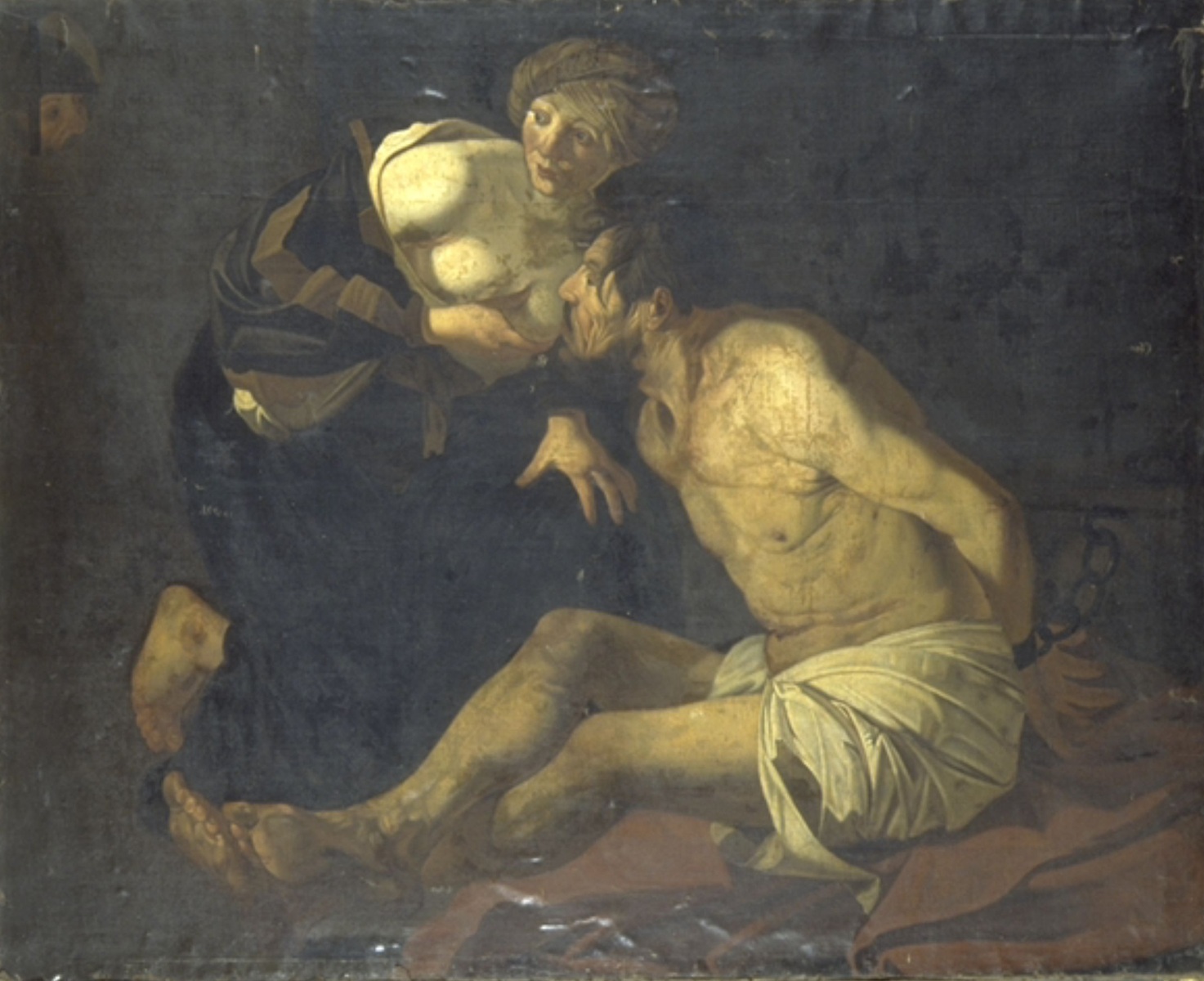
Prometheus Being Chained by Vulcan is an oil painting of 1623 by Dirck van Baburen of the Utrecht School, and an example of Baroque chiaroscuro.
The painting represents a tale from Greco-Roman mythology. Mercury, the messenger of the gods, watches the club-footed blacksmith god, Vulcan, punish the bold and cunning Titan Prometheus for stealing fire from the gods and giving it to mortals. Prometheus's punishment is to be bound to a rock and to have his liver consumed daily by an eagle, which appears partially at the top left.
The painting mysteriously has two signatures: the first is a clear signature below the right-hand shoulder of Prometheus. During a restoration of the painting, a second signature was discovered at the lower left by his hand.
Lees meer
In some versions of a Greek creation myth, Prometheus forges humans from clay and the stolen fire brings them to life. A painting, Adam and Eve, also by Baburen, was sold at auction in 1707 together with the Prometheus Being Chained by Vulcan, and one might conjecture that the two works formed a pair, both being illustrations of creation.
In de woorden van het museum
Prometheus stole fire from the gods and gave it to mankind. As punishment, Vulcan chained him to a rock, where an eagle pecked out his liver causing him excruciating pain. Here we see Prometheus being chained, his face contorted with fear, while Mercury laughs at him. Van Baburen borrowed the dramatic illumination and the figure’s sunburned hands and faces from
his great model Caravaggio.
Rijksmuseum Amsterdam
Gegevens
- Inventarisnummer
- SK-A-1606
Wat het toont
In de catalogus
Komen en gaan
Te zien · Zaal 2.1
Rijksmuseum Amsterdam · 29 sep 2026 — nu · Gecontroleerd
Of het te zien was, is onbekend
Rijksmuseum Amsterdam · Onbevestigd
Bronnen
- Rijksmuseum Amsterdam
- Afbeelding: Rijksmuseum Amsterdam — public domain