Dmitry Levitzky1735–1822
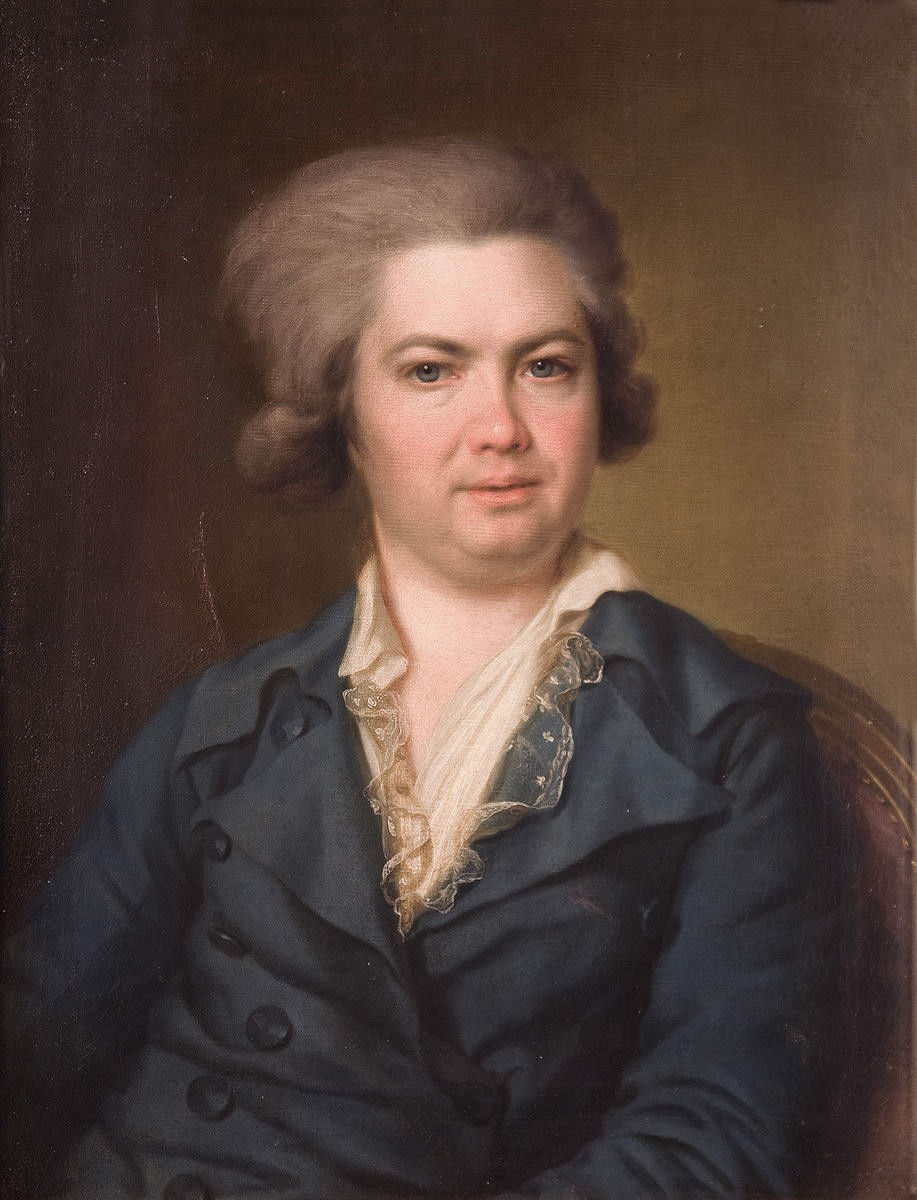
Портрет графа И.А.Игельстрома
Mag men het zien?
Onbekend
Sint-Petersburg, Rusland
De eigenaar is bekend; of het werk nu te zien is, is onbekend.
- Ongewijzigd sinds
- Bron
- Het museum
Over het schilderij
In de woorden van het museum — in het Russisch
поясной, 3/4 вправо, голова прямо, в белом гладком парике с буклями, белом галстуке с жабо, в зеленом мундире с красным отложным воротником, отворотами и жилетом; на плечах оливковый плащ, подбитый лиловым, во Владимирской ленте, с Андреевской и Владимирской звездами; правой рукой оперся о трость, левой подбоченился; фон темно-серый.
Pavlovsk
Gegevens
- Inventarisnummer
- ЦХ-2218-III
In de catalogus
Bronnen
- De Staatscatalogus van het Russische museumbezit
- Afbeelding: Pavlovsk — © ГМЗ «Павловск» · Госкаталог музейного фонда РФ
Intussen, in het leven van Dmitry Levitzky
Het hele leven1756–1822 · Werkzaam in
Saint Petersburg
1771–1788
Head of the Academy's Portrait Class
From 1771 he taught at the Academy of Arts and headed its portrait class for seventeen years; he retired in 1788.
1773–1778
Commissions from Empress Catherine II
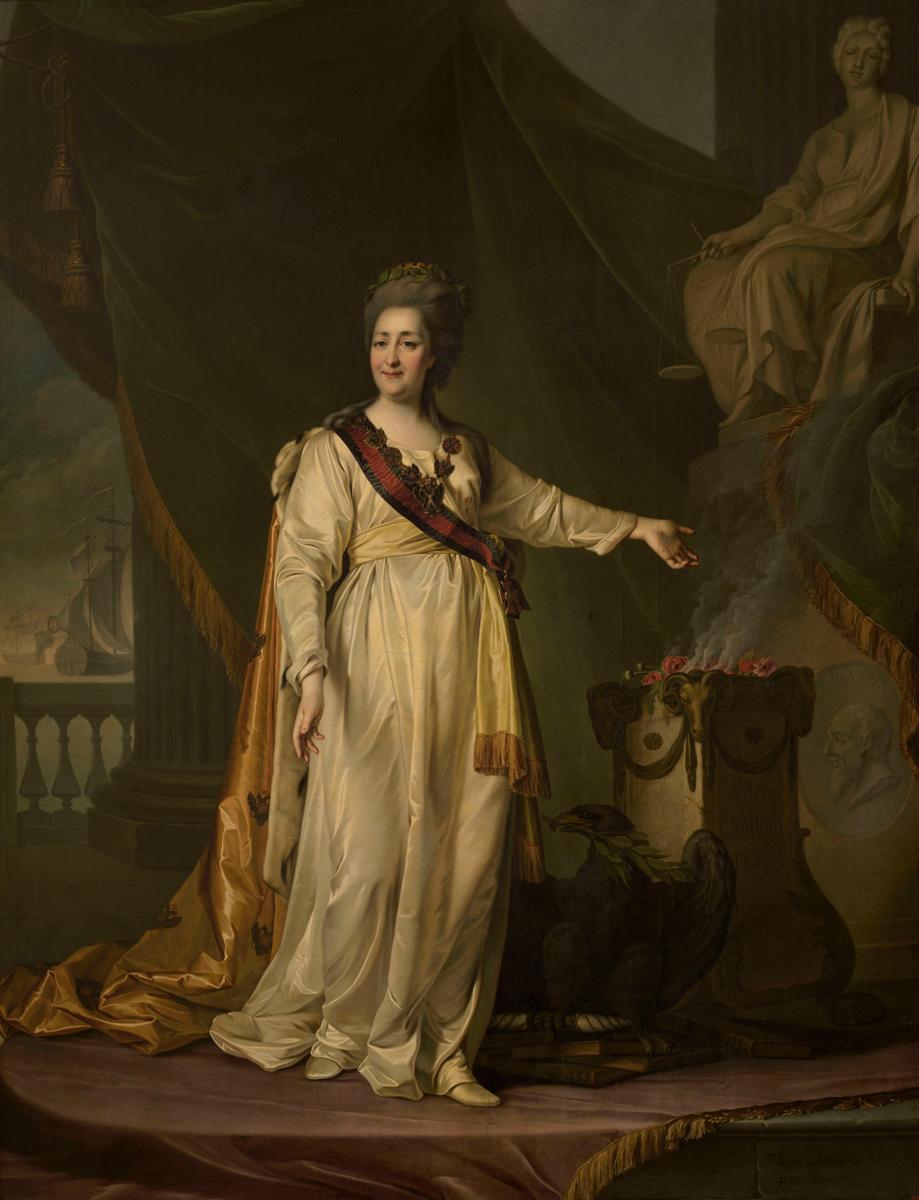
Levitzky's name appears repeatedly in the empress's personal accounts: 1,000 rubles for two portraits of her (1773), 800 rubles for a portrait of the Prussian king, and 1,000 rubles for a large portrait of Catherine II (1778) — enormous sums for the time.
1786 · Loopbaan
the Council of the Academy of Arts
He was elected a member of the council of the Imperial Academy of Arts.
late 1790s
Failing Eyesight
In the late 1790s Levitzky's eyesight began to fail, and he came to paint only rarely.
late 1797
Initiation into Freemasonry
At the end of 1797 he was initiated by A. F. Labzin into the first three Masonic degrees on the recommendation of N. I. Novikov; he then belonged to Labzin's St. Petersburg lodge, "The Dying Sphinx."