 Alessandro AlgardiItalië, 1595–1654
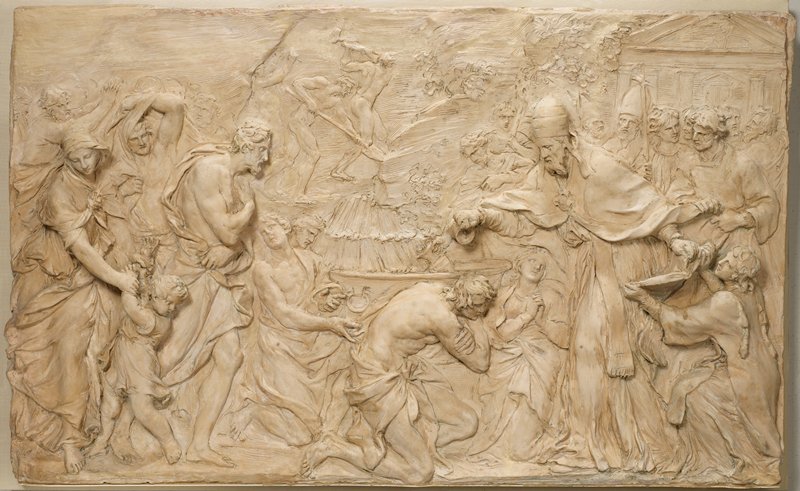
Pope Liberius Baptizing the Neophytes
Kan ik het zien?
Ja, nu te zien
Waar is „Pope Liberius Baptizing the Neophytes” nu? Minneapolis Institute of Art, G313, Minneapolis. Ja, nu te zien. Gecontroleerd 29 september 2026.

Minneapolis, Verenigde Staten
Nu open· tot 17:00
Publiek tentoongesteld.
- Gecontroleerd
- Ongewijzigd sinds
- Bron
- Het museum
Over de sculptuur
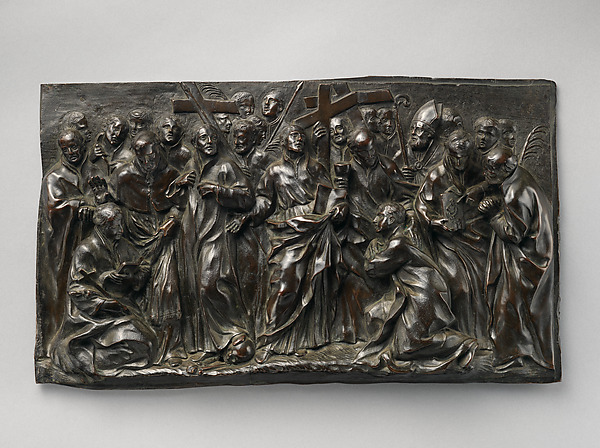
This terra-cotta relief is the only known study in clay for a sculpture decorating the marble fountain of Saint Damasus in the Vatican. The fountain was erected in the 17th century by Pope Innocent X to mark his restoration of aqueducts built for Pope Damasus in the 4th century. The relief shows Damasus’ predecessor, Liberius, baptizing new converts to Christianity. Damasus stands behind him, lifting his mantle.
The easily worked medium of clay allowed Algardi to experiment and refine his ideas before carving the relief in marble. By sculpting the foreground figures almost fully in the round and those more distant in ever shallower relief, he achieved an illusion of depth and volume. Over time, weather and abrasive cleaning have taken a toll on the marble version, but the clay model remains evidence of the artist’s intent.
Minneapolis Institute of Art
Gegevens
- Inventarisnummer
- 59.17
In de catalogus
Bronnen
- Minneapolis Institute of Art
- Afbeelding: Minneapolis Institute of Art — public domain
In het leven van Alessandro Algardi
Het hele leven1625–1654 · Werkzaam in
Rome
1650
Velázquez en opdrachten uit Spanje
Hij maakte kennis met Diego Velázquez, die hem opdrachten uit Spanje bezorgde: vier schouwomlijstingen voor het koninklijk paleis van Aranjuez en figuren voor de Neptunusfontein in de tuinen, en een grafmonument voor de graaf en gravin de Monterey in het augustijnenklooster van Salamanca.
in later years
Een groot atelier, vermogen en leerlingen
In zijn latere jaren leidde hij een groot atelier en vergaarde hij een aanzienlijk vermogen. Zijn leerlingen Ercole Ferrata en Domenico Guidi zetten zijn classicerende stijl voort, terwijl Antonio Raggi aanvankelijk bij hem leerde, al gingen volgens andere bronnen alle drie later naar Bernini; tot zijn minder bekende helpers behoorden Francesco Barrata, Girolamo Lucenti en Giuseppe Peroni.