CanalettoItalië, 1697–1768
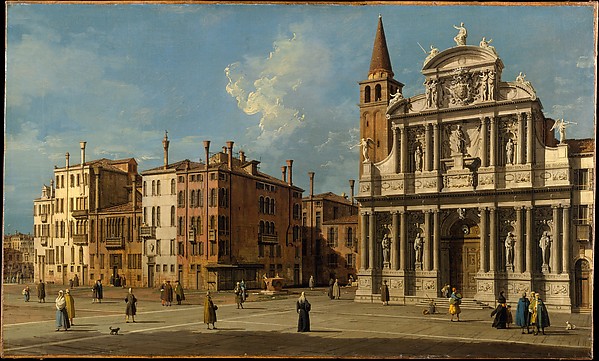
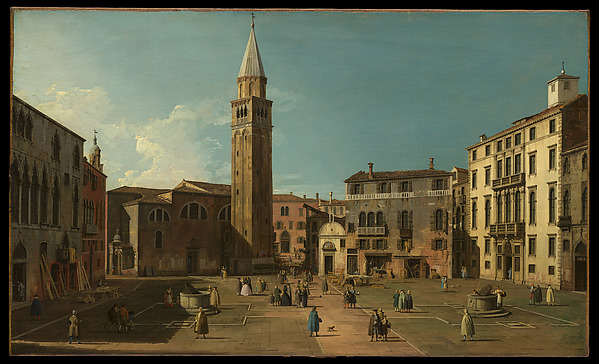
Plein met ruiterstandbeeld
Kan ik het zien?
Onbekend
Waar is „Plein met ruiterstandbeeld” nu? Collectie: Rijksmuseum Amsterdam, Amsterdam. Onbekend.

Amsterdam, Nederland
De eigenaar is bekend; of het werk nu te zien is, is onbekend.
- Bron
- Het museum
Over het werk
Een plein met een ruiterstandbeeld, een sarcofaag en een huis met overkapt dakterras.
Rijksmuseum Amsterdam
Gegevens
- Inventarisnummer
- RP-P-OB-35.575
Wat het toont
In de catalogus
Bronnen
- Rijksmuseum Amsterdam
- Afbeelding: Rijksmuseum Amsterdam — public domain
In het leven van Canaletto
Het hele leven1719–1720
Rome: Pannini, van Wittel and the turn to the veduta
In Rome Canal comes to know the work of the vedutista Giovanni Paolo Pannini and begins to paint views of Venice; his love of landscape painting grows stronger through contacts with the Dutch artists working in Rome, in particular Gaspar van Wittel. Soon he probably realises that the conventions of stage design stand in the way of his natural gift.
until 1728
The association with Joseph Smith begins
Sometime before 1728 Canaletto begins his association with Joseph Smith, an English businessman and collector living in Venice, who is appointed British Consul there in 1744; Smith will become the artist's principal agent and patron.
c. 1729 – 1735
Smith as agent: a “market of taste” for the Venetian veduta
Joseph Smith — a banker, art dealer and later British consul in Venice — creates a “market of taste” for the Venetian veduta among British aristocrats touring Italy and, as Canaletto's commercial agent from about 1729 to 1735, in effect controls the artist's work to the benefit of them both. Among the young painter's buyers is also the Prince of Liechtenstein.
1746
Moving to London because of wars and a collapsing market
Smith inspires Canaletto to travel to London; because of the wars shaking continental Europe he decides in 1746 to move to England, where he will live for the next ten years.
1762
George III buys Smith's collection for £20,000
In 1762 Joseph Smith sells most of his collection, which includes paintings by Canaletto, to King George III of England, who pays £20,000 for fifty paintings and 142 drawings and incorporates them into the Royal Collection.
20 april 1768
Died