 Sir Alfred GilbertVerenigd Koninkrijk, 1854–1934
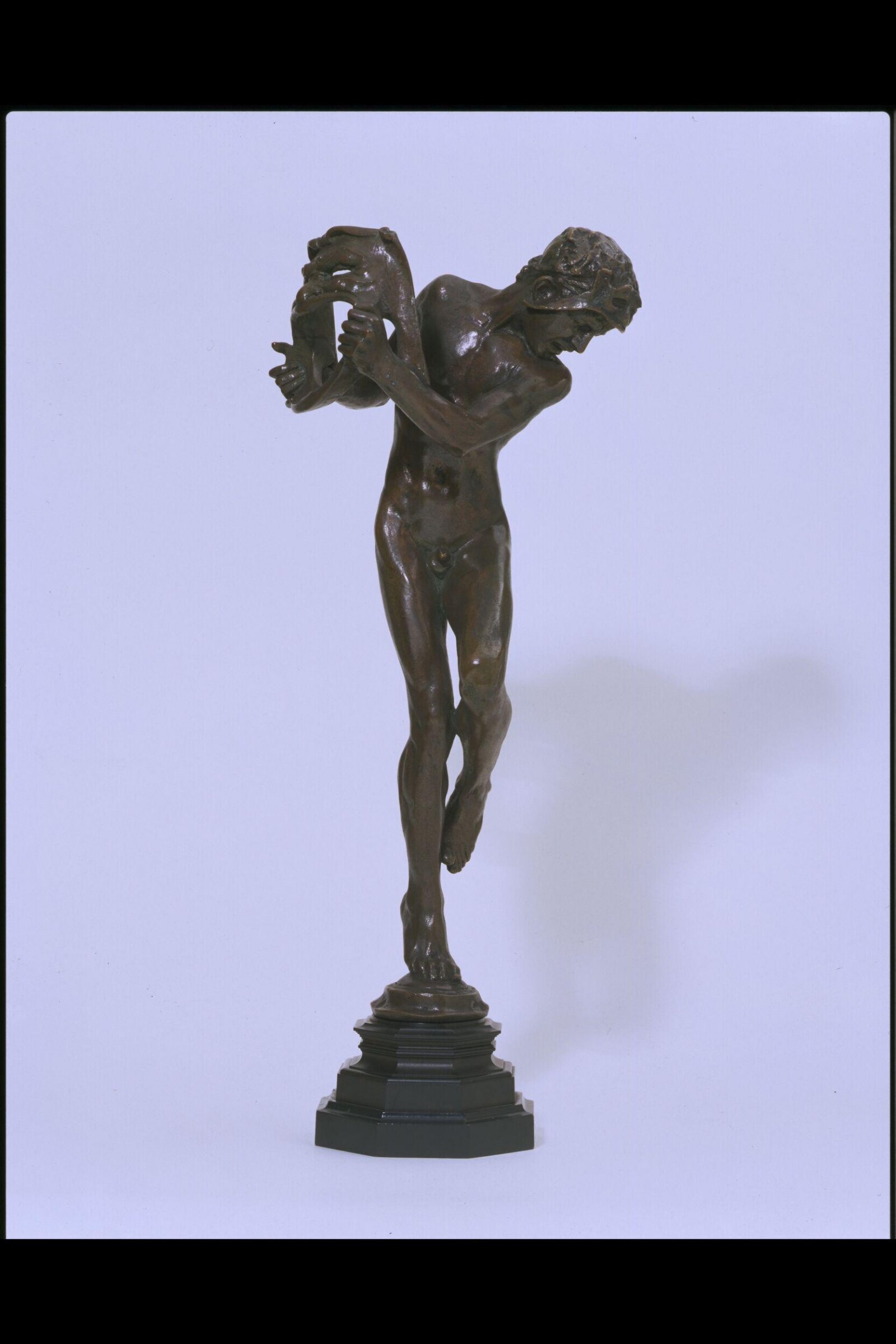
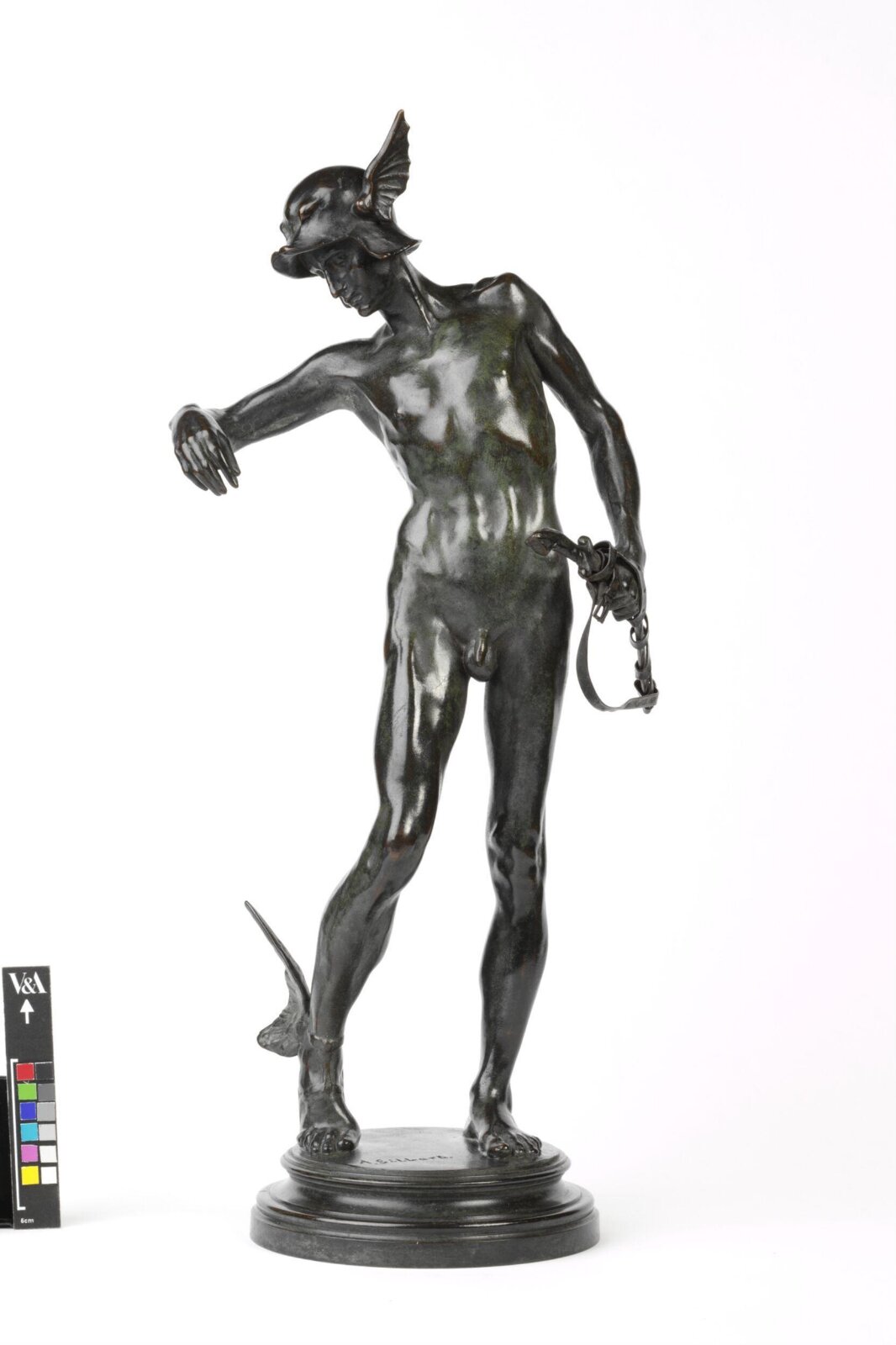
Perseus Arming
Mag men het zien?
Ja, het ontvangt bezoek

Victoria and Albert Museum
Londen, Verenigd Koninkrijk
ZaalSculpture, Room 21, The Dorothy and Michael Hintze Galleries
Publiek tentoongesteld. Wie daarvoor instaat, staat hieronder.
- Gecontroleerd
- 9 dagen geleden
- Ongewijzigd sinds
- 25 sep 2026
- Bron
- De eigen collectiegegevens van het museum
About the sculpture
This bronze statuette of 'Perseus Arming' by Alfred Gilbert was cast around 1882, after a plaster model made in Rome in 1880-1881. It represents the nude figure of Perseus with a winged helmet and a sword in his left hand. He is looking down at a winged sandal which he has just strapped to his right foot.
Read on
The work was conceived when Gilbert was in Italy, studying Renaissance art. In Florence, he had been particularly struck by Donatello's bronze of David (Bargello), and Cellini's Perseus with the Head of Medusa (Loggia dei Lanzi). Of the latter, Gilbert said: 'amazed as I was by that great work, it still left me somewhat cold, insomuch that it failed to touch my sympathies. As at that time my whole thoughts were of my artistic equipment for the future, I conceived the idea that Perseus before becoming a hero was a mere mortal, and that he had to look to his equipment. That is a presage of my life and work at that time.' (Hatton 1903, p. 10). Gilbert's portrayal of the mythological hero was exhibited at the Paris Salon in 1883, and received an honourable mention, which encouraged the young artist to 'go on writing my own history by symbol'.
Perseus was the son of Zeus and Danae and one of the archetypal heroes in Greek mythology. He defeated various monsters, one of them Medusa, whom he beheaded. Perseus is depicted either as the typical hero, young, beardless and naked (sometimes with a short cloak), or he is dressed as a warrior in armour. He holds a curved sword, a gift from Mercury and a polished shield given by his protector Minerva. He wears winged sandals.
Sir Alfred Gilbert (1854 - 1934) was a famous British sculptor of the late 19th century. He was also a medallist, goldsmith and draughtsman. He was known for his inventiveness, experimentation with alloys and patina and characteristically used various materials in the same work. Upon his many commissions for monuments and memorials is the celebrated Eros figure as part of the Shaftsbury memorial (1885-1893) on Piccadilly Circus.
Victoria and Albert Museum
Gegevens
- Inventarisnummer
- 77-1904
What it shows
In de catalogus
Bronnen
- Victoria and Albert Museum: the museum's own open data · opgehaald 9 dagen geleden
- Afbeelding: Victoria and Albert Museum — © Victoria and Albert Museum, London