John RuskinEngeland, 1819–1900
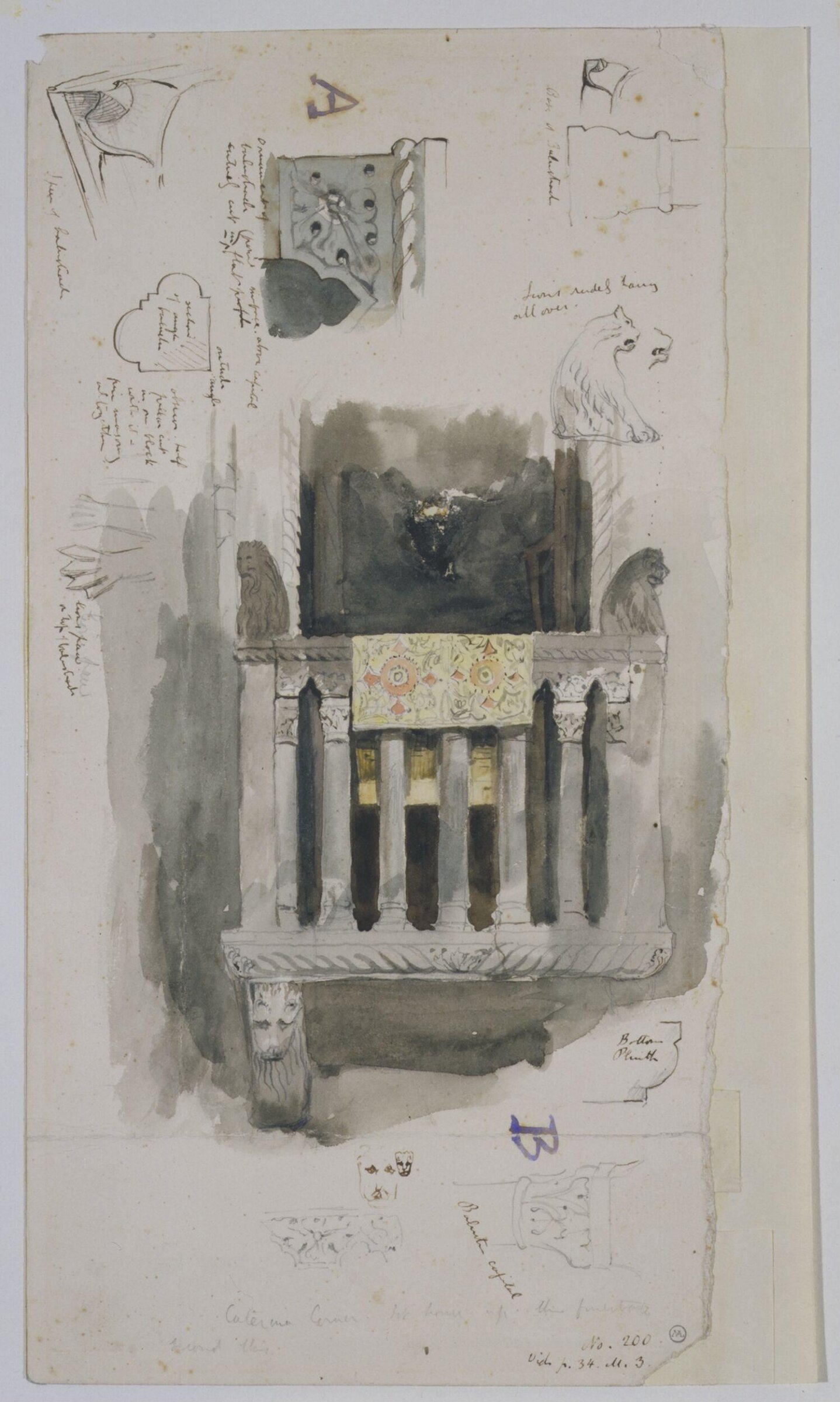
Panel Moldings, Sarcophagi
Mag men het zien?
Ontvangt momenteel niet

Cambridge, Verenigde Staten
Het hoort bij de collectie, maar is momenteel niet tentoongesteld.
- Gecontroleerd
- Ongewijzigd sinds
- Bron
- Het museum
Gegevens
- Inventarisnummer
- 1926.33.127
In de catalogus
Bronnen
- Harvard Art Museums
- Afbeelding: Harvard Art Museums — © President and Fellows of Harvard College
Intussen, in het leven van John Ruskin
Het hele leven1834–1900 · Werkzaam in
Great Britain
October 1847
Engagement to Effie Gray
During 1847 Ruskin grows closer to Euphemia “Effie” Gray, the daughter of family friends, for whom he had once written “The King of the Golden River”; they become engaged in October.
10 april 1848
Married: Effie Gray
1849
In Venice with Effie: the sketches behind “The Stones of Venice”
In November 1849 the couple stay at the Hotel Danieli: Effie looks for company, while Ruskin works alone and hurries to draw the Ca' d'Oro and the Doge's Palace, fearing that the occupying Austrian troops will destroy them. These sketches and notes will grow into “The Stones of Venice”.
1851–1853
The three-volume “Stones of Venice”
Growing from a technical history of Venetian architecture, from the Byzantine to the Renaissance, into a broad cultural history, the work is a warning to contemporary England about the moral and spiritual health of society: Ruskin explains the decline of Venice by the loss of true Christian faith. The chapter “The Nature of Gothic” from the second volume — a critique of the division of labour and industrial capitalism — will be published by William Morris as a separate book.
April – July 1854
Effie leaves Ruskin and the marriage is annulled
Suffering from illness and from fierce quarrels with her husband and his overly protective parents, Effie goes to her own parents in Scotland; she and Millais have fallen in love, and her leaving causes a public scandal. In April 1854 she files a suit of nullity on grounds of non-consummation, which is granted in July; Ruskin does not even mention it in his diary.