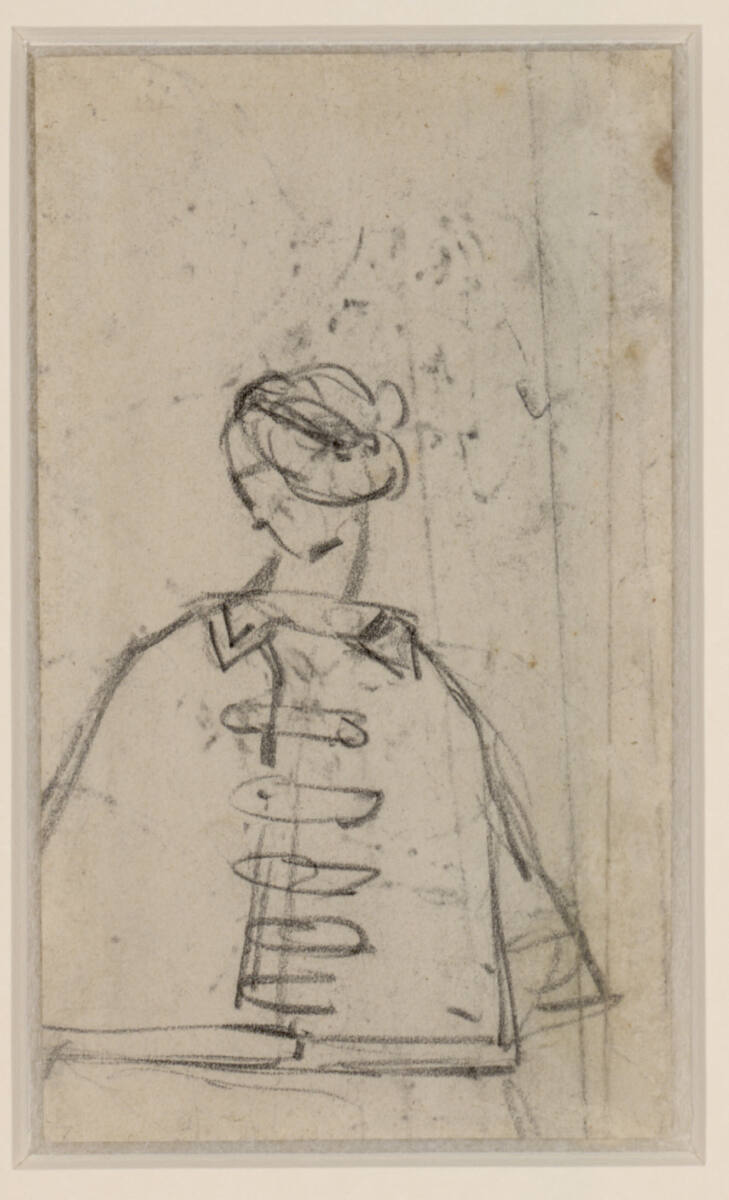
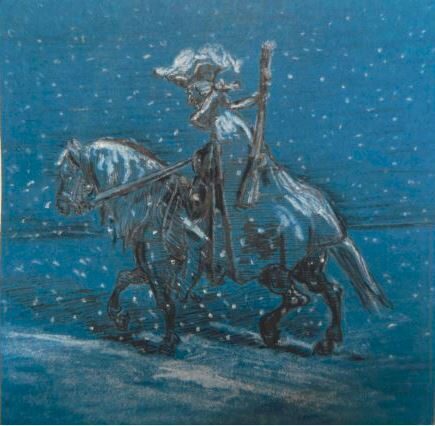
Gustave DoréFrankrijk, 1832–1883
Owls
Mag men het zien?
Ontvangt momenteel niet

Harvard Art Museums
Cambridge, Verenigde Staten
Het hoort bij de collectie, maar is momenteel niet tentoongesteld.
- Gecontroleerd
- 20 uur geleden
- Ongewijzigd sinds
- 27 sep 2026
- Bron
- De eigen collectiegegevens van het museum
Gegevens
- Inventarisnummer
- M9721
In de catalogus
Bronnen
- Harvard Art Museums: the museum's own open data · opgehaald 5 dagen geleden
- Afbeelding: Harvard Art Museums — © President and Fellows of Harvard College
Intussen, in het leven van Gustave Doré
Het hele leven1852
Breaking with the magazine and cheap editions
Four years after taking part in the Salon Doré breaks with the magazine and from then on works on the illustration of cheap editions.
1853
A commission for Byron and British publishers
In 1853 Doré is asked to illustrate the works of Lord Byron; this commission is followed by additional work for British publishers, including a new illustrated Bible.
1853
The Philippson Bible with his illustrations
In 1853 a Bible in Ludwig Philippson's translation, with illustrations by Doré, is published.
1854
“The History of Holy Russia” amid the Crimean War
With the outbreak of the Crimean War Doré's first independent album-book appears — an anti-Russian war pamphlet, the “Picturesque, Dramatic and Caricatural History of Holy Russia”, in 500 drawings with commentary drawn from the texts of Nestor, Karamzin, Ségur and other historians.
1854–1855
Rabelais, “The Parisian Menagerie” and Balzac
In 1854 Doré's illustrations to “Gargantua and Pantagruel” appear, together with an album of lithographs, “The Parisian Menagerie”, grotesque sketches of Paris life; in 1855 his drawings for Balzac's “Droll Stories” are published.
1856
Twelve plates for “The Legend of the Wandering Jew”
In 1856 Doré produces twelve folio-size illustrations of “The Legend of the Wandering Jew”, a short poem by Pierre-Jean de Béranger derived from a novel by Eugène Sue of 1845; the series propagated longstanding antisemitic views of the time.