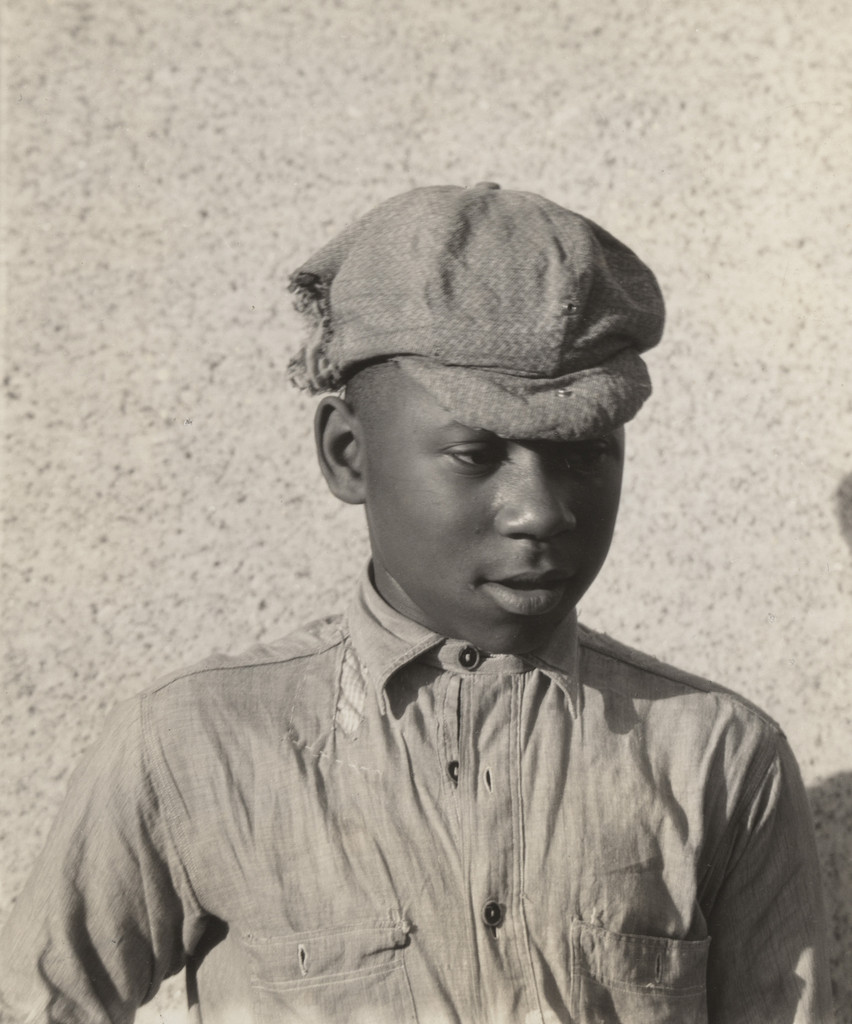
 Walker EvansVerenigde Staten, 1903–1975
New Orleans Vicinity
Mag men het zien?
Ontvangt momenteel niet

Museum of Modern Art
New York, Verenigde Staten
Het hoort bij de collectie, maar is momenteel niet tentoongesteld.
- Gecontroleerd
- 13 dagen geleden
- Bron
- De eigen collectiegegevens van het museum
Gegevens
- Inventarisnummer
- 376.2015
Bronnen
- Museum of Modern Art: the museum's own open data · opgehaald 13 dagen geleden
- Afbeelding: Museum of Modern Art — © the artist or rights holder
Intussen, in het leven van Walker Evans
Het hele levenMay – June 1933
An assignment in Cuba
In May and June 1933 Evans takes photographs in Cuba on assignment for Lippincott, the publisher of Carleton Beals' “The Crime of Cuba”, a “strident account” of the dictatorship of Gerardo Machado. He documents street life, the presence of police, beggars and dockworkers in rags, and other waterfront scenes; 31 of his photographs will appear in Beals' book.
May – June 1933
Drinking with Hemingway in Cuba
In Cuba Evans drinks nightly with Ernest Hemingway, who lends him money to extend his two-week stay by an additional week. Fearing that his photographs might be deemed critical of the government and confiscated, he leaves 46 prints with Hemingway, and helps him acquire photos from newspaper archives documenting the political violence Hemingway describes in “To Have and Have Not” (1937).
June 1935
A miners' settlement and a staff post at the RA
In 1935 Evans spends two months on a fixed-term photographic campaign in West Virginia and Pennsylvania; in June he accepts a job from the U.S. Department of the Interior to photograph a government-built resettlement community of unemployed coal miners in West Virginia. He quickly parlays this temporary employment into a full-time position as an “information specialist” in the Resettlement Administration (later the Farm Security Administration) and from October 1935 on does photographic work for it, primarily in the Southern United States.
summer 1936
Hale County with James Agee, on assignment for Fortune
In the summer of 1936, while on leave from the FSA, Evans and the writer James Agee are sent by Fortune to Hale County, Alabama, for a story the magazine subsequently opts not to run.