 Fernand LégerFrankrijk, 1881–1955
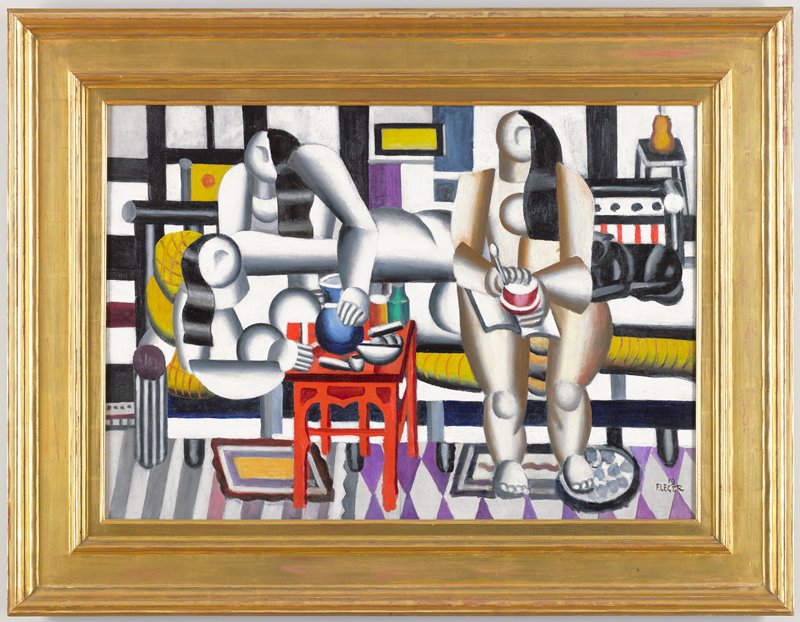
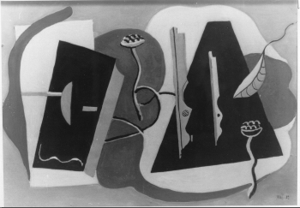
Nature Morte au Compas
Kan ik het zien?
Nee, gestolen en gezocht
Waar is „Nature Morte au Compas” nu? Nee, gestolen en gezocht. Gecontroleerd 29 september 2026.
Opgenomen in het nationale register van gestolen kunst van de FBI, nr. 00348.
- Gecontroleerd
- · Gemeld
- Ongewijzigd sinds
- Bron
- Een register van gestolen kunst
Gegevens
In de catalogus
Bronnen
- Het register van gestolen kunst van de FBI
- Afbeelding: FBI National Stolen Art File
In het leven van Fernand Léger
Het hele levenDecember 1919
Marriage to Jeanne Lohy
In December 1919 Léger marries Jeanne-Augustine Lohy; she remains his wife until her death in 1950.
1920
Friendship with Le Corbusier, “The Mechanic” and “The Great Lunch”
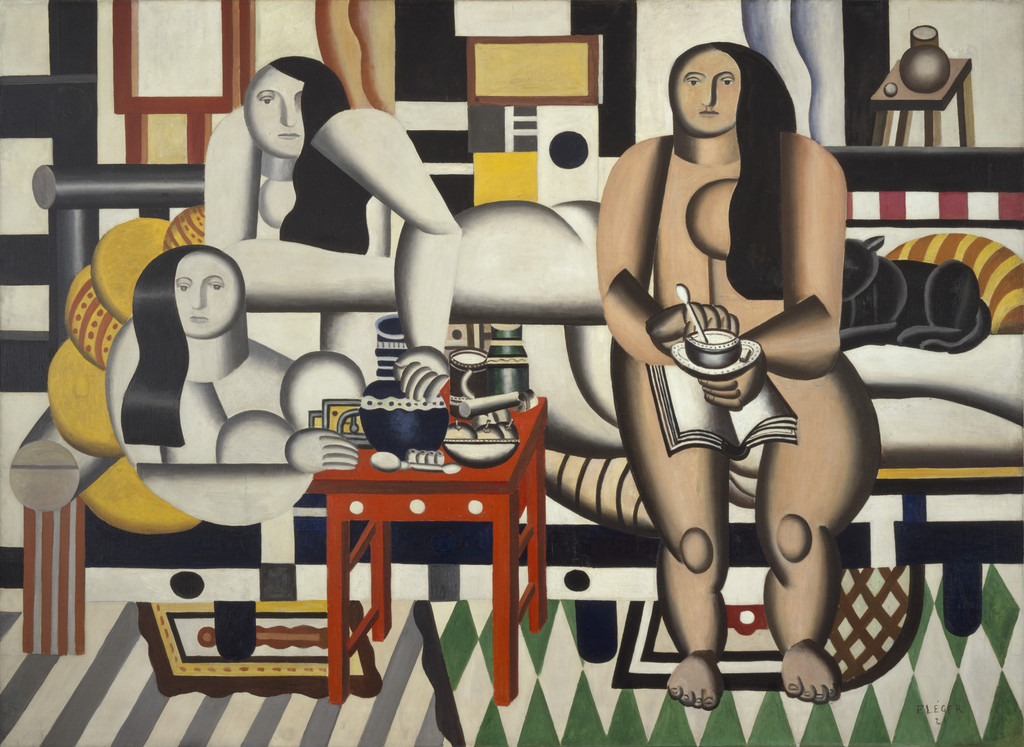
In 1920, at the founding of the journal “L'Esprit nouveau”, Léger befriends Le Corbusier, who remains a lifelong friend. In the same year he paints the canvases “The Mechanic” and “The Great Lunch”, and from this year he exhibits at the Indépendants for many years.
1921
Meeting van Doesburg and Mondrian
In 1921 Léger meets van Doesburg and Mondrian.
1921
Gance's “La Roue” and Malraux's “Lunes en papier”
In 1921, together with Blaise Cendrars, Léger works on Abel Gance's film “La Roue” and illustrates André Malraux's book “Lunes en papier”. He is so drawn to cinema that he considers for a time giving up painting for filmmaking.
1922
The death of his mother
In 1922 Léger's mother, Marie Adèle Dunon, dies; she had lived on her farm in Lisores until her death.
1922–1924
Stage and screen: the Swedish Ballet and “L'Inhumaine”
In 1922 Léger designs sets, costumes and the curtain for “Skating Rink” (music by Milhaud) for Rolf de Maré's Swedish Ballet, and in 1923 for the ballet “La Création du monde” (Milhaud, libretto by Cendrars). In 1923–24 he designs the laboratory set for Marcel L'Herbier's film “L'Inhumaine”.