Jan SteenNederland, 1626–1679
Moses and Pharaoh’s Crown
Mag men het zien?
Onbekend

Den Haag, Nederland
De eigenaar is bekend; of het werk nu te zien is, is onbekend.
- Ongewijzigd sinds
- Bron
- Het museum
Over het schilderij
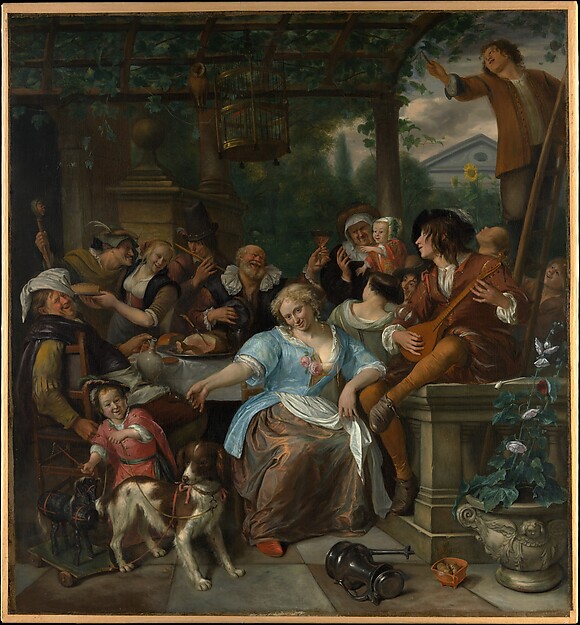
Mozes en de kroon van de farao is een schilderij van Jan Steen uit 1670. Het werk maakt sinds 2011 deel uit van de collectie van het Mauritshuis in Den Haag.
Gegevens
- Inventarisnummer
- 1167
In de catalogus
Bronnen
- Wikidata
- Afbeelding: Mauritshuis — Jan Steen · Public domain · Wikimedia Commons
Intussen, in het leven van Jan Steen
Het hele leven1660–1670
Haarlem: his most productive period
From 1660 to 1670 Steen lived in Haarlem, and this was the most productive period of his life.
1669–1670
The deaths of his wife, mother and father
By 1669 Steen's finances had improved, but in the spring his wife died, later that year his mother, and a year later his father.
1670
Returns to Leiden, to his parents' house
After his father's death Steen returned to Leiden and lived for the rest of his life in the house he inherited from his parents.
1671
Elected head of the Leiden Guild of St Luke
In 1671 Steen was elected princeps — head — of the local Guild of St Luke.
1672
Opens the tavern “De Vrede” (“Peace”)
Steen opened the tavern “De Vrede” (“Peace”); his debts mounted again, the art market was declining, and according to Houbraken he often spent his time drinking.
1672
The “Year of Disaster”: the art market collapses
In 1672, known in the Netherlands as the “Year of Disaster”, the art market collapsed.