Pierre-Narcisse GuérinFrankrijk, 1774–1833
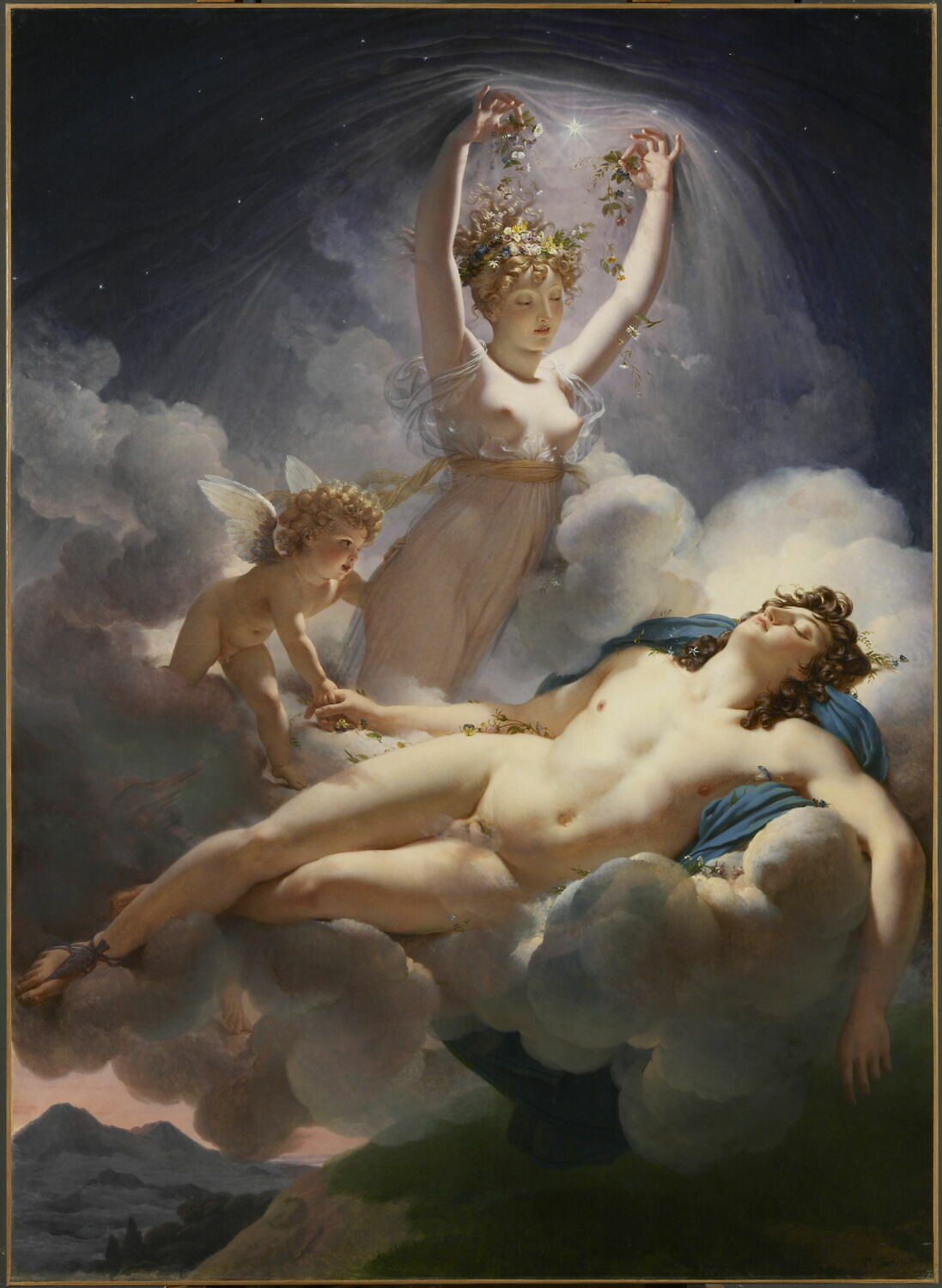
Morpheus and Iris
Kan ik het zien?
Ja, nu te zien
Waar is „Morpheus and Iris” nu? Hermitage, Zaal 303, Sint-Petersburg. Ja, nu te zien. Gecontroleerd 29 augustus 2026.

Sint-Petersburg, Rusland
Gesloten· gaat open om 12:00
Publiek tentoongesteld.
- Gecontroleerd
- Ongewijzigd sinds
- Bron
- Het museum
Over het schilderij
In de woorden van het museum — in het Russisch
Сюжет картины восходит к «Метаморфозам» Овидия. Богиня радуги Ирида, вестница олимпийских богов, в сопровождении крылатого Купидона спускается на облаках к богу сновидений Морфею. Ложе Морфея украшено барельефами на темы XIV песни «Илиады» Гомера. Мифологические образы, эффектная театральная композиция и условный декоративный колорит, построенный на сочетании холодных зеленовато-голубых и теплых золотисто-розовых тонов, идеально соответствовали убранству дворцовых интерьеров эпохи Первой Империи. Типичный образец живописи французского неоклассицизма, картина Герена предвосхищает и некоторые особенности салонного искусства середины XIX в.
Hermitage
Gegevens
- Inventarisnummer
- ГЭ-5675
In de catalogus
Bronnen
- Hermitage
- Afbeelding: Hermitage — Museum open access
In het leven van Pierre-Narcisse Guérin
Het hele leven1805–1822 · Werkzaam in
Paris
1810
The Paris Salon of 1810: three paintings
Returning to Paris after several years in Italy, Guérin appeared at the Salon again with three paintings. “Dawn Abducting Cephalus” was received coldly, while “Napoleon Pardoning the Rebels in Cairo, 30 October 1798” drew sharp criticism.
1810
Opens a studio in Paris
Guérin’s studio soon became very lively: the best-known French Romantic painters came out of it — Théodore Géricault, Eugène Delacroix, Ary Scheffer, Léon Cogniet, André Jacques Orsel, Louis-Pierre Henriquel-Dupont, Paul Huet and others. Unmarried and childless, he devoted himself entirely to his studio and his pupils, with whom he was very close.