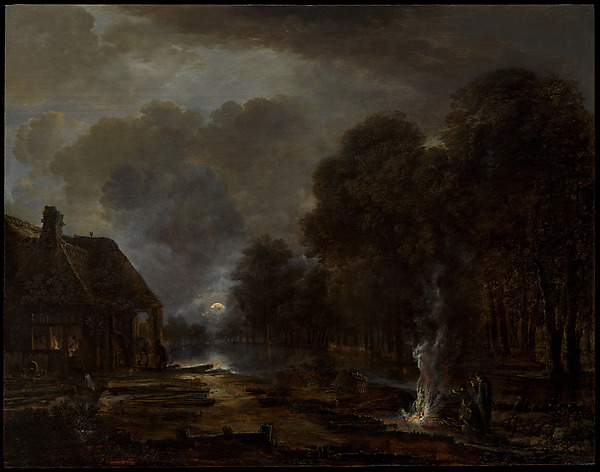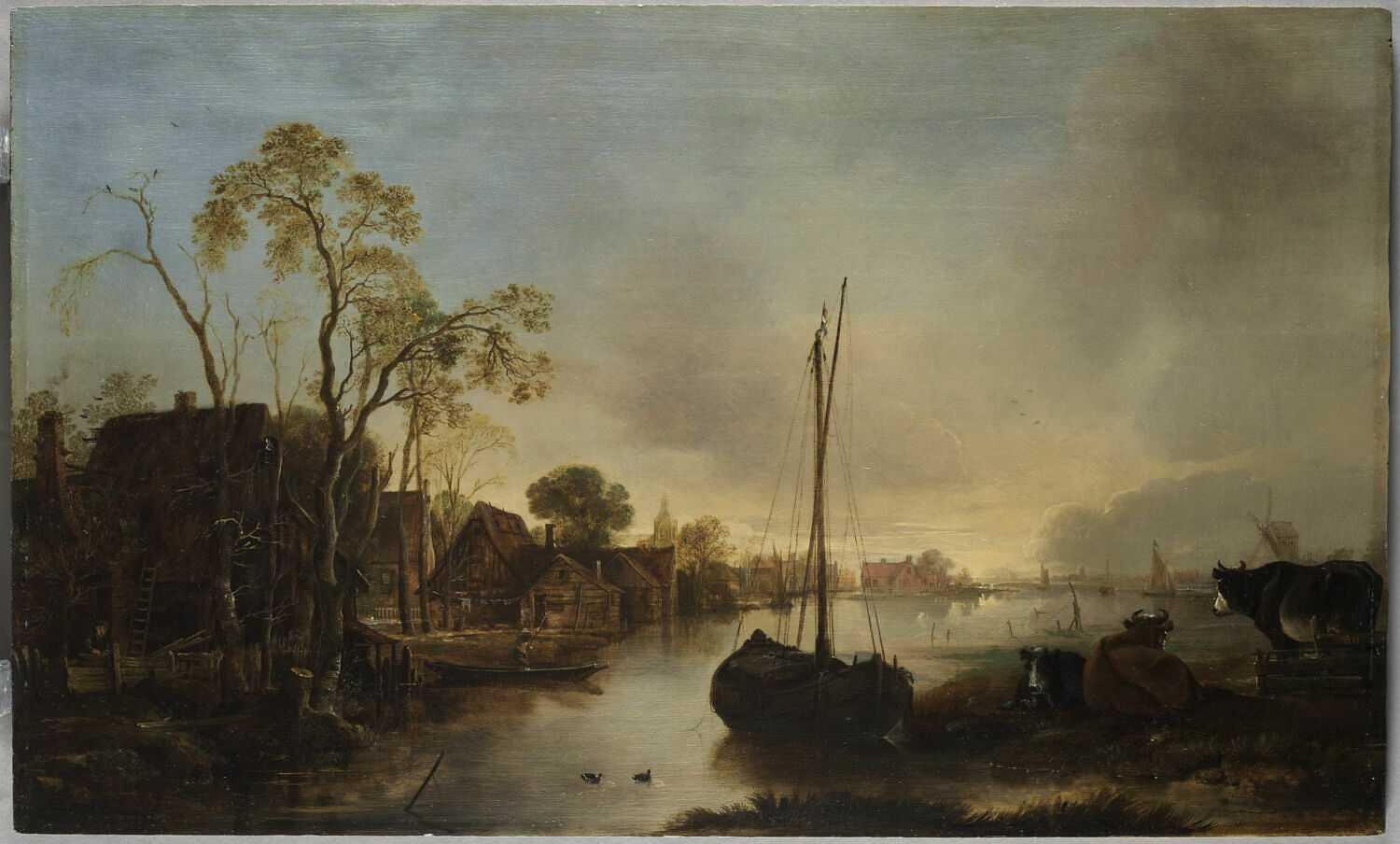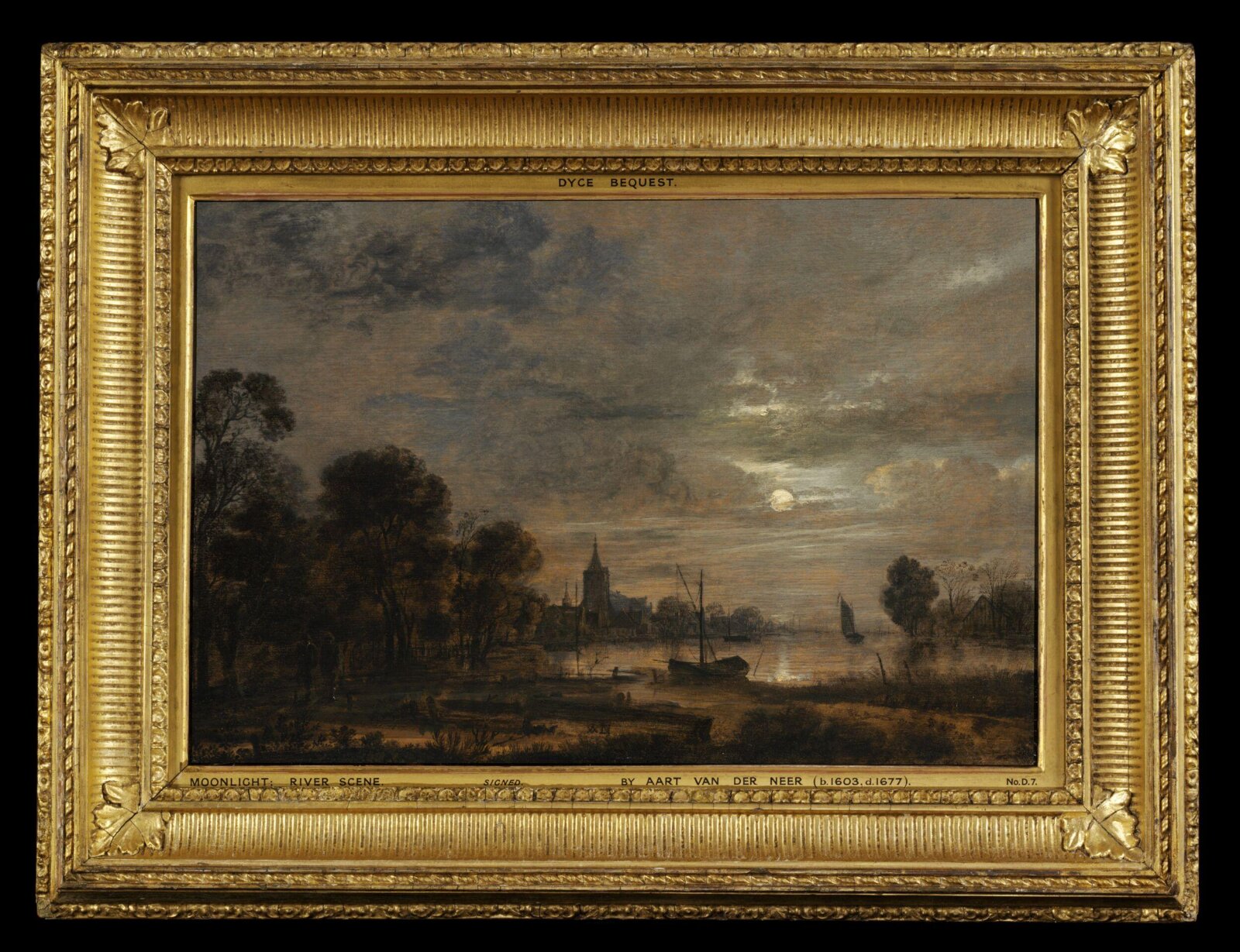
Moonlight and River Scene
Over het schilderij
Aert van der Neer (1603/04-1677) spent his youth in Arkel near Gorinchem (Gorkum), a town on the river Waal, east of Dordrecht. He moved to Amsterdam in about 1632 and remained there for the rest of his life. He was best known for moonlight landscapes and winter scenes.
Verder lezen
This painting is unlikely an authentic work by Aert van der Neer but a good example of his much copied oeuvre and the attribution to the artist is qualified in the catalogue raisonné (Schulz, 2002) as questionable. The demand for moonlit landscapes by Aert van der Neer was great during his lifetime but also in the 18th and the 19th centuries particularly in 1770-80 and again in the period between 1815 and 1840 in central Europe and England under the influence of Romanticism that led to a series of copies and forgeries often inscribed with fake monograms. The naturalistic elements such as the foliage and the vegetation at ground level look indeed less accurate than in an authentic work by the artist. The earthy palette and the play of reddish brown and dark greyish blue however reflect well the characteristic style of Aert van der Neer who was famous for his use of coloured light and his ability to depict atmospheric effects.
Victoria and Albert Museum

Gegevens
Intussen, in het leven van Aert van der Neer
Het hele leven1630s
Son born: Eglon van der Neer
1632–1677 · Werkzaam in
Amsterdam
9 november 1677
Died