 Kuzma Petrov-VodkinRusland, 1878–1939
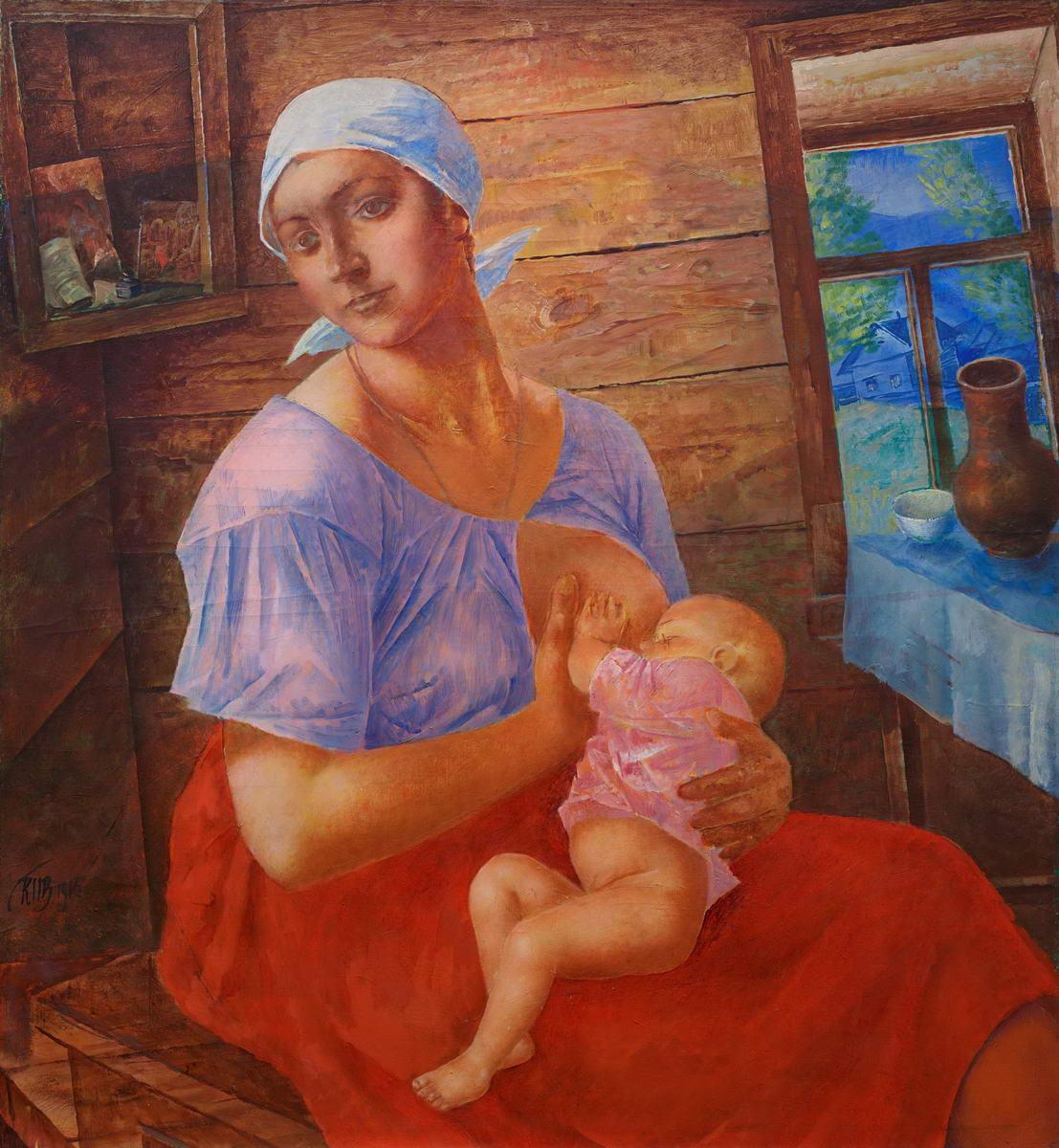
Мать
Kan ik het zien?
Ja, nu te zien
Waar is „Мать” nu? Russisch Museum, Korpus Benua, Zal 79, Sint-Petersburg. Ja, nu te zien. Gecontroleerd 28 september 2026.

Sluit binnenkort· tot 18:00
Publiek tentoongesteld.
- Gecontroleerd
- Ongewijzigd sinds
- Bron
- Het museum
Over het schilderij
In de woorden van het museum — in het Russisch
В середине 1910-х годов в творчестве Петрова-Водкина резко возрос интерес к национальным корням и традициям. В основе картины — натурный мотив, претерпевший значительные трансформации, пройдя через личностные видение мастера. Облик молодой крестьянки, кормящей ребенка, перерастает в образ Мадонны с Младенцем, осиянный божественной благодатью. Монументальность и значимость образного строя произведения усиливаются мастерски найденным звучным цветовым колоритом с доминирующим — любимым в народе — красным цветом. Русский музей . От иконы до современности . СПб . 2015. С . 281.
Lees meer
Образ матери, материнской любви в житейском его отображении в искусстве, соединяется в его представлении с христианским символом материнства — образом Богородицы, свидетельствуя о единстве всего происходящего вокруг нас. Взору Петрова-Водкина открывается вечность в единичном явлении. Заметный с первого взгляда «иконописный» характер образов, созданных Петровым-Водкиным, в особенности в предреволюционный период творчества, далек от поверхностной стилизации. По словам Михаила Владимировича Алпатова, «… он понимал самую суть, он шел не от приема а от какого-то взгляда на мир, на человека ». Ольга Мусакова. Мгновения вечности // Кузьма Сергеевич Петров-Водкин. СПб. 2018. С. 10.
Russisch Museum
Gegevens
- Inventarisnummer
- ЖБ-1250
Wat het toont
In de catalogus
Bronnen
- Russisch Museum
- Afbeelding: Russisch Museum — © State Russian Museum
In het leven van Kuzma Petrov-Vodkin
Het hele leven1913
First serious stage design: “The Maid of Orleans”
He designs sets and costumes for Schiller’s “The Maid of Orleans” at Nezlobin’s theatre in Moscow (directed by N. N. Zvantsev). The papers dubbed the war scene the “fire of war”, and it drew both praise and blame for its colour contrasts.
1916
Ferapontov Monastery: Dionysius’s frescoes
He visits the Ferapontov Monastery to study Dionysius’s frescoes for a church decoration in Bari, Italy, commissioned by the architect Alexey Shchusev. In autumn he makes a sketch for it, but the war prevents the commission from going ahead.
1916
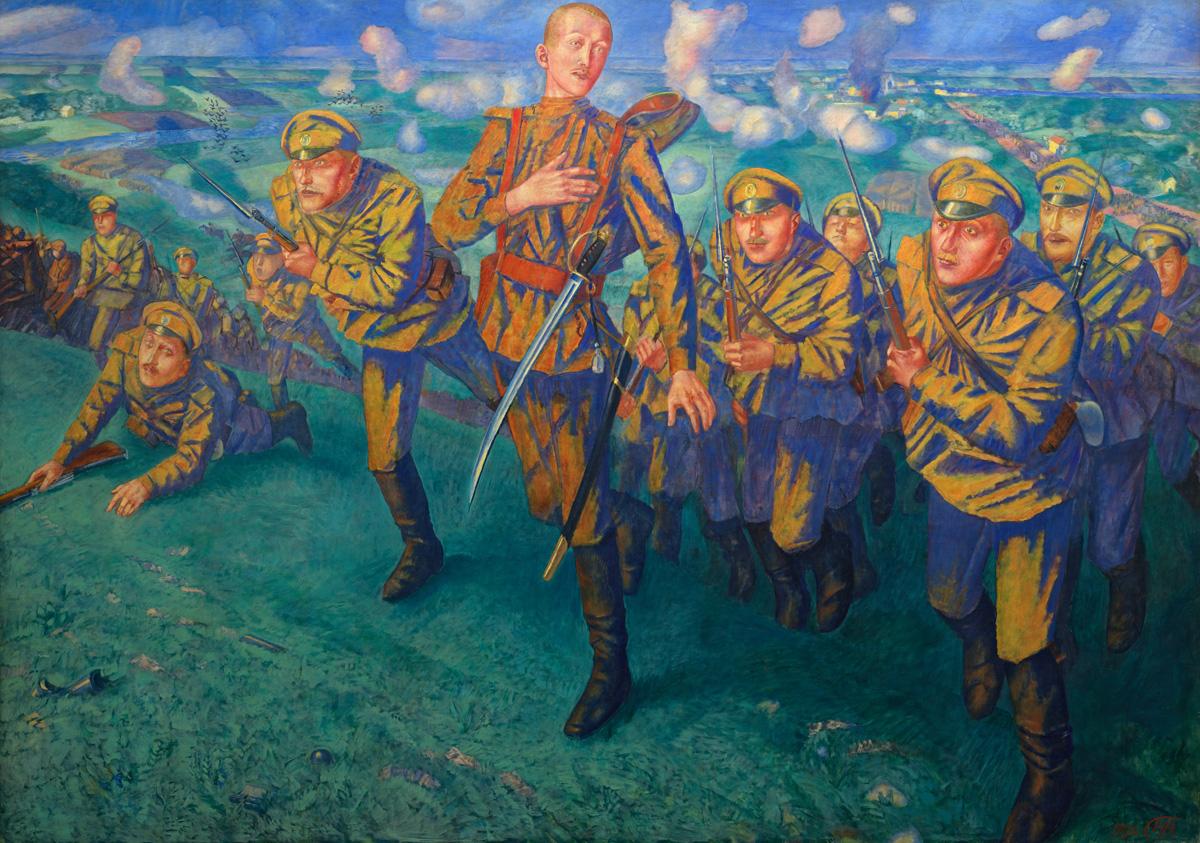
Called up to the Izmailovsky Regiment; “In the Line of Fire”
A military commission sends him from Khvalynsk to the Izmailovsky Life Guards Regiment in Petrograd. Living half in barracks and undergoing drill, he works on his “war picture”, “In the Line of Fire”.
by 1917
The theory of “spherical perspective”
By 1917 he has formed a philosophical and theoretical concept of the “science of seeing”, embodied in a symbolic pictorial space built on “spherical” (or “inclined”) perspective and in a theory of how the three primary colours, red, blue and yellow, interact.
1917
The February Revolution
He greets the days of the “Great Upheaval” with enthusiasm and hopes to return soon to Khvalynsk and Krasulinka; the Italian commission is left in limbo.
1917
Kept in Petrograd instead of the front
He is enrolled in a march company bound for the front, but the battalion committee cancels it: he holds a responsible post on the Petrograd Council for Art Affairs, headed by Maxim Gorky. By June he tells his mother that the endless councils and meetings have worn him out.