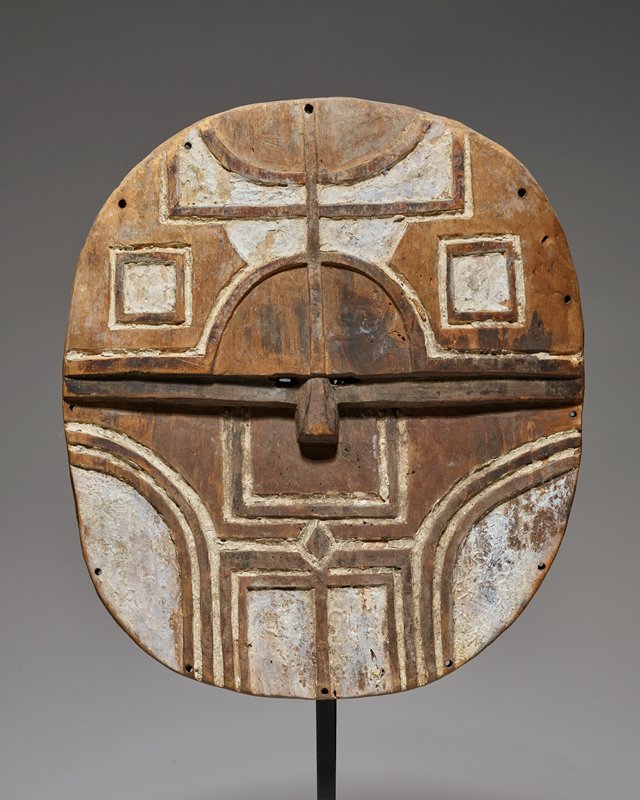
Mask
Mag men het zien?
Ontvangt momenteel niet

Minneapolis Institute of Art
Minneapolis, Verenigde Staten
Het hoort bij de collectie, maar is momenteel niet tentoongesteld.
- Gecontroleerd
- 6 uur geleden
- Ongewijzigd sinds
- 25 sep 2026
- Bron
- De eigen collectiegegevens van het museum
About the sculpture
When the first masks of the Congolese Teke-Tsaayi peoples arrived in Europe in the early 1900s, their geometric designs appealed greatly to artists and collectors. Yet Europeans only saw and admired the formal properties, whereas for the Teke-Tsaayi themselves the masks were repositories of coded historic knowledge. The lines and shapes appear to form a language, whose signs refer to clan animals, celestial bodies, human body parts, and roads and crossroads. During a masquerade the dancer performed a cartwheel, which, for a very brief moment, would alter the disposition of the signs, and thus the “reading” of the mask.
Minneapolis Institute of Art
Gegevens
- Inventarisnummer
- 2021.76
In de catalogus
Bronnen
- Minneapolis Institute of Art: the museum's own open data · opgehaald 4 dagen geleden
- Afbeelding: Minneapolis Institute of Art — public domain