ART WIKI32.963 te zien
KaartCollectieKunstenaarsMuseaTentoonstellingenJournal
Inloggen

ART WIKI

Waar het meesterwerk hangt en wanneer men u toelaat.

Collecties: Art Institute of Chicago, Cleveland Museum of Art, Getty Villa, Harvard Art Museums, Hermitage, Hirshhorn Museum and Sculpture Garden, J. Paul Getty Museum, Louvre, Metropolitan Museum of Art, Minneapolis Institute of Art, Museum of Modern Art, National Gallery of Art, National Museum of Asian Art, National Portrait Gallery, Poesjkinmuseum, Rijksmuseum Amsterdam, Russisch Museum, Smithsonian American Art Museum, Statens Museum for Kunst, Tretjakovgalerij, Victoria and Albert Museum, Whitney Museum of American Art, Staatscatalogus van het Russische museumfonds (274 musea), Europeana (19 musea), Wikidata (6 musea), Paris Musées (12 musea) en Joconde, de museumdatabank van het Franse ministerie van Cultuur (495 musea). De afbeeldingen behoren toe aan hun rechthebbenden.

Rubrieken

  • Kaart
  • Zoeken
  • Collectie
  • Meesterwerken
  • Nu te zien
  • Kunstenaars

Meer

  • Musea & galerieën
  • Tentoonstellingen
  • Journal
  • Waar de gegevens vandaan komen
  • Privacy & cookies
StartpaginaKaartCatalogus
  1. Collectie/
  2. Cleveland Museum of Art/
  3. Male Votive Figure
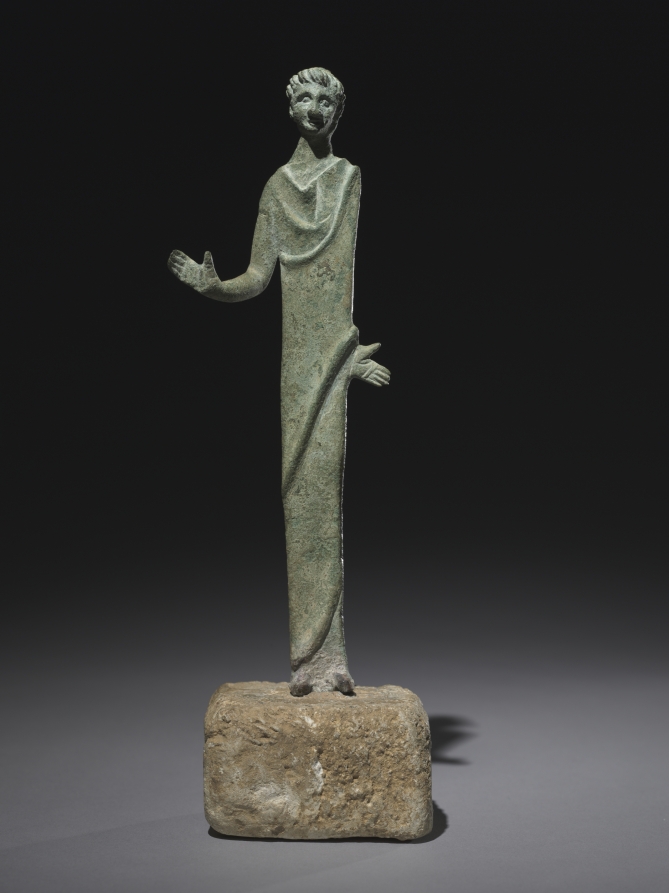
Male Votive Figure, 300s BCE

Male Votive Figure

300s BCE · Sculpture

Mag men het zien?

Ja, het ontvangt bezoek

Cleveland Museum of Art

Cleveland, Verenigde Staten

Zaal102D Pre-Roman

Publiek tentoongesteld. Wie daarvoor instaat, staat hieronder.

Gecontroleerd
3 dagen geleden
Ongewijzigd sinds
19 aug 2026
Bron
Het museum
Op de kaartMuseumpagina

Over de sculptuur

This Etruscan votive figure is posed with his hands turned to expose his palms, one near his hip, the other projecting laterally. With the exception of the fully three-dimensional head and the extended right arm and hand, the side profile of this figure is shockingly flat. The tall man’s back is not only extremely thin but also an almost perfectly vertical column. Other examples of this votive figure type are even more elongated, and some hold small cups or libation dishes, as if making offerings. Some scholars have suggested that these votive figures may represent shadows due to their extreme height and relative lack of depth, while others have seen connections to much older traditions of relatively flat cult images, whether of wood or metal.

Cleveland Museum of Art

Gegevens

Inventarisnummer
1985.3

In de catalogus

BeeldhouwkunstBronsEtruscan

Bronnen

  • Cleveland Museum of Art
  • Afbeelding: Cleveland Museum of Art — Museum open access
Buren in huis: Cleveland Museum of Art

Museumpagina
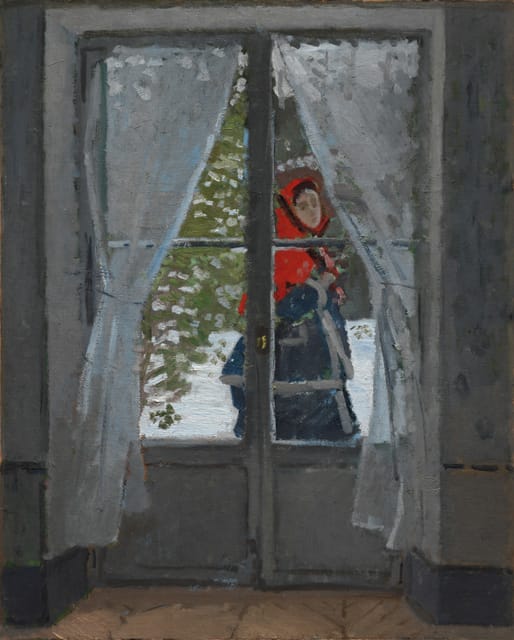
The Red Kerchief, Claude Monet, c. 1868–73

Claude Monet

The Red Kerchief, c. 1868–73

Melencolia I, Albrecht Dürer, 1514

Albrecht Dürer

Melencolia I, 1514

The Virgin and Child with the Pear, Albrecht Dürer, 1511

Albrecht Dürer

The Virgin and Child with the Pear, 1511

The Nativity, Albrecht Dürer, probably c. 1509/1510

Albrecht Dürer

The Nativity, probably c. 1509/1510

The Virgin and Child on a Crescent with a Starry Crown, Albrecht Dürer, 1508

Albrecht Dürer

The Virgin and Child on a Crescent with a Starry Crown, 1508

The Lamentation, Albrecht Dürer, 1507

Albrecht Dürer

The Lamentation, 1507

Large Horse, Albrecht Dürer, 1505

Albrecht Dürer

Large Horse, 1505

Nemesis (The Great Fortune), Albrecht Dürer, c. 1501/1502

Albrecht Dürer

Nemesis (The Great Fortune), c. 1501/1502