ART WIKI32.963 te zien
KaartCollectieKunstenaarsMuseaTentoonstellingenJournal
Inloggen

ART WIKI

Waar het meesterwerk hangt en wanneer men u toelaat.

Collecties: Art Institute of Chicago, Cleveland Museum of Art, Getty Villa, Harvard Art Museums, Hermitage, Hirshhorn Museum and Sculpture Garden, J. Paul Getty Museum, Louvre, Metropolitan Museum of Art, Minneapolis Institute of Art, Museum of Modern Art, National Gallery of Art, National Museum of Asian Art, National Portrait Gallery, Poesjkinmuseum, Rijksmuseum Amsterdam, Russisch Museum, Smithsonian American Art Museum, Statens Museum for Kunst, Tretjakovgalerij, Victoria and Albert Museum, Whitney Museum of American Art, Staatscatalogus van het Russische museumfonds (274 musea), Europeana (19 musea), Wikidata (6 musea), Paris Musées (12 musea) en Joconde, de museumdatabank van het Franse ministerie van Cultuur (495 musea). De afbeeldingen behoren toe aan hun rechthebbenden.

Rubrieken

  • Kaart
  • Zoeken
  • Collectie
  • Meesterwerken
  • Nu te zien
  • Kunstenaars

Meer

  • Musea & galerieën
  • Tentoonstellingen
  • Journal
  • Waar de gegevens vandaan komen
  • Privacy & cookies
StartpaginaKaartCatalogus
  1. Collectie/
  2. Cleveland Museum of Art/
  3. Male Torso
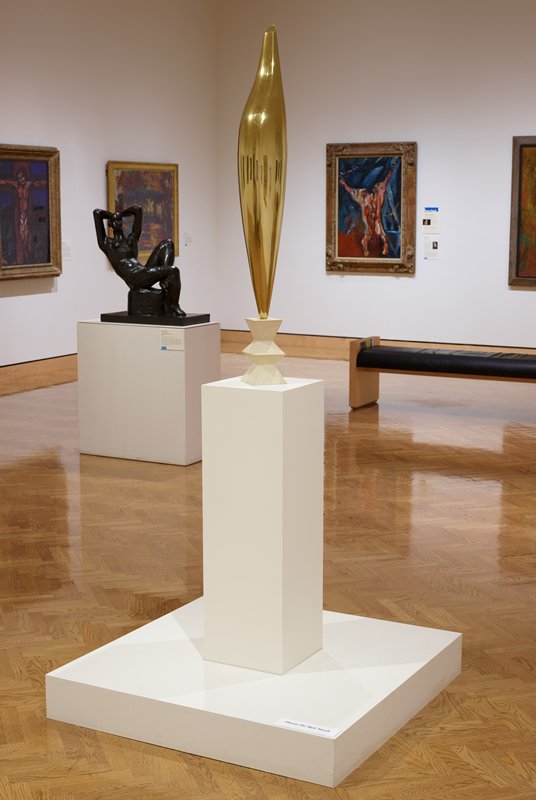
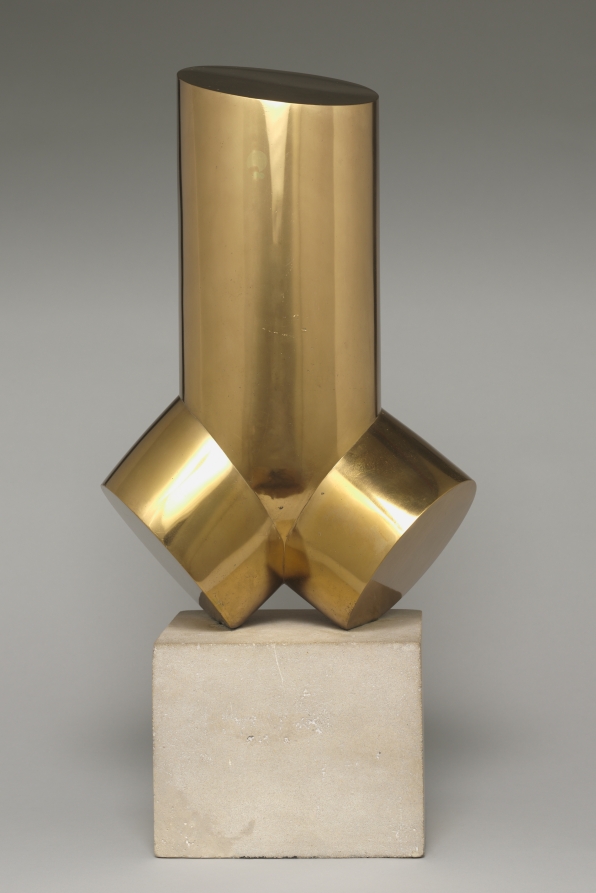
Male Torso, Constantin Brancusi, 1917
Constantin Brancusi, portretConstantin BrancusiRoemenië, 1876–1957

Male Torso

1917 · Sculpture

Mag men het zien?

Ja, het ontvangt bezoek

Cleveland Museum of Art

Cleveland, Verenigde Staten

Zaal223 20th Century Avant-Garde

Publiek tentoongesteld. Wie daarvoor instaat, staat hieronder.

Gecontroleerd
3 dagen geleden
Ongewijzigd sinds
19 aug 2026
Bron
Het museum
Op de kaartMuseumpagina

Over de sculptuur

This sculpture depicts a simplified human torso without limbs or head. The artist’s goal was not to move toward abstraction, but to capture the essence of things in his sculptures. Here, he stripped the human body down to its most basic components: one sleek cylinder representing the torso and two representing the upper thighs. Constantin Brancusi made three versions of this artwork: a wood version (Philadelphia Museum of Art) and two in brass (this museum and the Hirshhorn Museum and Sculpture Garden). The smooth surfaces of the brass versions dazzle the eye with their gleaming high polish.

Cleveland Museum of Art

Gegevens

1917 · op 41-jarige leeftijd
18761957
Inventarisnummer
1937.3205

In de catalogus

BeeldhouwkunstMetaalModernisme20e eeuwFrance, 20th century

Bronnen

  • Cleveland Museum of Art
  • Afbeelding: Cleveland Museum of Art — © Succession Brancusi - All rights reserved (ARS)

Intussen, in het leven van Constantin Brancusi

Het hele leven
  1. 1910s

    “Mobile groups”: rearranging the sculptures

    During the 1910s Brâncuși arranges sculptures and pedestals in changing compositions that he calls “mobile groups”: he moves the works and watches how each change alters the space around them. When he sells a sculpture he often puts a plaster version in the same position, and by the 1920s the studio is also an exhibition space whose arrangement forms part of the work.

  2. 1915–1917

    The First World War: a refusal to serve

    Brâncuși stays in Paris after the outbreak of World War I; in 1915 he donates works to an exhibition at Bernheim-Jeune that raises money for Polish artists affected by the war. As a Romanian citizen he remains liable for military service, but he refuses to serve in 1916 and receives a permanent exemption on 8 November 1917.

  3. early 1916

    Moving into the Impasse Ronsin

    In early 1916 Brâncuși moves into number 8 Impasse Ronsin and later occupies number 11 as well, cutting openings through the walls to join first two studios and then three; in 1936 and 1941 he adds rooms for unfinished works, his workbench and his tools. He furnishes the studio with pieces he makes himself — a large stone slab as a table, a fireplace recalling rural houses in Oltenia — and cooks his own food, serving Romanian dishes to friends.

  4. 1916

    The Modern Gallery buys “The Newborn I”

    In 1916 the Modern Gallery, founded by Marius de Zayas, buys “Le Nouveau-Né I”; the sale widens the group of American collectors following his work. Brâncuși also begins photographing his sculptures and testing different arrangements for them inside the studio.

  5. November 1919

    Meeting Erik Satie

    The writer Henri-Pierre Roché brings the composer Erik Satie, exactly ten years older than Brâncuși, to his studio together with Marcel Duchamp, beginning a friendship that lasts from 1919 to 1925. After dinner Brâncuși plays the violin for his guest, and Satie, in Roché’s words, teaches him verbal fencing, self-belief and clarity of thought.

Meer van Constantin Brancusi

Alle werken
Maiastra, Constantin Brâncuși, c. 1911

Maiastra

c. 1911 · National Gallery of Art

Bird in Space, Constantin Brâncuși, 1925

Bird in Space

1925 · National Gallery of Art

Bird in Space, Constantin Brâncuși, 1927

Bird in Space

1927 · National Gallery of Art

Agnes E. Meyer, Constantin Brâncuși, 1929

Agnes E. Meyer

1929 · National Gallery of Art

Golden Bird, Constantin Brancusi, 1919/20 (base c. 1922)

Golden Bird

1919/20 (base c. 1922) · Art Institute of Chicago

Golden Bird, Constantin Brancusi, c. 1919

Golden Bird

c. 1919 · Minneapolis Institute of Art

Wisdom, Constantin Brancusi, c. 1908

Wisdom

c. 1908 · Art Institute of Chicago

Leda, Constantin Brancusi, 1920

Leda

1920 · Art Institute of Chicago

In dezelfde zaal · 223 20th Century Avant-Garde, Cleveland Museum of Art

Museumpagina
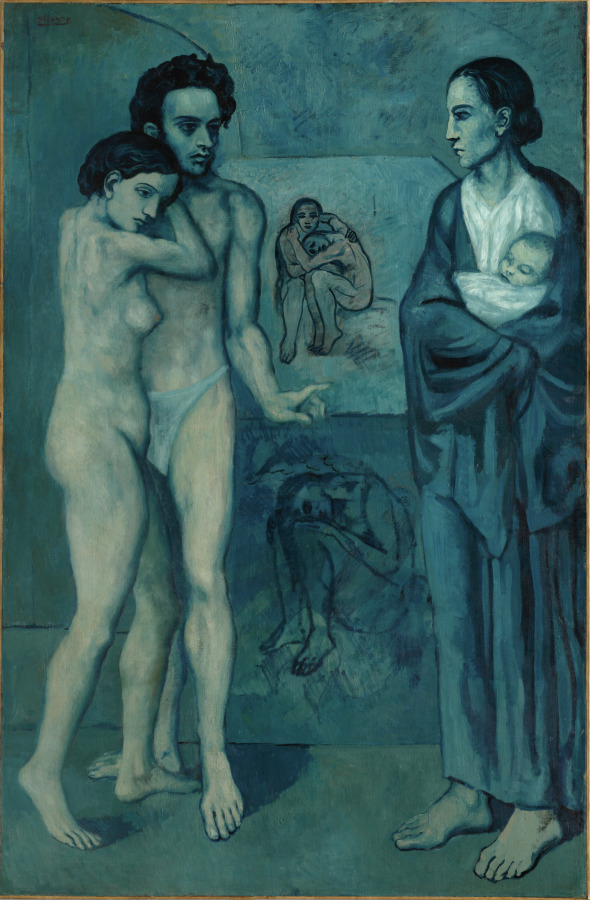
La Vie, Pablo Picasso, 1903

Pablo Picasso

La Vie, 1903

Interior with an Etruscan Vase (Intérieur au vase étrusque), Henri Matisse, 1940

Henri Matisse

Interior with an Etruscan Vase (Intérieur au vase étrusque), 1940

The Aviator, Fernand Léger, 1920

Fernand Léger

The Aviator, 1920

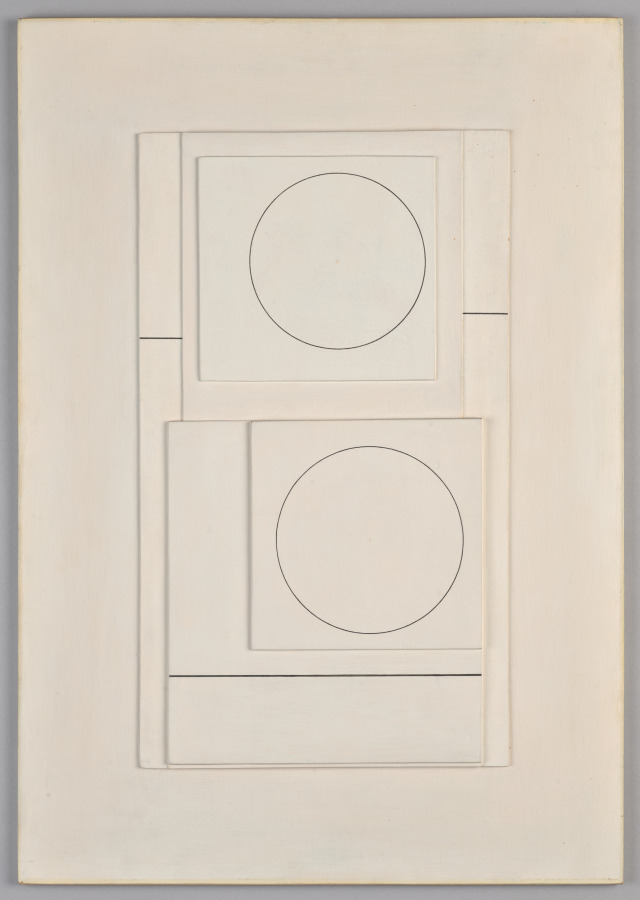
1941 (relief), Ben Nicholson, 1941

Ben Nicholson

1941 (relief), 1941

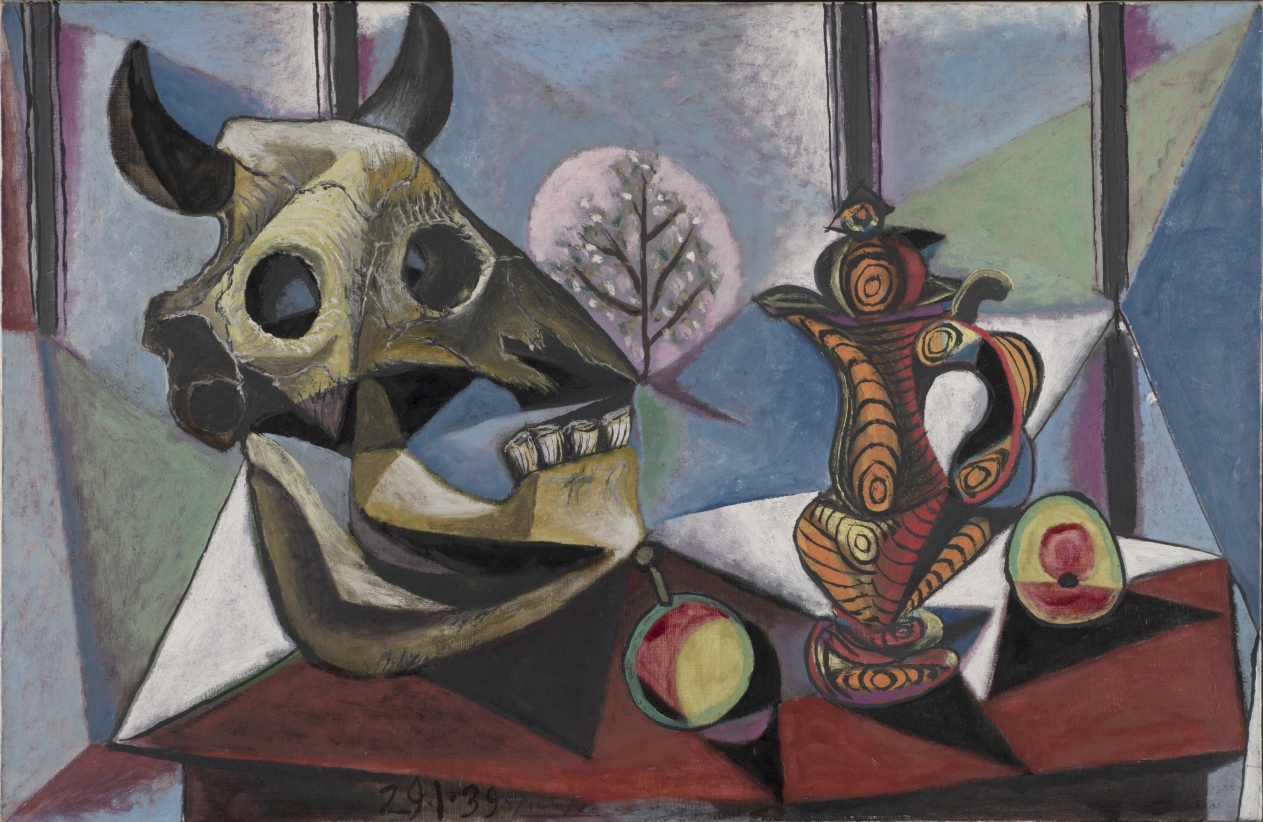
Bull Skull, Fruit, Pitcher, Pablo Picasso, 1939

Pablo Picasso

Bull Skull, Fruit, Pitcher, 1939

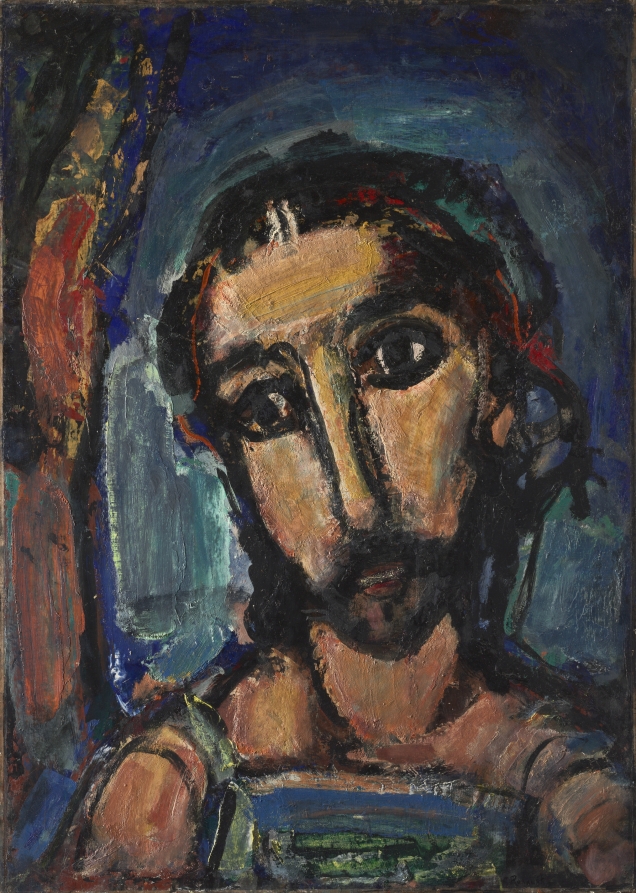
Head of Christ, Georges Rouault, c. 1937

Georges Rouault

Head of Christ, c. 1937

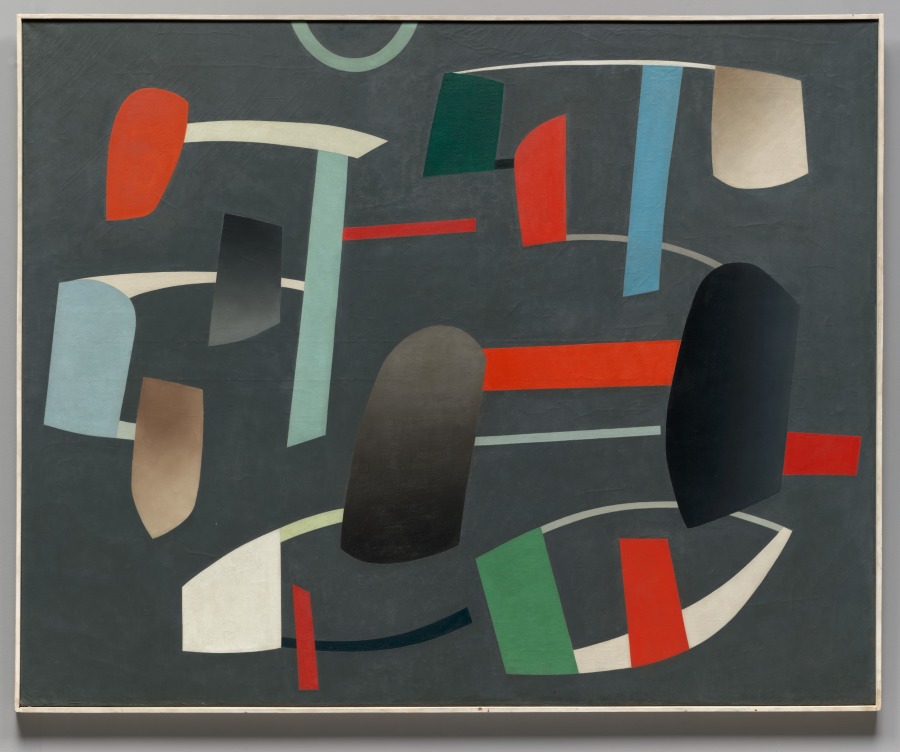
Composition, Jean Hélion, 1934

Jean Hélion

Composition, 1934

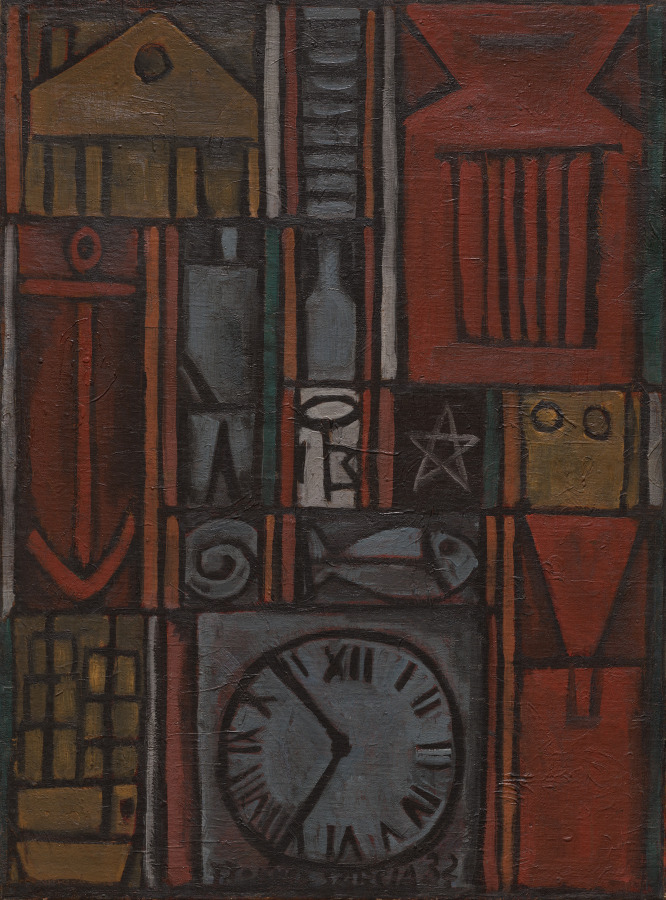
Constructive Composition, Joaquín Torres-García, 1932

Joaquín Torres-García

Constructive Composition, 1932