 Francesco PrimaticcioItalië, 1504–1570
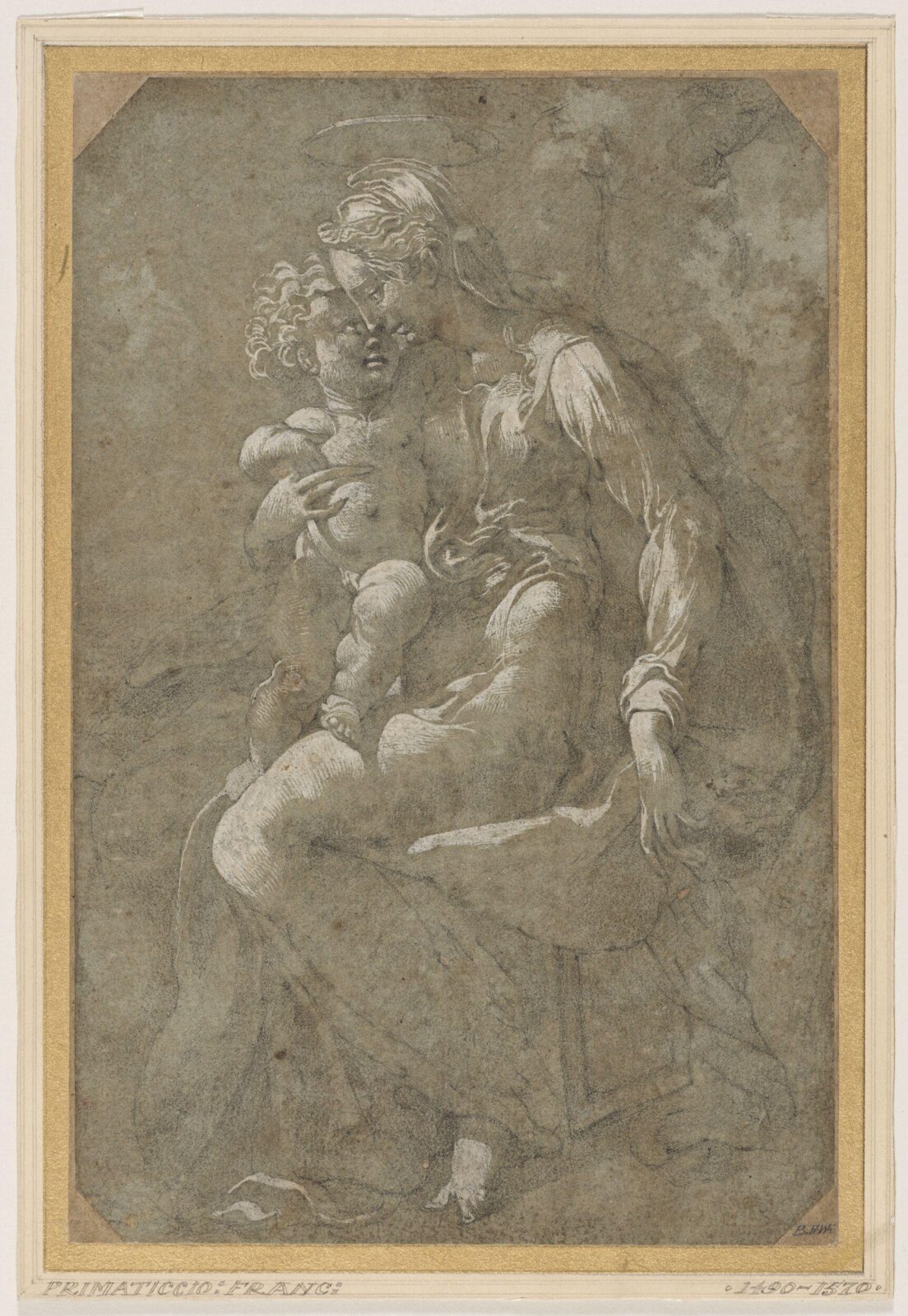
Madonna and Child
Kan ik het zien?
Nu niet te zien
Waar is „Madonna and Child” nu? Collectie: Victoria and Albert Museum, Londen. Nu niet te zien. Gecontroleerd 25 september 2026.

Londen, Verenigd Koninkrijk
Het hoort bij de collectie, maar is momenteel niet tentoongesteld.
- Gecontroleerd
- Ongewijzigd sinds
- Bron
- Het museum
Gegevens
- Inventarisnummer
- E.4012-1919
Wat het toont
In de catalogus
Bronnen
- Victoria and Albert Museum
- Afbeelding: Victoria and Albert Museum — © Victoria and Albert Museum, London
In het leven van Francesco Primaticcio
Het hele leven30 april 1504
Born
1532
Arrives at the court of Francis I
Primaticcio arrives at the court of King Francis I of France, replacing Giulio Romano, and works with Francesco Caccianemici and Rosso Fiorentino.
1533
Decorates the king’s and queen’s apartments at Fontainebleau
With Antonio da Trento, Primaticcio leads the team decorating the king’s and queen’s apartments at the Château de Fontainebleau, which becomes his main place of work for a long time. With his assistants he decorates the interiors with frescoes, statues and stucco; among the works are the decorated fireplace (1535), the Golden Door, the Pavilion of Pomona, the Gallery of Ulysses, the Gallery of Henry II and the Guise Chapel.
1540
Takes charge of the work at Fontainebleau after Rosso
After Rosso Fiorentino’s death Primaticcio takes control of the artistic direction at Fontainebleau, furnishing the painters and stuccators of his team, such as Nicolò dell’Abate, with designs. He makes cartoons for tapestry-weavers and designs elaborate ephemeral decorations for masques and fêtes.
12 July 1559
Catherine de’ Medici entrusts the works to Primaticcio
Two days after the death of Henry II, Catherine de’ Medici thanks Philibert Delorme, whom Diane de Poitiers had patronised, and entrusts the main works to Primaticcio, appointing him on 12 July 1559 surintendent of the royal buildings. In his lifetime he served four Valois kings — Francis I, Henry II, Francis II and Charles IX — and made for them not only frescoes but also designs for reliefs and painted ceilings, patterns for carving, furniture and jewellery.
1560/1570
Died