Eugène DelacroixFrankrijk, 1798–1863
Le Picador
Mag men het zien?
Onbekend: het museum bewaart het stilzwijgen

Louvre
Parijs, Frankrijk
De eigenaar is bekend. Of het vandaag te zien is, zegt het museum niet, en gissen hebben wij niet geleerd.
- Ongewijzigd sinds
- Bron
- De eigen collectiegegevens van het museum
Over het werk
The Picador is an 1832 watercolor painting by the French Romantic painter Eugène Delacroix, showing the 'tercio de pique' or third phase of a bullfight. It is held in the department of prints and drawings at the Louvre with other drawings of bullfights by the same artist, notably Picador and Chuletillo (lead pencil, 1832).
The work's small dimensions allowed him to compete with the sinister The Bullfights of Bordeaux by Goya. Luigina Rossi-Bortolatto considers that the work's poses draw on the painter's The Battle of Nancy, painted the previous year. The man's simple gesture and the soft colours of the clothes are a major contrast with his paintings such as The Lion Hunt
Gegevens
- Inventarisnummer
- RF 36804, Recto
Bronnen
- Louvre: the museum's own open data · opgehaald 6 dagen geleden
- Afbeelding: Louvre — dist. GrandPalaisRmn / Martine Beck-Coppola
Intussen, in het leven van Eugène Delacroix
Het hele leven1831
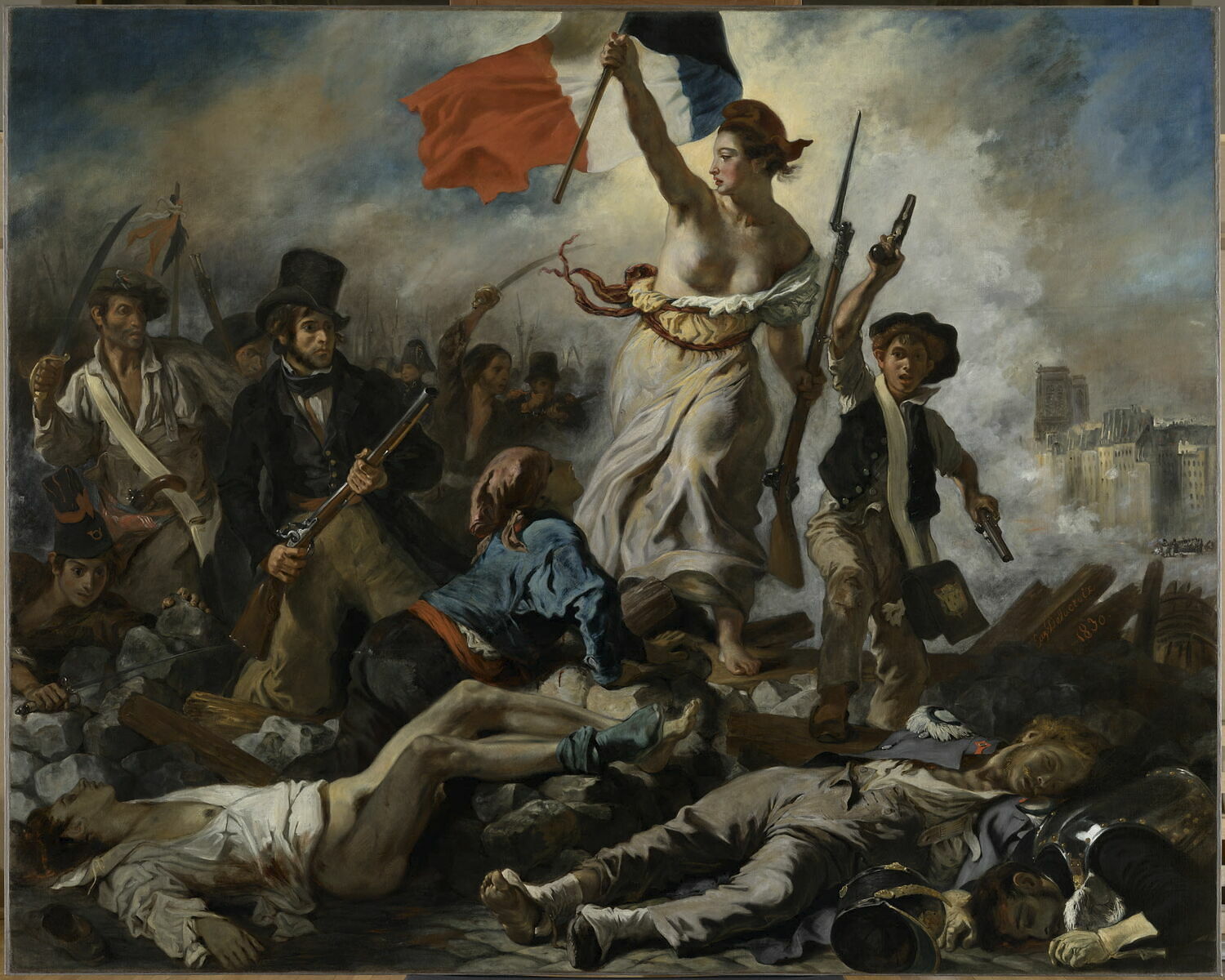
"Liberty" at the Salon of 1831
Liberty Leading the People was enthusiastically received by the public at the Salon of 1831 and immediately acquired by the state for 3,000 francs for the throne room of the Luxembourg Palace.
14 maart 1831 · Onderscheiding
Knight of the Legion of Honour
1832
Journey to Spain and North Africa
As part of the diplomatic mission of Charles-Edgar de Mornay, Delacroix traveled to Morocco shortly after the French conquest of Algeria. The journey proved a turning point: he made dozens of sketches, and his impressions of North Africa nourished his art for the rest of his life.
1832
"Liberty" Removed from Public Display
By 1832 officials had deemed the painting's glorification of liberty too provocative and removed it from public display; nevertheless Delacroix continued to receive state commissions.
1833
Beginning of the Friendship with Marie-Élisabeth Blavot-Boulanger
In 1833 Delacroix formed a friendship with the painter Marie-Élisabeth Blavot-Boulanger that lasted the rest of his life.
1833–1837
Decoration of the Salon du Roi in the Palais Bourbon
From 1833 Delacroix received numerous commissions to decorate the public buildings of Paris; the first was his work on the Salon du Roi in the Chamber of Deputies at the Palais Bourbon, completed in 1837.