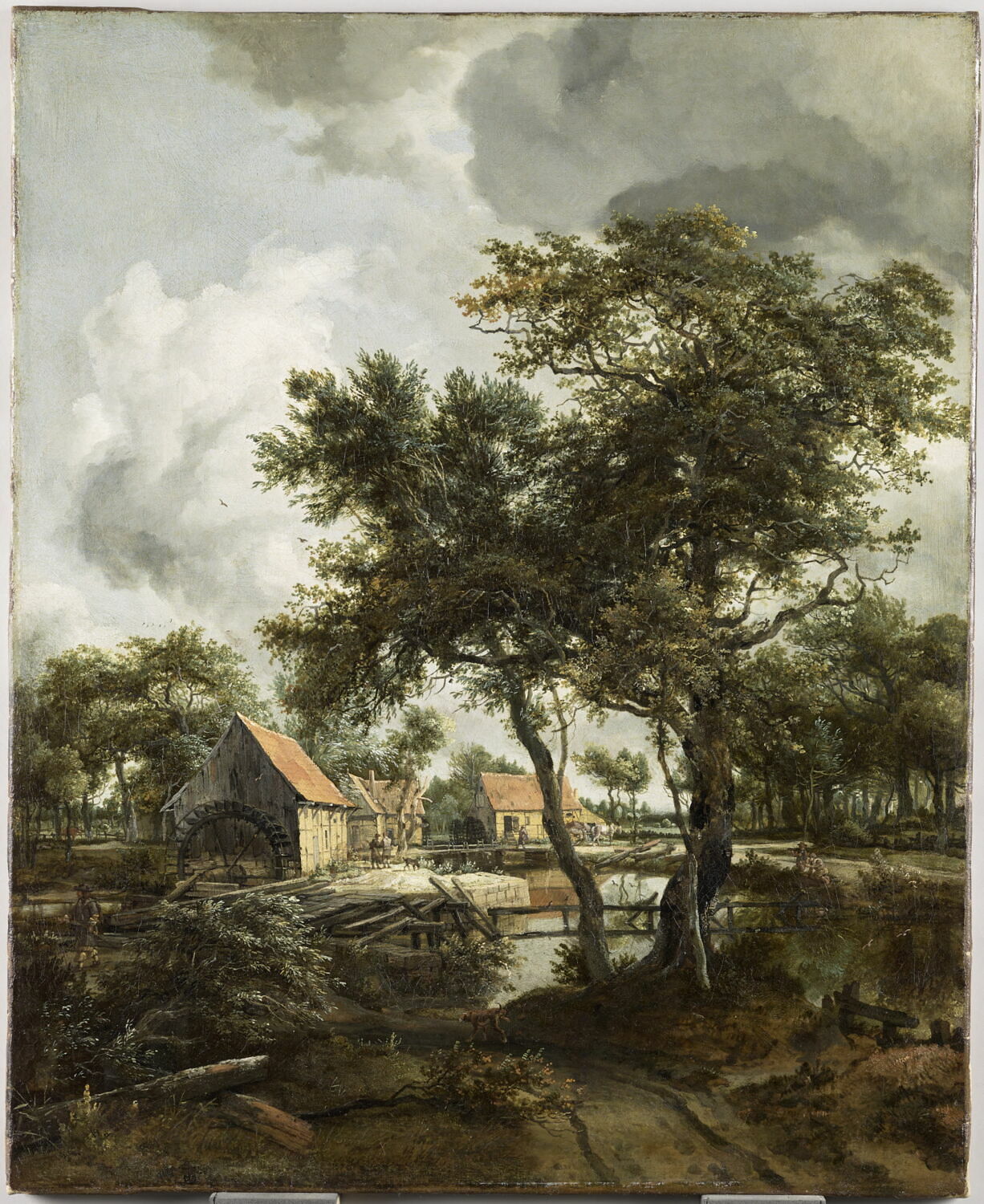
 Meindert HobbemaNederland, 1638–1709
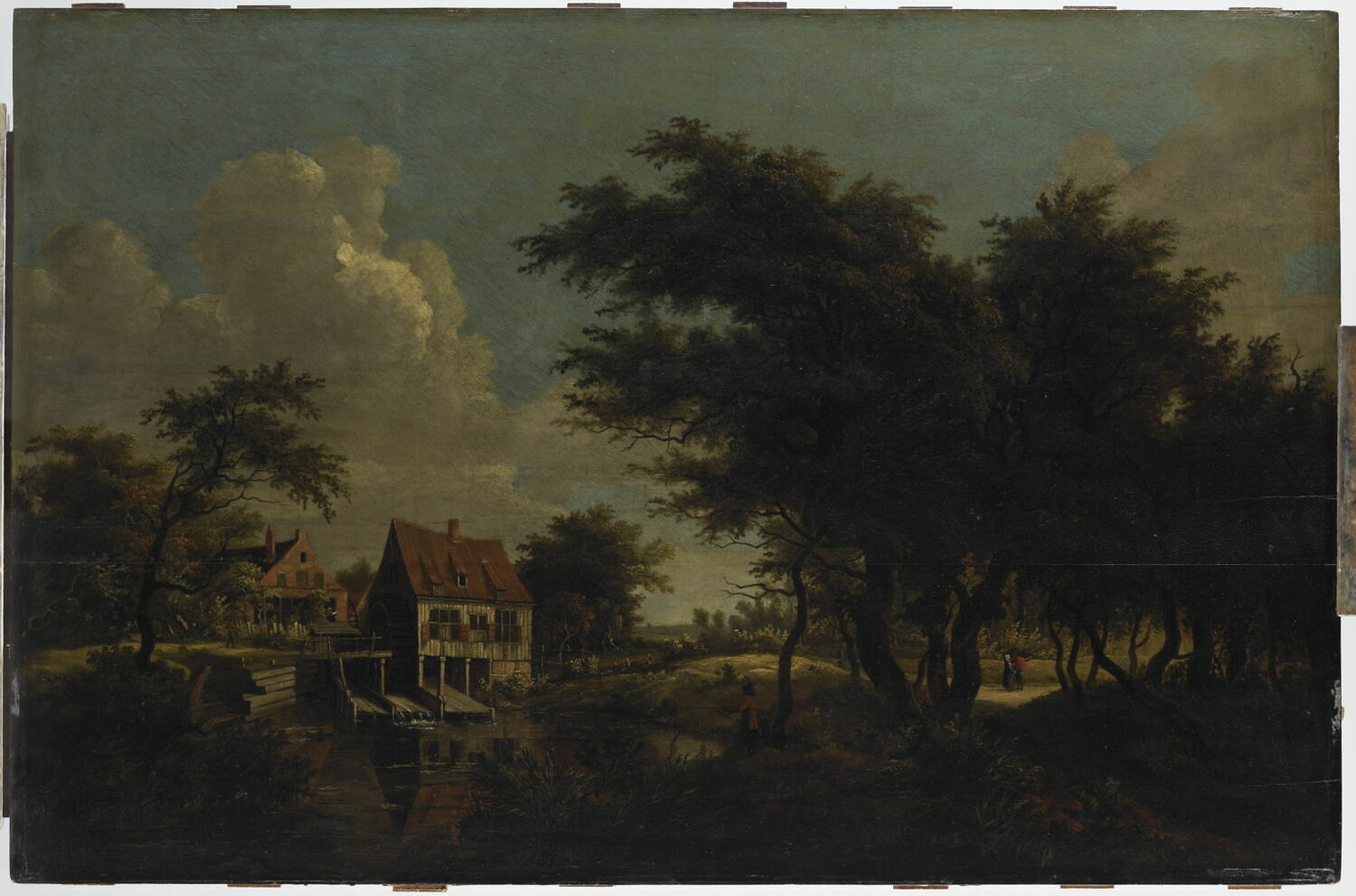
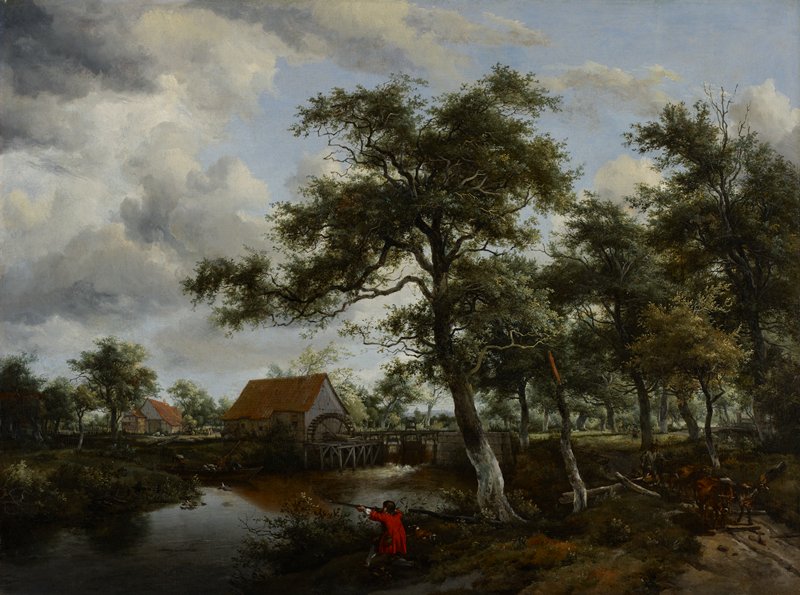
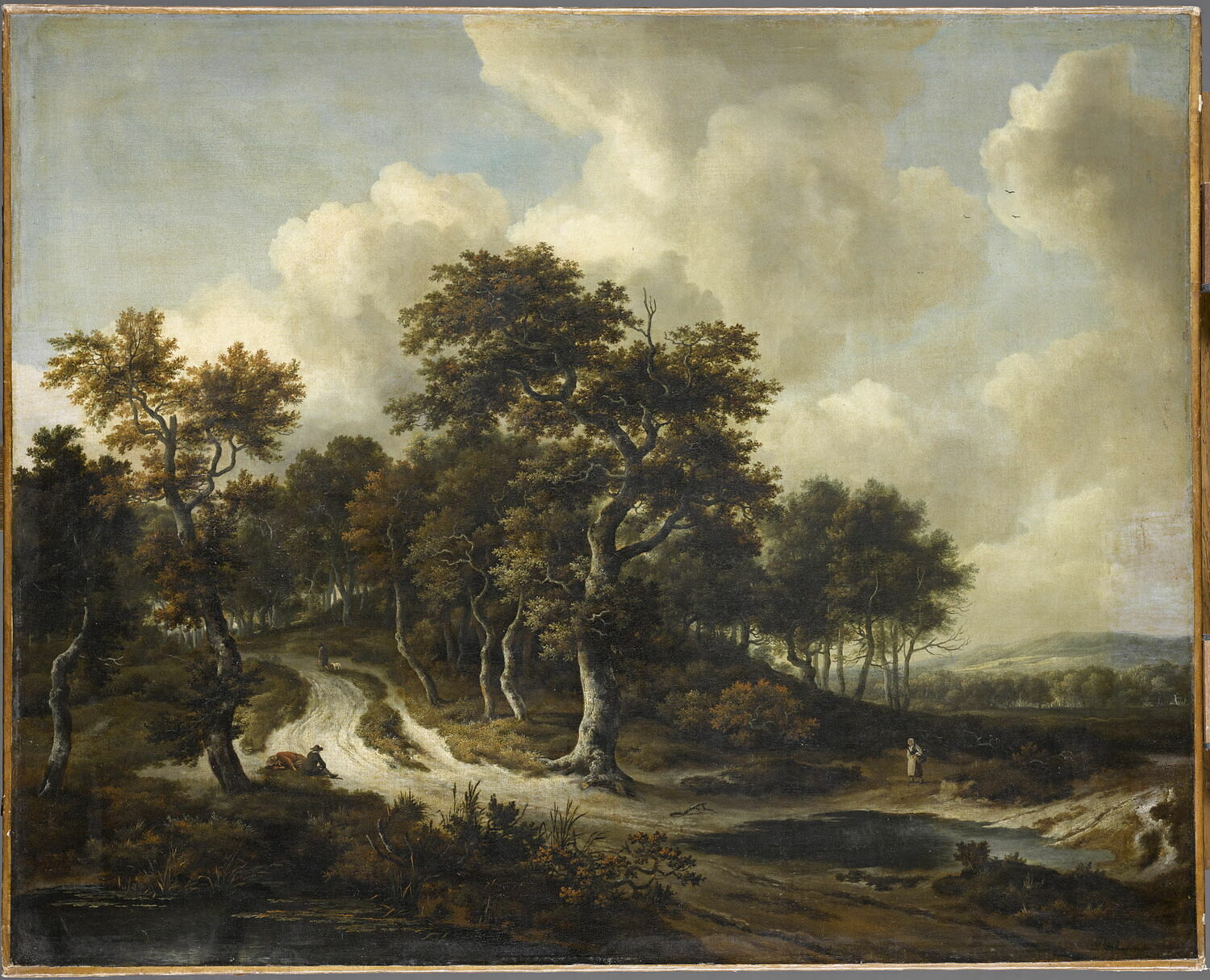
Le Moulin à eau
Mag men het zien?
Ja, het ontvangt bezoek

Publiek tentoongesteld.
- Gecontroleerd
- Ongewijzigd sinds
- Bron
- Het museum
Gegevens
- Inventarisnummer
- MI 270
In de catalogus
Bronnen
- Louvre
- Afbeelding: Louvre — © 2019 GrandPalaisRmn (musée du Louvre) / Tony Querrec
Intussen, in het leven van Meindert Hobbema
Het hele leven1661
With Ruisdael across the German border
He and Ruisdael may have travelled a short way across the German border, via the Veluwe, Deventer and Ootmarsum; they are known to have travelled together and sketched from nature.
c. 1662
Finds his speciality: woodland landscapes
From about 1662 Ruisdael’s influence grows much stronger, and Hobbema settles into his speciality of wooded landscapes with ponds, roads and a building or two. Some compositions as late as 1664 are near-copies of Ruisdael, and he often repeats his own compositions with variations.
1668
Becomes a wine-gauger for the Amsterdam tax
He takes the well-paid post of wine-gauger for the Amsterdam octroi, assessing and collecting local taxes on wine, and keeps it until the end of his life; presumably the place was found through his wife’s former employer. After this he devotes noticeably less time to painting, but does not give it up altogether, as was long believed.
2 November 1668
Marries Eeltje Vinck
At the Oude Kerk in Amsterdam he marries Eeltje Vinck from Gorcum, who had been in the service of Burgomaster Lambert Reynst; she is four years older than he. The witnesses at the wedding are the bride’s brother Cornelius Vinck and Jacob van Ruisdael.
1672
The “Disaster Year”: the art market collapses
After 1672 the Dutch art market virtually collapses for the rest of the century, and many masters of his generation — Vermeer, Pieter de Hooch, Nicolaes Berchem — produce much less. The same year Burgomaster Lambert Reynst, in whose service Hobbema’s wife had been, loses office and influence.
1689
Apparently stops painting after 1689
“The Avenue at Middelharnis”, dated 1689, is one of his last paintings; after it he apparently paints no more. By the end of his career demand for Dutch landscape has fallen sharply, and no literary source mentions him in his lifetime.