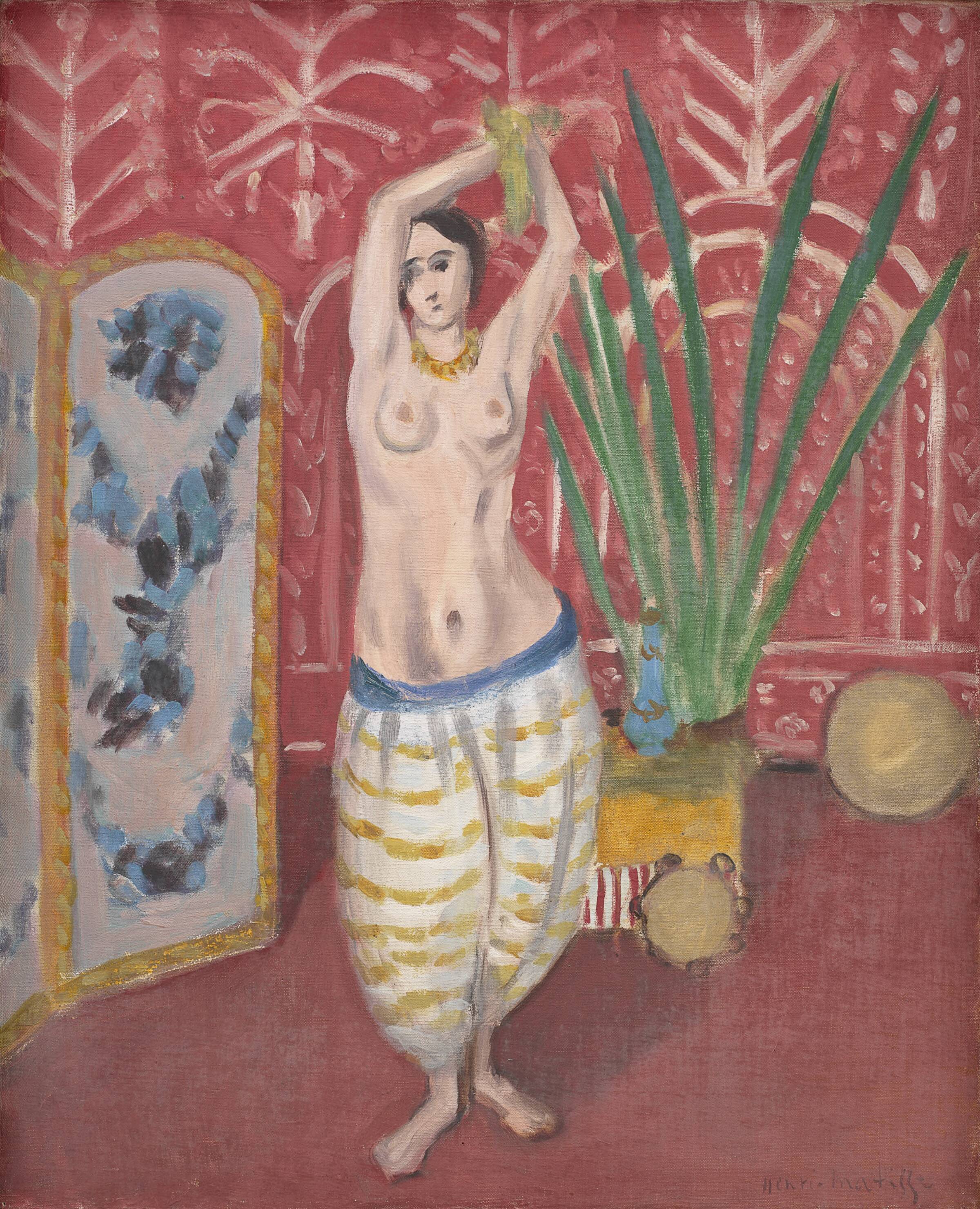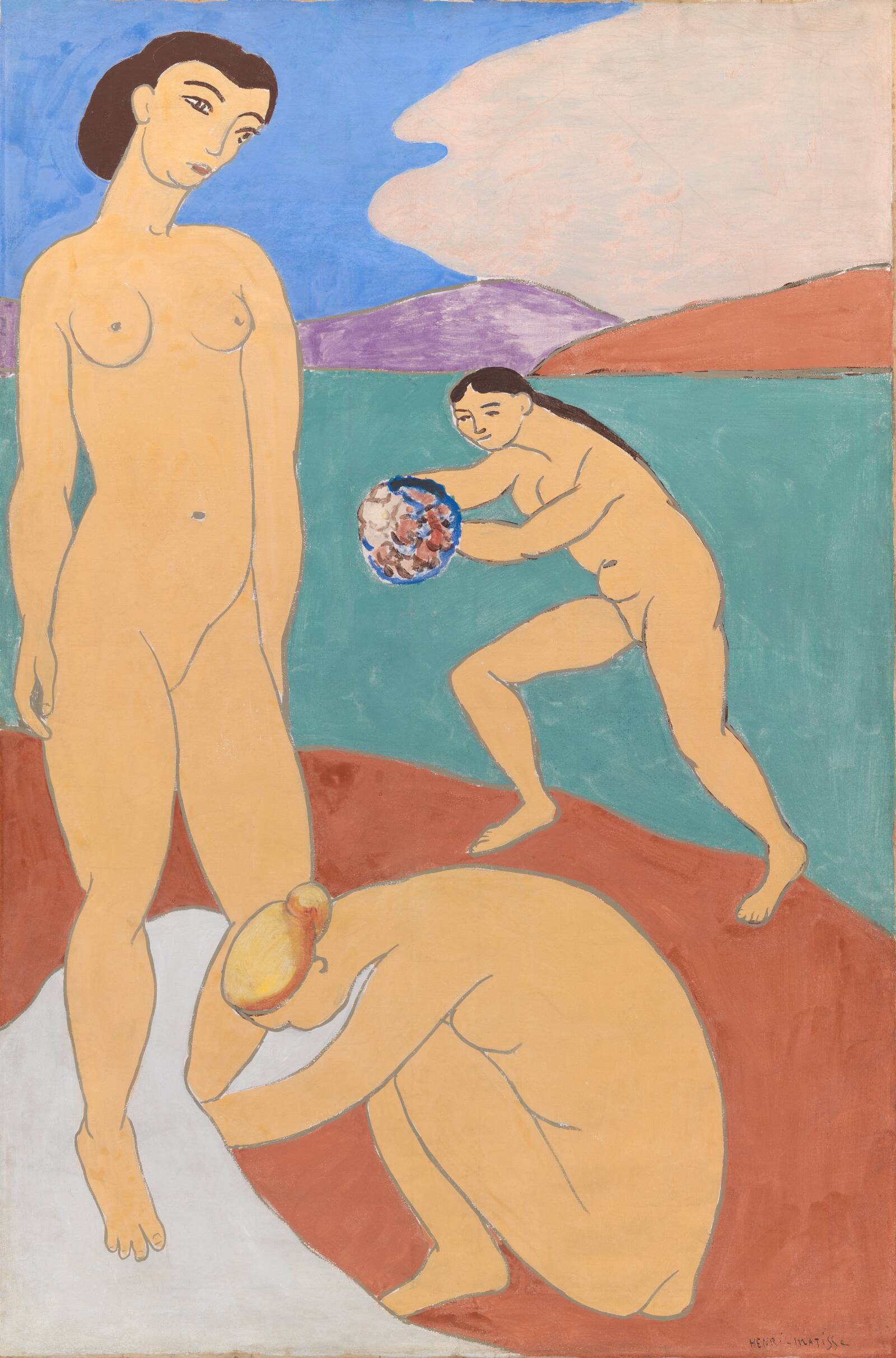
 Henri MatisseFrankrijk, 1869–1954
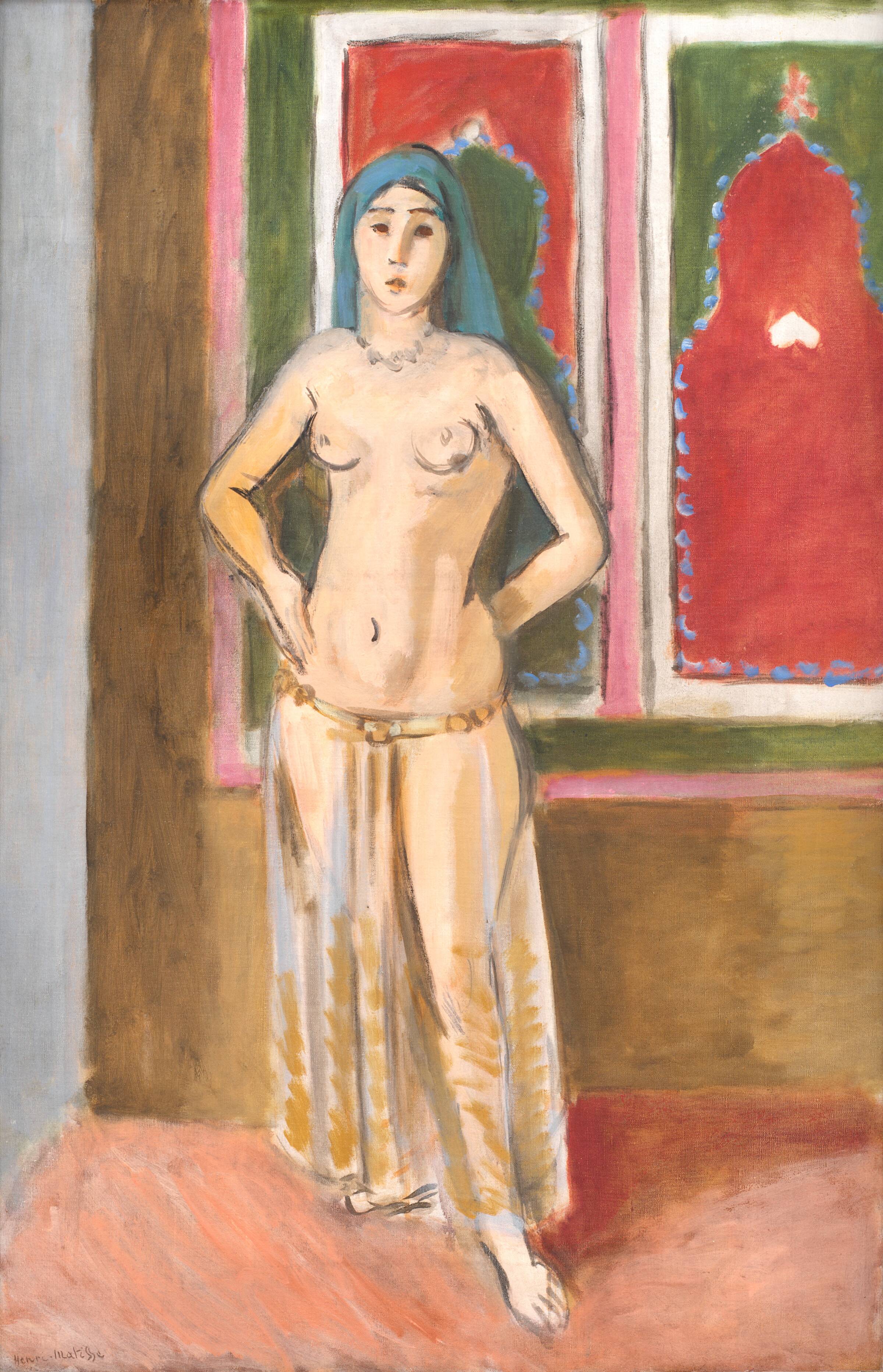
Le Luxe II
Kan ik het zien?
Ja, nu te zien
Waar is „Le Luxe II” nu? Statens Museum for Kunst, Zaal 214, Kopenhagen. Ja, nu te zien. Gecontroleerd 29 september 2026.

Kopenhagen, Denemarken
Gesloten· gaat morgen om 10:00 open
Publiek tentoongesteld.
- Gecontroleerd
- Ongewijzigd sinds
- Bron
- Het museum
Gegevens
- Inventarisnummer
- KMSr76
In de catalogus
Exposities
Te zien · Zaal 214
Statens Museum for Kunst · 28 sep 2026 — nu · Gecontroleerd
Was te zien
Statens Museum for Kunst · 19 aug 2026 — 28 sep 2026 · Gecontroleerd
Bronnen
- Statens Museum for Kunst
- Afbeelding: Statens Museum for Kunst — public domain
In het leven van Henri Matisse
Het hele levensummer 1904
Summer in Saint-Tropez with Signac
Together with the Neo-Impressionists Paul Signac and Henri Cross, Matisse went to Saint-Tropez, where he began working in the Divisionist technique. There he painted his first masterpiece, "Luxe, Calme et Volupté" (1904/1905).
summer 1905
Collioure: The Birth of Fauvism
Matisse spent the summer of 1905 with André Derain and Maurice de Vlaminck in the fishing village of Collioure on the Mediterranean. Together with Derain he created a new style that entered art history as Fauvism.
1905
Scandal at the Salon d'Automne
Matisse showed "The Open Window" and "Woman with a Hat"; Louis Vauxcelles's review of 17 October 1905 gave the group the nickname "fauves" ("wild beasts"). "Woman with a Hat" was bought by Leo Stein for 500 francs, which raised the market value of the artist's work.
1906
Meeting Pablo Picasso
The first meeting between Matisse and Picasso took place at the Steins' salon on the Rue de Fleurus in Paris. Their creative friendship was full of rivalry and mutual respect.
20 March 1906
"Le Bonheur de Vivre" at the Salon des Indépendants
Matisse presented "Le Bonheur de Vivre" (The Joy of Life), a painting combining pastoral and bacchanal motifs. Critics and academic circles reacted with extreme irritation, but Leo Stein purchased this painting as well.
1908
Shchukin's Commission for "Dance" and "Music"
The Russian collector Sergei Shchukin commissioned three decorative panels from Matisse for his Moscow house: "Dance," "Music," and "Bathing" (which remained at the sketch stage). The money of Russian collectors allowed the artist to finally overcome his financial difficulties.