 Jan van GoyenNederland, 1596–1656
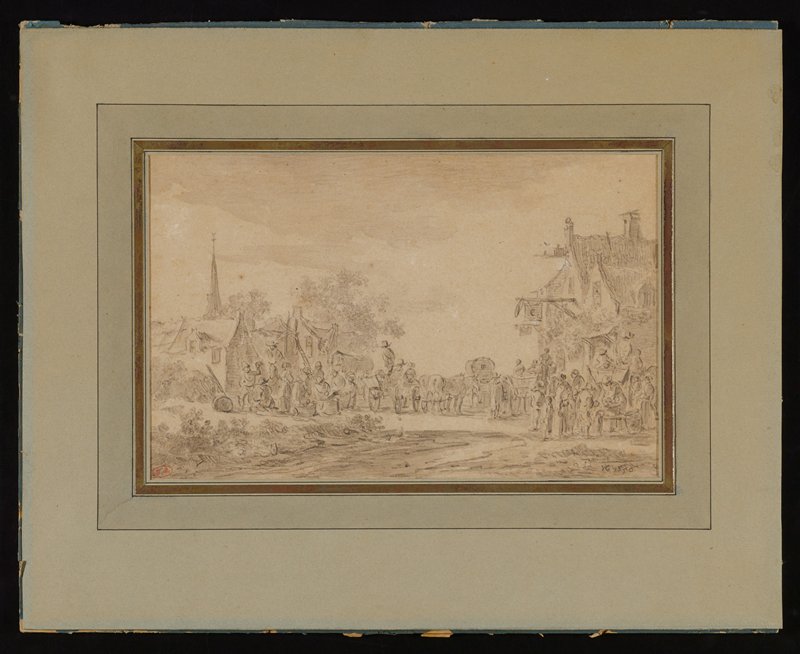
Landscape
Mag men het zien?
Ontvangt momenteel niet

Minneapolis Institute of Art
Minneapolis, Verenigde Staten
Het hoort bij de collectie, maar is momenteel niet tentoongesteld.
- Gecontroleerd
- Ongewijzigd sinds
- Bron
- De eigen collectiegegevens van het museum
Over het werk
The village buzzes as people have come in from the country to attend a small market fair. Horse drawn wagons block the road, which is lined with vendors standing over their baskets of produce. Children and adults take part in the activity. The inn has hung out its greens to remind all that refreshments are available.
Jan van Goyen was among the most prolific landscape draftsmen of Holland’s Golden Age. He remained productive until his death in 1656, the year of this drawing. Here as in most of his work, he seems to revel in the picturesque character of scruffy buildings, floppy hats, and unmanicured vegetation—all captured in his quick shorthand notations.
Minneapolis Institute of Art
Gegevens
- Inventarisnummer
- 2017.153.3
In de catalogus
Bronnen
- Minneapolis Institute of Art: the museum's own open data · opgehaald 7 dagen geleden
- Afbeelding: Minneapolis Institute of Art — public domain
Intussen, in het leven van Jan van Goyen
Het hele leven1635–1656 · Werkzaam in
The Hague
1650s
The freely composed seascapes of the 1650s
According to the art historian H. U. Beck, in his freely composed seascapes of the 1650s van Goyen reached the apex of his creative work, producing paintings of “striking perfection”.
1654
Sells his collection again, moves to a smaller house
In 1654 van Goyen again had to sell his collection of paintings and graphic art, and subsequently moved to a smaller house.
1654
His son-in-law and pupil Jan Steen leaves The Hague
In 1654 Jan Steen, van Goyen’s pupil and the husband of his daughter, left The Hague; his father-in-law’s troubles may also have hurt his early business prospects.
1656
His debts reach 18,000 guilders
By 1656 van Goyen’s debts had reached 18,000 guilders; he died without paying them off, and his widow was forced to sell the remaining property, furniture and paintings.
27 april 1656
Died