 Jacopo AmigoniItalië, 1682–1752
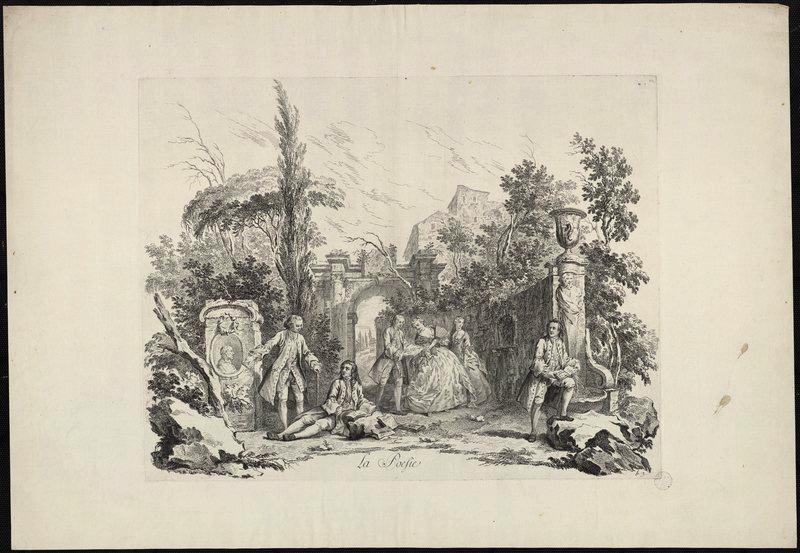
La poésie
Mag men het zien?
Onbekend
Nantes, Frankrijk
De eigenaar is bekend; of het werk nu te zien is, is onbekend.
- Ongewijzigd sinds
- Bron
- Het museum
Gegevens
- Inventarisnummer
- 896.1.3062
Wat het toont
In de catalogus
Bronnen
- Musée Thomas Dobrée
- Afbeelding: Musée Thomas Dobrée — © Nantes, musée Dobrée; Ministère de la Culture (France), base Joconde
Intussen, in het leven van Jacopo Amigoni
Het hele leven1711
Begins working in Germany
In the same year he began working in Germany and collaborated with the Venetian painter Antonio Bellucci. Many offers of work at the time may have come from Giovanni Antonio Pellegrini, who was in Düsseldorf in 1713–1714.
1716–1728
Works in Bavaria
He worked extensively in the cities and monasteries of Bavaria, painting altarpieces for Würzburg Cathedral and pictures for the Munich Residence; in Munich the engraver Joseph Wagner became his pupil. Other accounts document him in Bavaria only from 1717 and have him back in Venice as early as 1726.
1729 or 1730
Moves to London
He settled in London, where he lived until 1739 apart from a trip to Paris. In portraiture he took an honoured place in the English tradition that followed Van Dyck and Peter Lely.
1734–1735
Meets the singer Farinelli
While he was decorating the Theatre Royal, Covent Garden, he met and befriended the celebrated castrato singer Farinelli. Other accounts place their meeting in London or on a trip to Paris in 1736.
1738
Marries the singer Maria Antonia Marchesini
In London he married the mezzo-soprano Maria Antonia Marchesini, known as “La Lucchesina”, who sang in Handel’s operas and oratorios.
1747
Leaves for Madrid
He left for Madrid: Giambattista Tiepolo was then the leading painter in Venice, and Farinelli, who held a court appointment in Spain, encouraged the move. He worked in Spain until the end of his life, mainly on commissions from King Ferdinand VI.