Miskina
Khan Kilan
Mag men het zien?
Ontvangt momenteel niet

Victoria and Albert Museum
Londen, Verenigd Koninkrijk
Het hoort bij de collectie, maar is momenteel niet tentoongesteld.
- Gecontroleerd
- Ongewijzigd sinds
- Bron
- Het museum
Over het schilderij
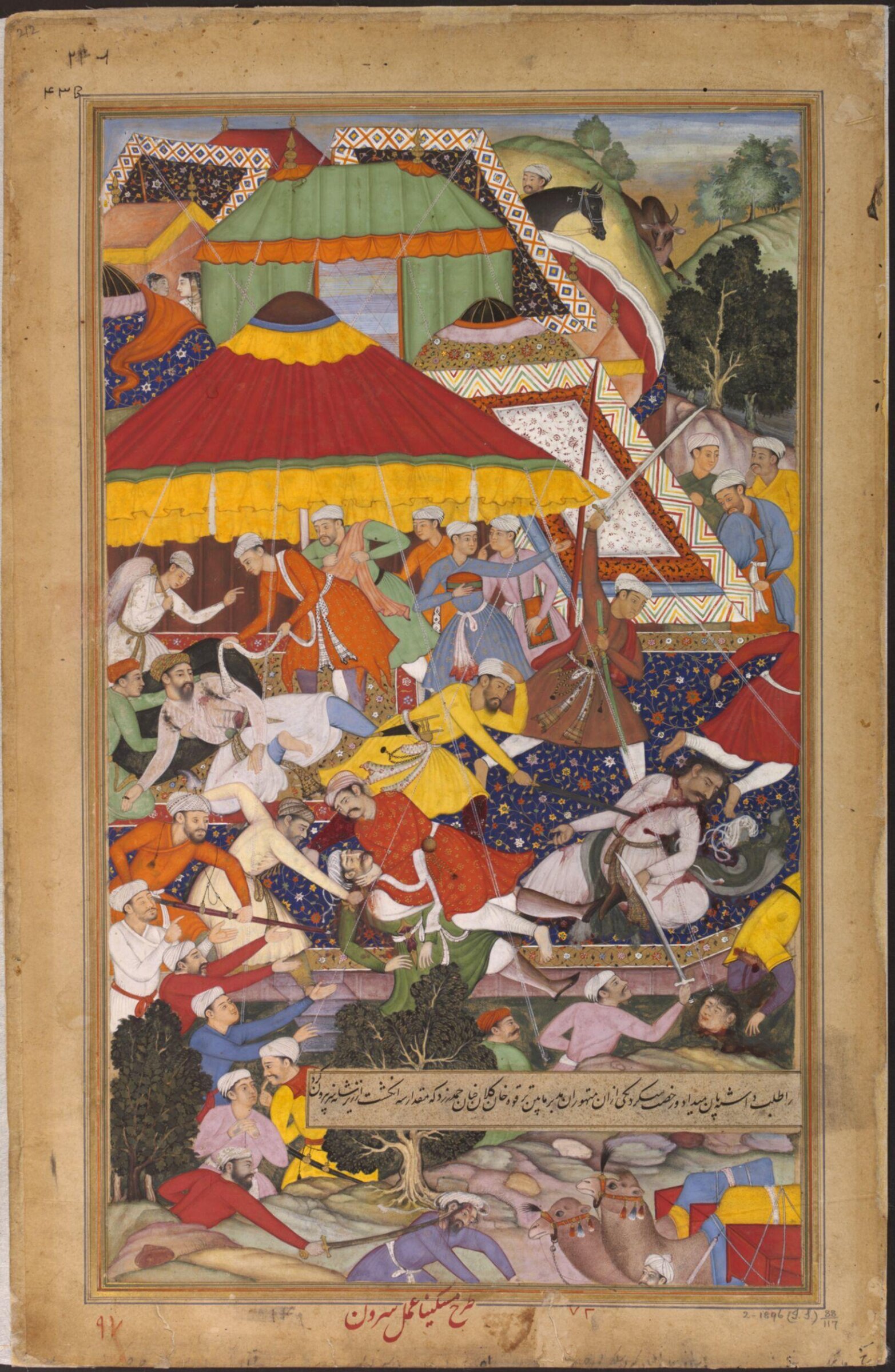
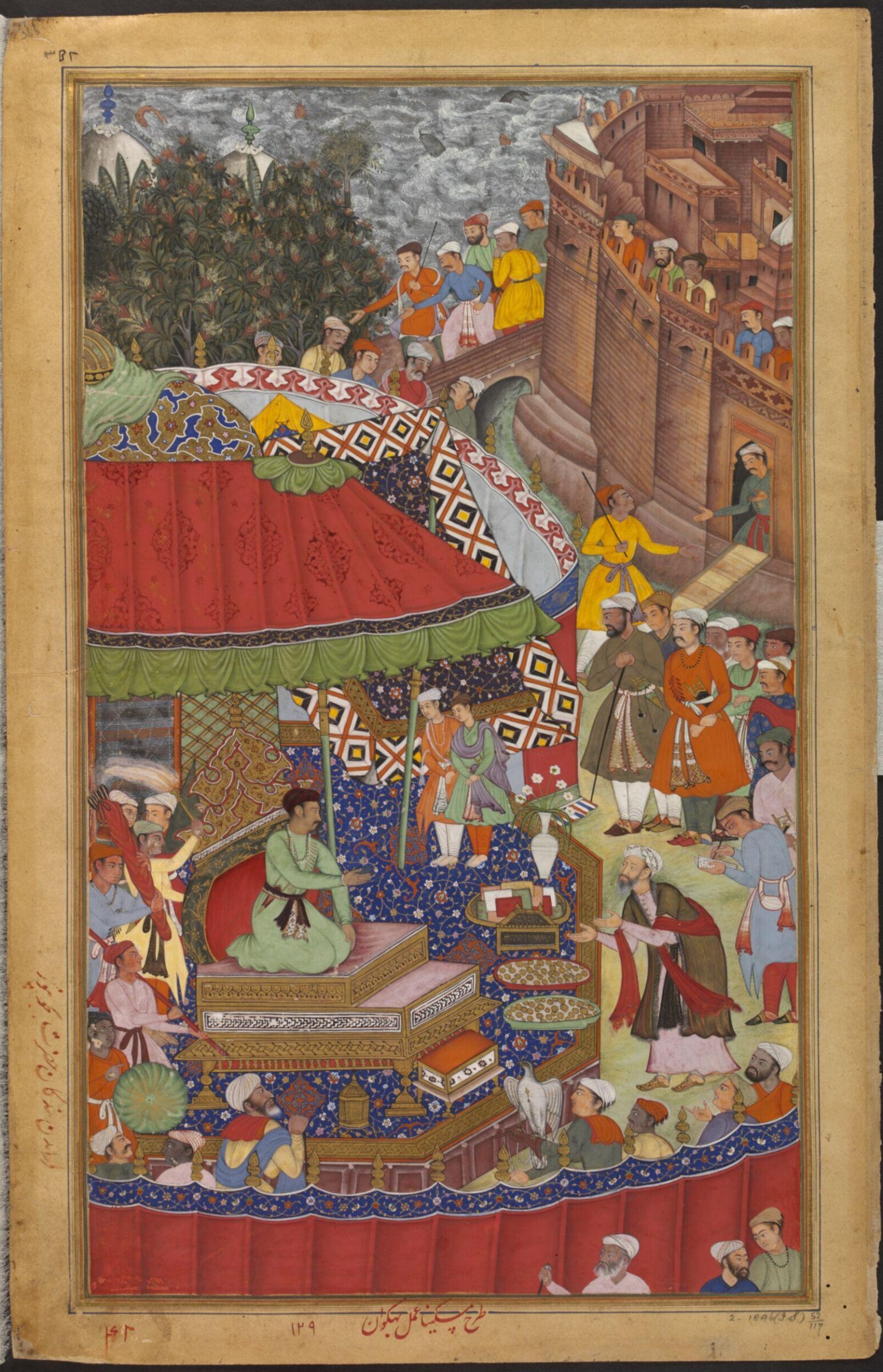
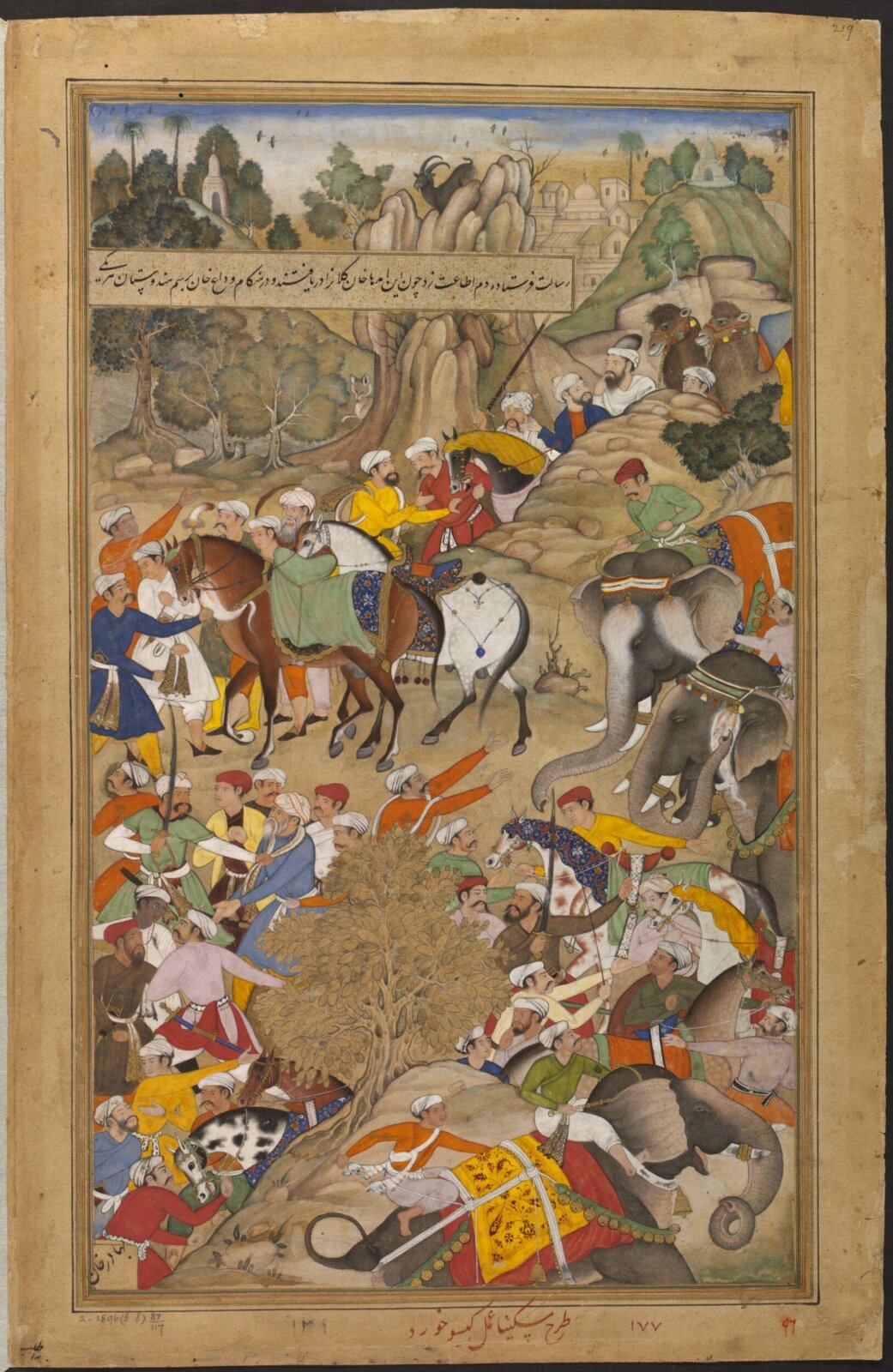
This illustration to the Akbarnama (Book of Akbar) depicts an episode in 1572 during the march of Mughal forces led by Khan Kilan to Gujarat in north-west India, during the extended campaign to conquer this independent kingdom. Khan Kilan’s army was the vanguard and passed through the Rajput territory of Sirohi. The Rajput chief, Man Singh Deohra, sent envoys to Khan Kilan but at the end of their audience one of the envoys stabbed the Mughal general in the shoulder. Khan Kilan’s men leapt forward and killed the attacker and his companions. The composition was designed by the Mughal court artist Miskina and the painting done by Kesav Khord, or Kesav the Younger.
Verder lezen
The Akbarnama was commissioned by the Mughal emperor Akbar (r.1556–1605) as the official chronicle of his reign. It was written in Persian by his court historian and biographer, Abu’l Fazl, between 1590 and 1596, and the V&A’s partial copy of the manuscript is thought to have been illustrated between about 1592 and 1595. This is thought to be the earliest illustrated version of the text, and drew upon the expertise of some of the best royal artists of the time. Many of these are listed by Abu’l Fazl in the third volume of the text, the A’in-i Akbari, and some of these names appear in the V&A illustrations, written in red ink beneath the pictures, showing that this was a royal copy made for Akbar himself. After his death, the manuscript remained in the library of his son Jahangir, from whom it was inherited by Shah Jahan.
The V&A purchased the manuscript in 1896 from Frances Clarke, the widow of Major General John Clarke, who bought it in India while serving as Commissioner of Oudh between 1858 and 1862.
Victoria and Albert Museum
Gegevens
- Inventarisnummer
- IS.2:87-1896
Wat het toont
In de catalogus
Bronnen
- Victoria and Albert Museum
- Afbeelding: Victoria and Albert Museum — © Victoria and Albert Museum, London