Edgar DegasFrankrijk, 1834–1917
Interior with Two Figures
Mag men het zien?
Ja, het ontvangt bezoek

Sint-Petersburg, Rusland
Publiek tentoongesteld.
- Gecontroleerd
- Ongewijzigd sinds
- Bron
- Het museum
Gegevens
- Inventarisnummer
- ЗКсэ-1400
In de catalogus
Bronnen
- Hermitage
- Afbeelding: Hermitage — © State Hermitage Museum
Intussen, in het leven van Edgar Degas
Het hele levenlate 1860s
The turn to modern life: racecourses, milliners, laundresses
By the late 1860s Degas had moved from history painting to an original observation of contemporary life: racecourse scenes let him paint horses and riders in a modern setting, and then he turned to women at work — milliners and laundresses.
late 1860s
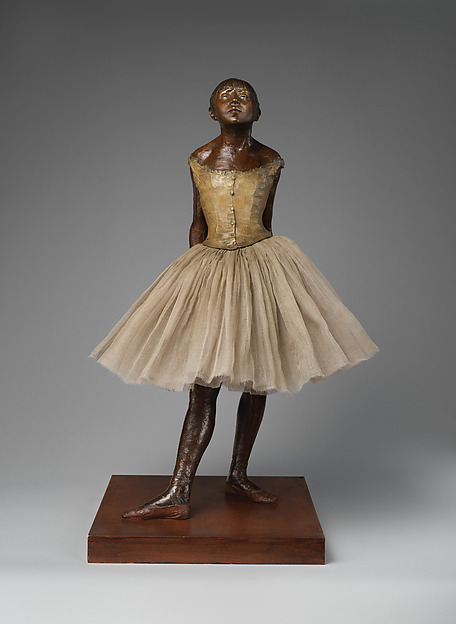
Begins modelling in wax
Degas modelled small wax figures of dancers, bathers and jockeys for himself, in place of studies. He never worked in bronze or stone; he valued wax for its changeability, and his sculptor friend Bartholomé encouraged him.
1870
A volunteer in the war; a flaw in his eyesight
When the Franco-Prussian War broke out Degas volunteered; at the first shooting practice it turned out that he saw poorly with his right eye. It was the first sign of the macular degeneration that left him almost blind at the end of his life; he was transferred to the artillery and served there to the end of the war.
early 1870s
Meets Durand-Ruel
Degas met the dealer Durand-Ruel, later the most prominent of the trusted dealers with whom he planned his strategy at auctions.
1870s
From “de Gas” back to plain “Degas”
The archives disproved the legend of an ancient noble line: the artist's paternal ancestors were bakers, and the name “de Gas” was invented by his father, who commissioned a false genealogy. In the 1870s Edgar returned to the plain spelling, Degas.