
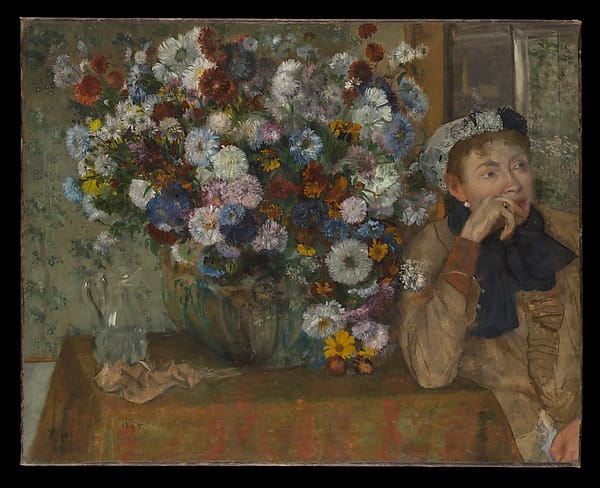
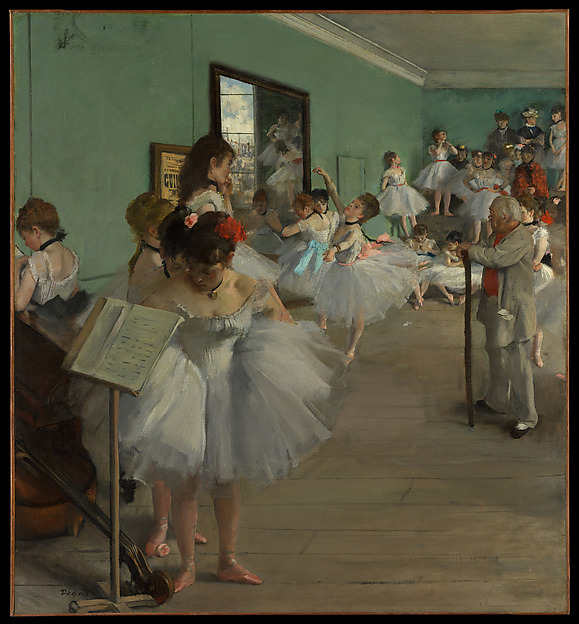
 Edgar DegasFrankrijk, 1834–1917
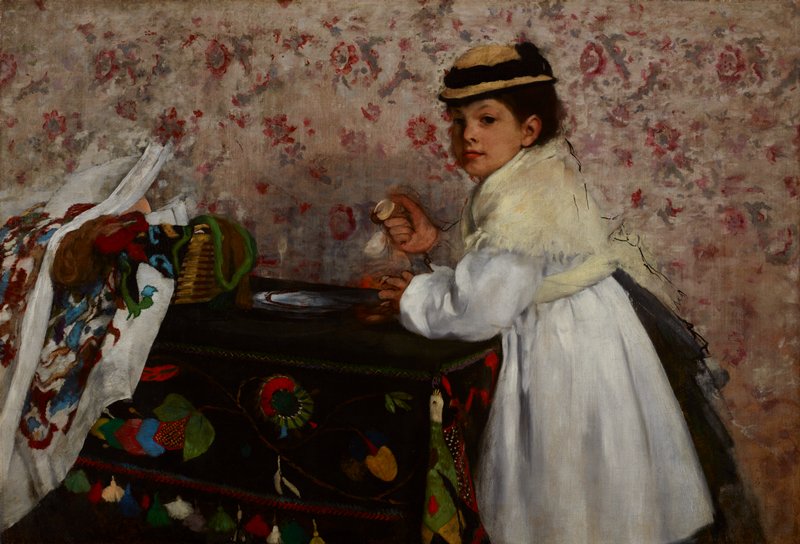
Hortense Valpinçon
Mag men het zien?
Ontvangt momenteel niet

Washington D.C., Verenigde Staten
Het hoort bij de collectie, maar is momenteel niet tentoongesteld.
- Gecontroleerd
- Ongewijzigd sinds
- Bron
- Het museum
Gegevens
- Inventarisnummer
- 1995.47.34
Wat het toont
In de catalogus
Bronnen
- National Gallery of Art
- Afbeelding: National Gallery of Art — Museum open access
Intussen, in het leven van Edgar Degas
Het hele leven1881
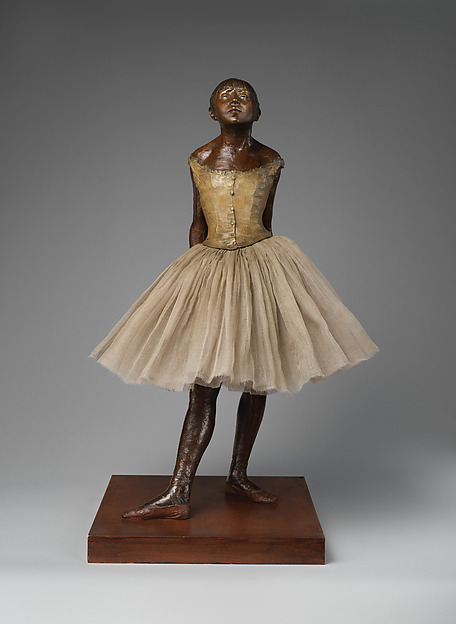
“The Little Dancer of Fourteen Years” on show
The nearly life-size wax figure with real hair and a cloth tutu, modelled on Marie van Goethem, provoked a strong reaction: critics found its realism extraordinary, but many denounced the dancer as ugly. It was the only sculpture Degas showed in his lifetime.
1881
The pastels “Criminal Physiognomies”
Degas attended the trial of the young gang members convicted of murder in the Abadie affair, sketchbook in hand, and in 1881 exhibited two pastels, “Criminal Physiognomies”. The drawings reveal his interest in features that some nineteenth-century scientists took as evidence of innate criminality.
by 1882
His eyesight sharply worsens
By 1882 Degas's eyesight began to worsen sharply: he turned to pastel and then to sculpture, where he could rely more on touch.


![Ginevra de' Benci [obverse], Leonardo da Vinci, c. 1474/1478](https://api.nga.gov/iiif/8f29e3c9-a289-4d53-abf0-31a66e9e98fa/full/!2400,2400/0/default.jpg)
![Wreath of Laurel, Palm, and Juniper with a Scroll inscribed Virtutem Forma Decorat [reverse], Leonardo da Vinci, c. 1474/1478](https://api.nga.gov/iiif/ff62e8d0-45c4-498f-ad36-6358de827e04/full/!2400,2400/0/default.jpg)


