John Ayres Hatfield
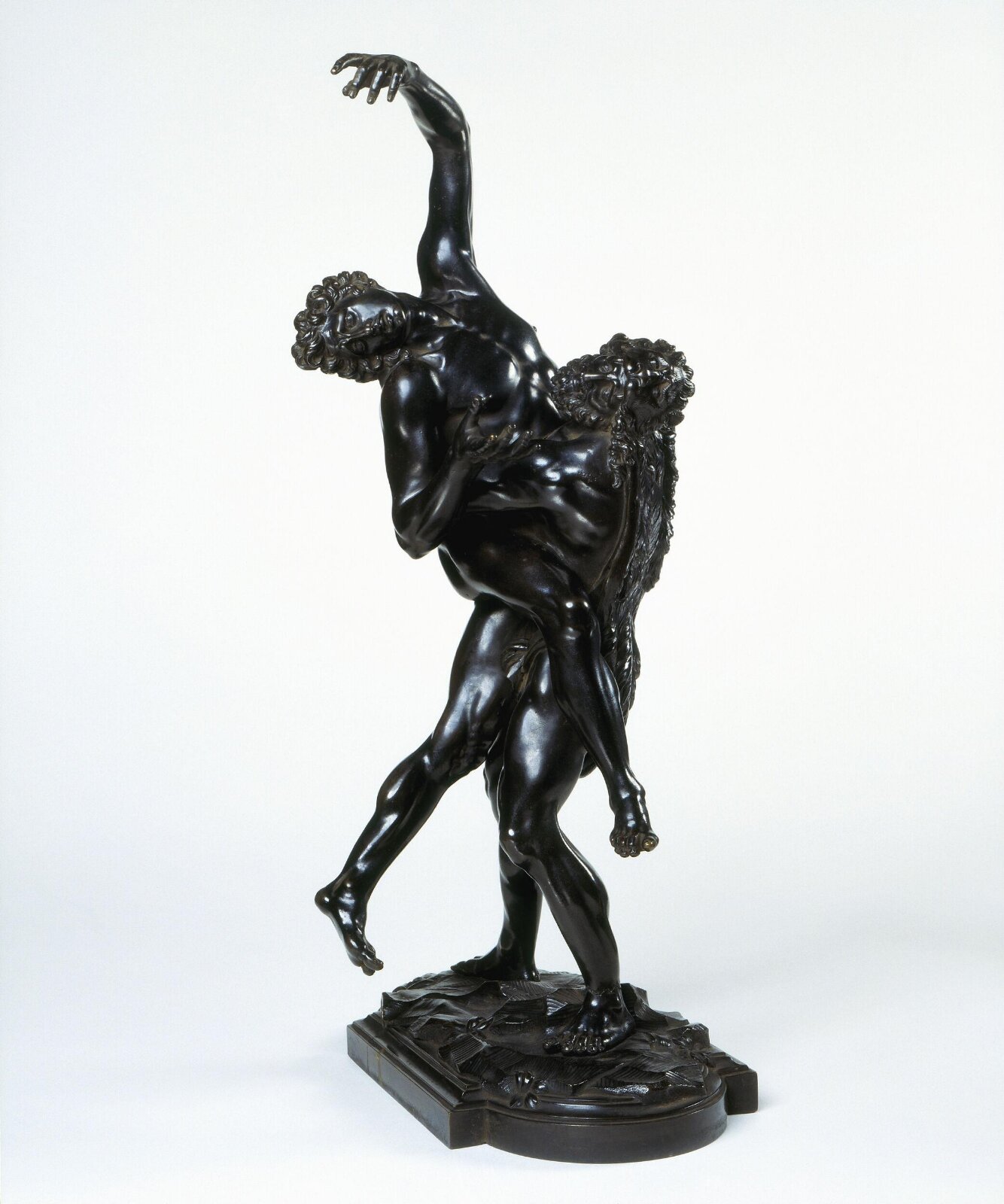
Hercules and Antaeus
Mag men het zien?
Ontvangt momenteel niet

Victoria and Albert Museum
Londen, Verenigd Koninkrijk
Het hoort bij de collectie, maar is momenteel niet tentoongesteld.
- Gecontroleerd
- Ongewijzigd sinds
- Bron
- Het museum
Over de sculptuur
On acquisition by the V&A in 1956, this bronze was considered to be 'possibly German, 18th century'. But a Hatfield foundry stamp concealed under the right foot of Hercules was discovered in the early 1980s, when the figure was removed from its base to repair the ankle, which was cracked. This group, with certain modifications, is based on a bronze in the Royal Collection at Windsor Castle, Berkshire.
John Ayres Hatfield established a firm of art metal workers in London in the 1840s, and supplied the Art Union with bronze statuettes. The firm is still in business: H. J. Hatfield & Sons, Restorers, 42 St Michael's Street, London.
Verder lezen
The well-known story of the Greek hero Hercules squeezing to death his opponent Antaeus has been a subject since classical times. Antaeus, son of Gaia, was a giant, whose strength appeared invincible. He was known for challenging travellers to wrestling matches which he invariably always won, until he met Hercules. During their combat it appeared at first as though Hercules might lose, for no matter how many times he threw Antaeus to the ground, it did no good. Hercules eventually realised that the earth (Gaia), Antaeus' mother, was the source of his strength, so he held the giant aloft from the ground until all his power had drained away, and then crushed him to death.
Victoria and Albert Museum
Gegevens
- Inventarisnummer
- A.110-1956
Wat het toont
In de catalogus
Bronnen
- Victoria and Albert Museum
- Afbeelding: Victoria and Albert Museum — © Victoria and Albert Museum, London