 Pablo PicassoSpanje, 1881–1973
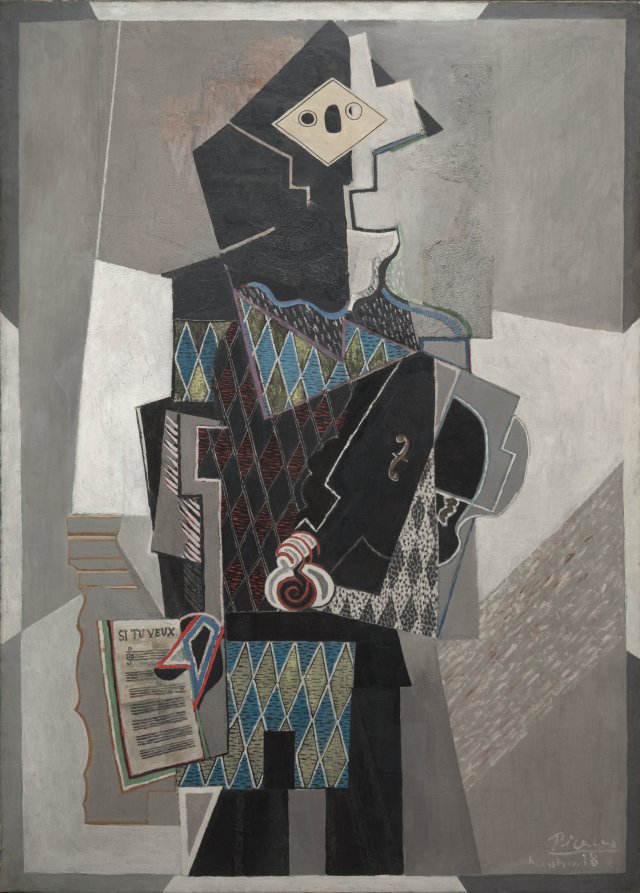
Harlequin with Violin
Mag men het zien?
Ja, het ontvangt bezoek

Publiek tentoongesteld. Wie daarvoor instaat, staat hieronder.
- Gecontroleerd
- Ongewijzigd sinds
- Bron
- De eigen collectiegegevens van het museum
Over het schilderij
The diamond-patterned costume and triangular hat identify the musician in this painting as one of Pablo Picasso’s alter egos, Harlequin, a jokester from the popular commedia dell’arte (a theatrical form in which a cast of colorful stock characters spoke in improvised dialogue).The phrase Si tu veux (“If you wish”) on the music sheet may refer to a contemporary popular song that began, "If you wish, Marguerite, make me happy by giving me your heart.” The inclusion of this lyric may refer to Picasso’s marriage to Russian ballerina Olga Khokhlova the year this painting was made.
Cleveland Museum of Art
Gegevens
- Inventarisnummer
- 1975.2
In de catalogus
Bronnen
- Cleveland Museum of Art: de open data van het museum · opgehaald 8 dagen geleden
- Afbeelding: Cleveland Museum of Art — © Estate of Pablo Picasso / Artists Rights Society (ARS), New York
Intussen, in het leven van Pablo Picasso
Het hele levenFebruary 1917
First Trip to Italy
While working on the ballet Parade for Diaghilev's company, Picasso traveled to Italy for the first time — to Rome, where he executed the sets and costumes.
18 May 1917
Scandalous Premiere of the Ballet Parade
The premiere of the ballet Parade with Picasso's designs at the Théâtre du Châtelet turned into an enormous scandal, which helped increase the artist's popularity in Parisian high society.
12 February 1918
Marriage to Olga Khokhlova
Picasso married Olga Khokhlova, a ballerina of Diaghilev's company, in the Russian church in Paris; the witnesses were Jean Cocteau, Max Jacob, and Guillaume Apollinaire.
12 juli 1918
Married: Olha Khokhlova