ART WIKI32.963 te zien
KaartCollectieKunstenaarsMuseaTentoonstellingenJournal
Inloggen

ART WIKI

Waar het meesterwerk hangt en wanneer men u toelaat.

Collecties: Art Institute of Chicago, Cleveland Museum of Art, Getty Villa, Harvard Art Museums, Hermitage, Hirshhorn Museum and Sculpture Garden, J. Paul Getty Museum, Louvre, Metropolitan Museum of Art, Minneapolis Institute of Art, Museum of Modern Art, National Gallery of Art, National Museum of Asian Art, National Portrait Gallery, Poesjkinmuseum, Rijksmuseum Amsterdam, Russisch Museum, Smithsonian American Art Museum, Statens Museum for Kunst, Tretjakovgalerij, Victoria and Albert Museum, Whitney Museum of American Art, Staatscatalogus van het Russische museumfonds (274 musea), Europeana (19 musea), Wikidata (6 musea), Paris Musées (12 musea) en Joconde, de museumdatabank van het Franse ministerie van Cultuur (495 musea). De afbeeldingen behoren toe aan hun rechthebbenden.

Rubrieken

  • Kaart
  • Zoeken
  • Collectie
  • Meesterwerken
  • Nu te zien
  • Kunstenaars

Meer

  • Musea & galerieën
  • Tentoonstellingen
  • Journal
  • Waar de gegevens vandaan komen
  • Privacy & cookies
StartpaginaKaartCatalogus
  1. Collectie/
  2. Cleveland Museum of Art/
  3. Gray Scramble (Single), VIII
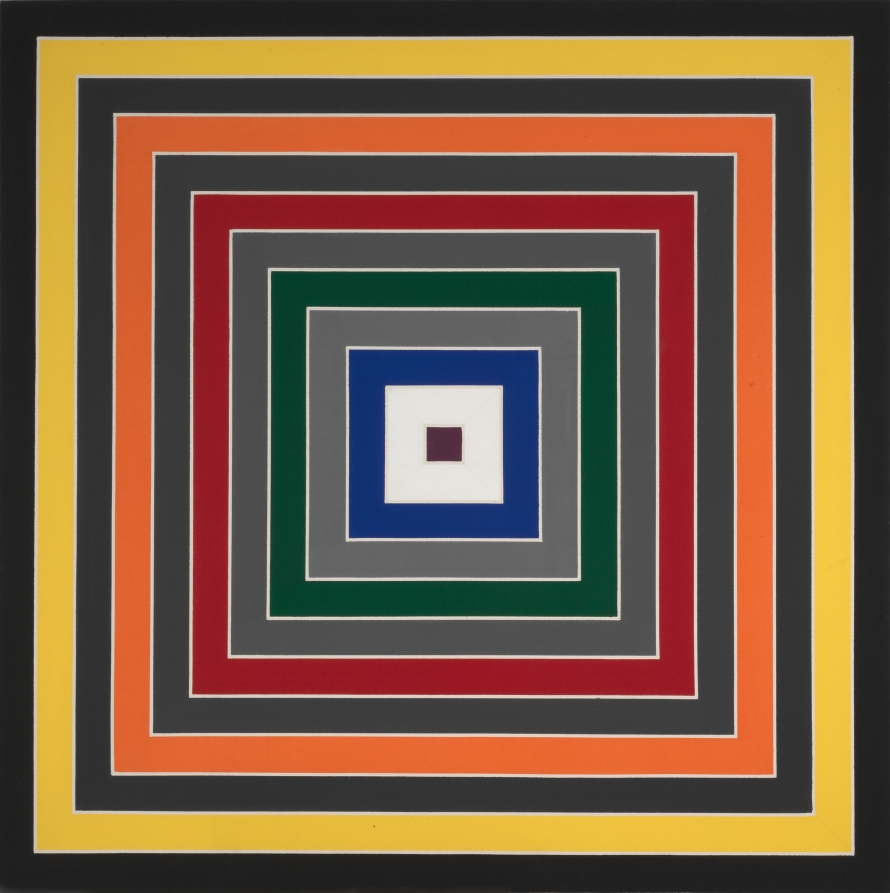
Gray Scramble (Single), VIII, Frank Stella, 1968
Frank Stella, portretFrank StellaVerenigde Staten, 1936–2024

Gray Scramble (Single), VIII

1968 · Painting

Mag men het zien?

Ontvangt momenteel niet

Cleveland Museum of Art

Cleveland, Verenigde Staten

Het hoort bij de collectie, maar is momenteel niet tentoongesteld.

Gecontroleerd
3 dagen geleden
Ongewijzigd sinds
19 aug 2026
Bron
Het museum
Op de kaartMuseumpagina

Over het schilderij

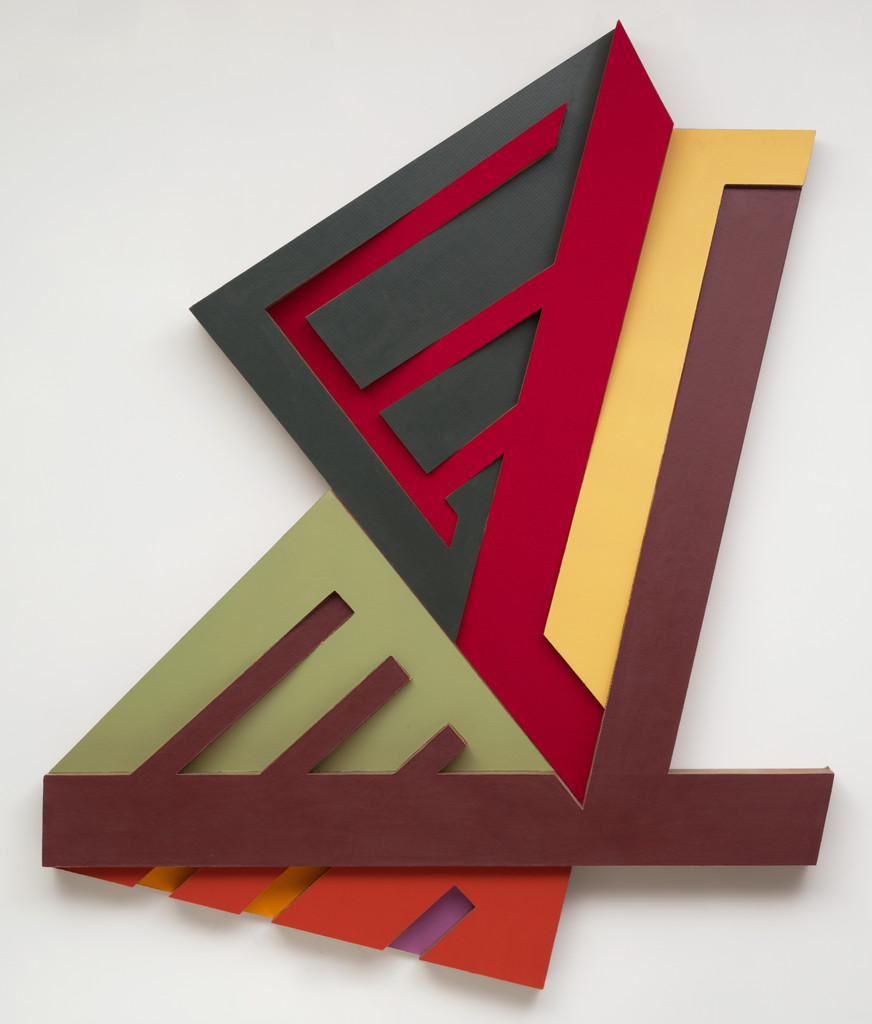
Stella’s early paintings represent his reaction against the seemingly loose, gestural brushstroke associated with Abstract Expressionism. In Gray Scramble (Single), VIII, Stella combines bands of sequential values and of differing colors. In contrast to the depth created by the alternating light and dark bands of color, the uniformity of the paint surface emphasizes the two-dimensionality of the canvas. Using commercial paint and a house-painter’s brush, Stella carefully crafted his works to create an immediate visual impression of simplicity and monumentality. The strict geometry and crisp edges of the painted bands illustrate Stella’s desire for precision, whereas the resulting symmetry contributes to an “all-over” quality reminiscent of Jackson Pollock’s drip paintings.

Cleveland Museum of Art

Gegevens

1968 · op 32-jarige leeftijd
19362024
Inventarisnummer
2003.355

In de catalogus

SchilderijenAcrylAmerikaanse schilderkunstNaoorlogse kunst20e eeuwAmerika

Bronnen

  • Cleveland Museum of Art
  • Afbeelding: Cleveland Museum of Art — © Frank Stella / Artists Rights Society (ARS), New York

Intussen, in het leven van Frank Stella

Het hele leven
  1. 1960s

    Travels in the Middle East

    He visits circular-plan cities in the Middle East and is especially intrigued by the arches and decorative patterns he sees in the architecture and art of Iran; these cities will later give their names to works of the Protractor series.

  2. 1965–1966

    Guggenheim: “The Shaped Canvas” and “Systemic Painting”

    His work is included in two exhibitions at the Solomon R. Guggenheim Museum: The Shaped Canvas (1965) and Systemic Painting (1966).

  3. 27 juni 1968 – 6 oktober 1968

    Exhibition: 4. documenta

  4. 1970

    Retrospective at the Museum of Modern Art

    The Museum of Modern Art in New York presents a retrospective of Stella's work, making him the youngest artist to receive one.

  5. 1970

    Boycott of the American Pavilion in Venice

    Invited to the 35th Venice Biennale, Stella joins a boycott by artists opposed to the US wars in Vietnam and Cambodia and withdraws his works from display at the American Pavilion.

  6. 1970s

    Introduces relief: “maximalist” painting

    He brings relief into his work and calls such painting “maximalist” for its sculptural qualities; in the Eccentric Polygon series the shaped canvases take on still less regular forms and collage elements appear, such as pieces of canvas glued to plywood, and aluminum then becomes the main support of his paintings.

Meer van Frank Stella

Alle werken
Flin Flon IV, Frank Stella, 1969

Flin Flon IV

1969 · National Gallery of Art

Tahkt-I-Sulayman Variation II, Frank Stella, 1969

Tahkt-I-Sulayman Variation II

1969 · Minneapolis Institute of Art

Chodorow II, Frank Stella, 1971

Chodorow II

1971 · National Gallery of Art

Nasielk III, Frank Stella, 1972

Nasielk III

1972 · Museum of Modern Art

Prinz Friedrich von Homburg, Ein Schauspiel, 3X, Frank Stella, 1998-2001

Prinz Friedrich von Homburg, Ein Schauspiel, 3X

1998-2001 · National Gallery of Art

Double Concentric Squares, Frank Stella, n.d.

Double Concentric Squares

n.d. · Art Institute of Chicago

Untitled, Frank Stella, n.d.

Untitled

n.d. · Niet te zien · Museum of Modern Art

Untitled, Frank Stella, n.d.

Untitled

n.d. · Niet te zien · Museum of Modern Art

Buren in huis: Cleveland Museum of Art

Museumpagina
The Red Kerchief, Claude Monet, c. 1868–73

Claude Monet

The Red Kerchief, c. 1868–73

Melencolia I, Albrecht Dürer, 1514

Albrecht Dürer

Melencolia I, 1514

The Virgin and Child with the Pear, Albrecht Dürer, 1511

Albrecht Dürer

The Virgin and Child with the Pear, 1511

The Nativity, Albrecht Dürer, probably c. 1509/1510

Albrecht Dürer

The Nativity, probably c. 1509/1510

The Virgin and Child on a Crescent with a Starry Crown, Albrecht Dürer, 1508

Albrecht Dürer

The Virgin and Child on a Crescent with a Starry Crown, 1508

The Lamentation, Albrecht Dürer, 1507

Albrecht Dürer

The Lamentation, 1507

Large Horse, Albrecht Dürer, 1505

Albrecht Dürer

Large Horse, 1505

Nemesis (The Great Fortune), Albrecht Dürer, c. 1501/1502

Albrecht Dürer

Nemesis (The Great Fortune), c. 1501/1502