ART WIKI32.979 te zien
KaartCollectieKunstenaarsMuseaTentoonstellingenJournal
Inloggen

ART WIKI

Waar het meesterwerk hangt en wanneer men u toelaat.

Collecties: Art Institute of Chicago, Cleveland Museum of Art, Getty Villa, Harvard Art Museums, Hermitage, Hirshhorn Museum and Sculpture Garden, J. Paul Getty Museum, Louvre, Metropolitan Museum of Art, Minneapolis Institute of Art, Museum of Modern Art, National Gallery of Art, National Museum of Asian Art, National Portrait Gallery, Poesjkinmuseum, Rijksmuseum Amsterdam, Russisch Museum, Smithsonian American Art Museum, Statens Museum for Kunst, Tretjakovgalerij, Victoria and Albert Museum, Whitney Museum of American Art, Staatscatalogus van het Russische museumfonds (274 musea), Europeana (19 musea), Wikidata (6 musea), Paris Musées (12 musea) en Joconde, de museumdatabank van het Franse ministerie van Cultuur (495 musea). De afbeeldingen behoren toe aan hun rechthebbenden.

Rubrieken

  • Kaart
  • Zoeken
  • Collectie
  • Meesterwerken
  • Nu te zien
  • Kunstenaars

Meer

  • Musea & galerieën
  • Tentoonstellingen
  • Journal
  • Waar de gegevens vandaan komen
  • Privacy & cookies
StartpaginaKaartCatalogus
  1. Collectie/
  2. National Gallery of Art/
  3. Frontispiece for "Gloriosissimae"
Frontispiece for "Gloriosissimae", Jacques Callot, 17th century
Jacques Callot, portretJacques CallotFrankrijk, 1592–1635

Frontispiece for "Gloriosissimae"

17th century · Print

Mag men het zien?

Ontvangt momenteel niet

National Gallery of Art

Washington D.C., Verenigde Staten

Het hoort bij de collectie, maar is momenteel niet tentoongesteld.

Gecontroleerd
3 dagen geleden
Ongewijzigd sinds
19 aug 2026
Bron
Het museum
Op de kaartMuseumpagina

Gegevens

Inventarisnummer
1969.15.517

Wat het toont

CrucifixionKindCherubSchrijvenFrame

In de catalogus

PrentenEtsBarok17e eeuwFrench

Bronnen

  • National Gallery of Art
  • Afbeelding: National Gallery of Art — Museum open access

Intussen, in het leven van Jacques Callot

Het hele leven
  1. 1608

    Runs away from home to Rome

    Secretly from his parents Jacques sets out on foot for Rome — according to legend, with wandering Romani; by one account he ran away twice and twice came back at his father’s demand, until his father finally consented to his studying in Italy.

  2. 1611

    Studies etching with Tempesta in Florence

    Having studied burin engraving in Rome with Philippe Thomassin, Callot moves to Florence, where he works with Antonio Tempesta, who teaches him the technique of line etching (by other accounts, he lived in Florence from 1612).

  3. 1614–1621

    At the court of Cosimo II de’ Medici

    Under Parigi’s direction Callot works at the court of the Grand Duke of Tuscany Cosimo II de’ Medici in the Uffizi, designing festivals and theatrical performances — later these give him themes for his series of grotesque prints; during his Florentine years he becomes an independent master and often works for the Medici.

  4. 1617

    Switches to hard ground and repeated biting

    From 1617 Callot uses, instead of the soft ground customary until then, the acid-resistant hard ground of Florentine joiners and furniture-makers; it allows the plate to be bitten repeatedly, with parts of the spatial planes successively covered by varnish, and gives broad tonal gradations; he is also credited with the échoppe, an etching needle with a slanted end that produces a swelling line.

  5. 1621

    Returns to Nancy after the death of Cosimo II

    After the death of Grand Duke Cosimo II de’ Medici, Callot responds to Duke Charles IV of Lorraine’s wish to see him at his court and returns to Lorraine, where he is received with flattering honours; staying in Nancy, he sends his prints all over Europe, and Rembrandt becomes a keen collector of them.

  6. 25 maart 1635

    Died

Meer van Jacques Callot

Alle werken
Lust, Jacques Callot, 17th century

Lust

17th century · Harvard Art Museums

Temptation of Saint Anthony, Jacques Callot, 17th century

Temptation of Saint Anthony

17th century · Harvard Art Museums

Envy, Jacques Callot, 17th century

Envy

17th century · Harvard Art Museums

Pardon des Rochelois, Jacques Callot, 17th century

Pardon des Rochelois

17th century · Harvard Art Museums

Pride, Jacques Callot, 17th century

Pride

17th century · Harvard Art Museums

Anger, Jacques Callot, 17th century

Anger

17th century · Harvard Art Museums

Descente dans l'île de Ré, Jacques Callot, 17th century

Descente dans l'île de Ré

17th century · Harvard Art Museums

Gluttony, Jacques Callot, 17th century

Gluttony

17th century · Harvard Art Museums

Buren in huis: National Gallery of Art

Museumpagina
Ginevra de' Benci [obverse], Leonardo da Vinci, c. 1474/1478

Leonardo da Vinci

Portret van Ginevra de' Benci, c. 1474/1478

Wreath of Laurel, Palm, and Juniper with a Scroll inscribed Virtutem Forma Decorat [reverse], Leonardo da Vinci, c. 1474/1478

Leonardo da Vinci

Wreath of Laurel, Palm, and Juniper with a Scroll inscribed Virtutem Forma Decorat [reverse], c. 1474/1478

Green Wheat Fields, Auvers, Vincent van Gogh, 1890

Vincent van Gogh

Green Wheat Fields, Auvers, 1890

Girl in White, Vincent van Gogh, 1890

Vincent van Gogh

Meisje in Wit, 1890

Roses, Vincent van Gogh, 1890

Vincent van Gogh

Roses, 1890

Self-Portrait, Vincent van Gogh, 1889

Vincent van Gogh

Self-Portrait, 1889

Farmhouse in Provence, Vincent van Gogh, 1888

Vincent van Gogh

Boerderij in de Provence, 1888

La Mousmé, Vincent van Gogh, 1888

Vincent van Gogh

La Mousmé, 1888

Over hetzelfde thema · Crucifixion

Alle werken over dit thema
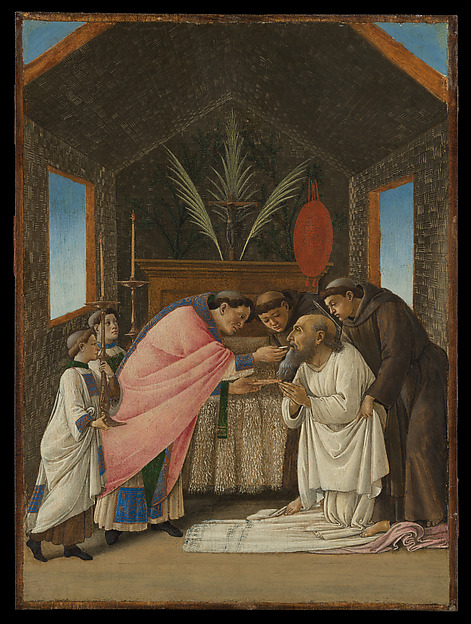
The Last Communion of Saint Jerome, Botticelli, early 1490s

Sandro Botticelli

The Last Communion of Saint Jerome, early 1490s

Metropolitan Museum of Art

La Crucifixion, Pablo Picasso, 1930

Pablo Picasso

La Crucifixion, 1930

Musée Picasso

Crucifixion and Last Judgement diptych, Jan van Eyck, ca. 1436–38

Jan van Eyck

Crucifixion and Last Judgement diptych, ca. 1436–38

Metropolitan Museum of Art

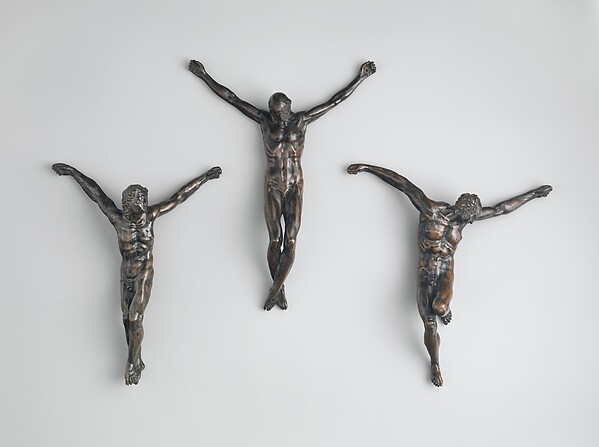
Christ and the Two Thieves Crucified, Michelangelo Buonarroti, ca. 1560–70

Michelangelo

Christ and the Two Thieves Crucified, ca. 1560–70

Metropolitan Museum of Art

Crucifixion de saint Pierre, Caravage

Caravaggio

Crucifixion de saint Pierre

Louvre

The Descent from the Cross, Ugo da Carpi after Raphael

Raphael

The Descent from the Cross

Niet te zien · National Gallery of Art

Mond Crucifixion, Raphael, 1500s

Raphael

Mond-kruisiging, 1500s

National Gallery

Christ Crucified between the Two Thieves (The Three Crosses), Rembrandt van Rijn, 1653

Rembrandt van Rijn

Christ Crucified between the Two Thieves (The Three Crosses), 1653

Niet te zien · Cleveland Museum of Art